
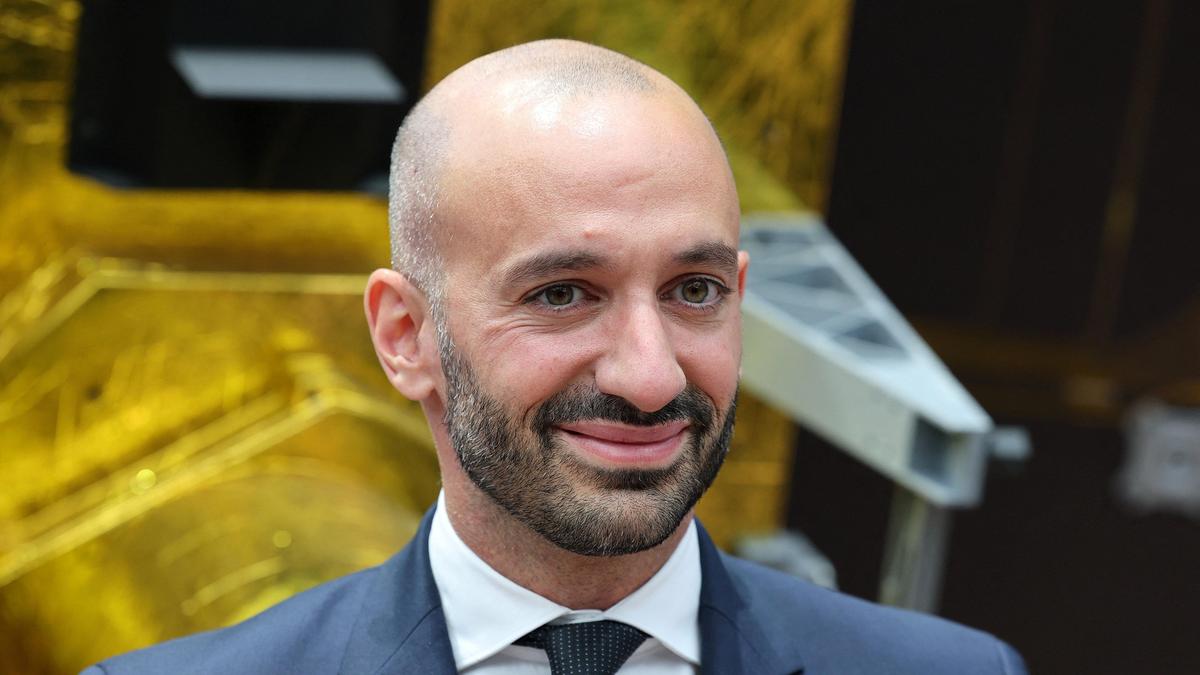
File photo of French Minister-Delegate for European Affairs Benjamin Haddad | Photo Credit: Reuters India and France have a common attachment to “strategic autonomy,” says French Minister-Delegate for European Affairs Benjamin Haddad, indicating that European countries are increasingly seeking more “middle power coalitions” to hedge against the uncertainty in ties with superpowers U.S. and China. In Delhi for the ‘Munich Leaders Meeting’ where External Affairs Minister S. Jaishankar indicated for the first time that India is mediating between Russia and Ukraine for specific agreement, Mr. Haddad told The Hindu in an interview that he hoped India would use its “voice” to bring Russia to the table for peace talks. Excerpts: You are in Delhi two months before the culmination of the India EU FTA, which is supposed to happen on December 16 in Brussels. Can you confirm that date is now set, and are there any hurdles still to cross before that? It is indeed our objective, to close by the end of the year. France is very supportive of the FTA with India, which really shows the deepening of both a bilateral relationship, and the broader relationship between the European Union (EU) and India. We are in a world of geopolitical turmoil, where we see that we have a common attachment to multilateralism, to cooperation, to a form of independence in international relations, which I think is what brings also France in India very close… this attachment to having strategic autonomy, to developing a sort of approach of middle powers in this world. Do you see India and France coming together in some kind of a non-superpower coalition — with the middle powers versus the superpowers? I don’t think it is ‘versus’. I think we are attached to a world that is driven by reliable partnerships, by cooperation and multilateralism in international law. We have our traditional allies and we are very committed to the European project, but we can see that with partners like India, we share the objective of not just being passive bystanders of a rivalry between the United States and China, but also to be able to defend our own interest, defend our own voice. In areas such as access to space and leadership of AI, I think there is really an incredible potential for a partnership. The India-EU FTA will only operationalise and deepen this. And one of the reasons of my visits, my second visit this year, is beyond just the signature of [the FTA] document, is to look at how we can take it to the next level, to a stronger partnership and a common voice on the international stage. An area of disagreement is the Russia-Ukraine conflict. What is your expectation from India, given it still imports more than half its oil needs from Russia ? I have seen Indian leaders state very clearly that they want to find a peaceful solution, including Prime Minister [Narendra] Modi, who told President [Vladimir] Putin that it is time to stop the wars. And I think in this respect, a country like India, that is a respected actor on the international stage, can play a role in working with us to find a peaceful solution — which is what we want, but clearly that Russia continues to refuse. The best way to put an end to this war is to increase the pressure on Russia to get it back to the negotiating table, and so it means also increasing economic pressures. We generally don’t lecture other countries on what they should do, but at the European level, we have adopted different packages of sanctions. We are working on the 22nd package of sanctions right now, precisely to increase the economic pressure on the Russian regime, in energy mostly, but also to limit its ability to conduct the war. Europeans are by far the first provider of aid and support to Ukraine, which is also a good example of European strategic autonomy and that we have taken ownership on our security, and there is a lot of interest from Europeans to work with India in finding a diplomatic solution. The recent BRICS summit Delhi Declaration made no mention of the Ukraine war — does this indicate that this is now just a European problem, not for the rest of the world? It would be a mistake to think that. Of course it is a European issue, as it pertains to European security. [But] this is also about international principles, not just law, of the security architecture that we want. If we allow a state to invade its neighbour, to use nuclear blackmail to conduct a conventional war on its neighbours, it creates an extremely dangerous precedent for the rest of the world, including for the nations that were at this BRICS summit. The U.S. invasion of Iran earlier this year, assassination of its supreme leader, of civilians there, targeting of nuclear installations, also ticks all these boxes, and yet no one is asking for the U.S. to be treated the same way… Europeans are not involved in [the Iran] war. We have always called for de-escalation. We have always called to find peaceful and diplomatic solutions, whether that is on the freedom of navigation, the Strait of Hormuz, but including on tackling issues where we agree with the U.S. for example, the Iranian nuclear programme, its ballistic missile programme, its support for terrorist proxies in the region. We said the best way is to do it through a diplomatic channel, like we did in concluding the JCPOA in 2015. The fact that the U.S. withdrew from this deal under the first Trump administration actually accelerated the nuclear programme from Iran, not the other way around. Europeans and the French act as predictable and reliable partners, and this is exactly why, on this basis, that we want to build a relationship with India. One of the areas India and France, and India and the EU have been working together is connectivity and the plan for the IMEC project. Is it still viable to have this project given the situation in the Middle East? We take IMEC very seriously. We have a special envoy for IMEC, and when you look at the situation, I mean, clearly you do need to de-risk and diversify, and so you need to invest in as many venues as possible for energy cooperation. And you know, when you look at the situation in the Middle East, I think you need to have a two-pronged approach. The short-term approach is how can we can cooperate to have an impact directly to reduce energy prices on the field, and this is why France has, number one, stated its intent to be able to participate and lead a coalition of the ruling for the freedom of navigation in the Strait of Hormuz after the war, when conditions align, and, number two, has already shown its willingness to participate in operations to secure some areas. For example, we have a discussion right now with Saudi Arabia to send troops and material to secure the Port of Yanbu, which is where you have 5 million barrels who circulate every day. That is more on the Red Sea. There is a geopolitical dimension to the increase in energy prices, and we need to be able to have a coordinated answer to this. That is in the short term, but in the long term, you also clearly need to invest in new routes, diversify the different routes. You know, this is a conversation we had also at the G7 level. IMEC can be one of the strong structural answers to this. Published - October 05, 2026 08:39 pm IST
We need a middle power approach to resolving global situation: French Minister Haddad
Full Article
Original Source
Read the full article at Thehindu →KhanList aggregates and links to publicly available news content. We do not host full articles from third-party sources. Always verify important information with original sources.