
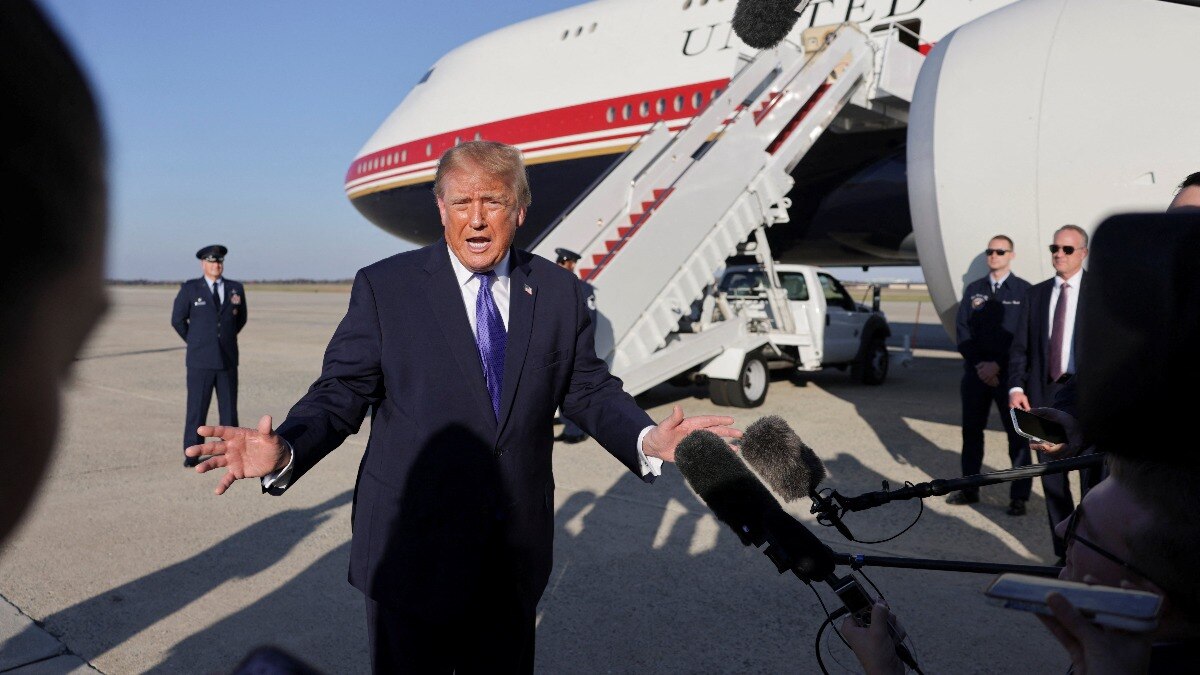
Trump said the United States was in no hurry to end its war with Iran. His remarks leave diplomacy active while keeping the possibility of renewed military action open.US President Donald Trump. (Photo- Reuters)US President Donald Trump has said Washington is in no hurry to end its war with Iran, describing the conflict as “not a typical war” and insisting that the United States has time on its side even as months of fighting and repeated diplomatic efforts have failed to produce a lasting settlement.Trump also claimed that Tehran was keen to continue negotiations with Washington but was facing serious internal difficulties, including an inability to pay its soldiers and police personnel.“There are talks. They want to talk. They keep talking,” Trump told reporters in the Oval Office.“But look, they're not paying their soldiers, they're not paying their police. They're in a lot of trouble. And we have time, frankly. It's a war, but it's not a typical war, we've been there for seven months,” he said. Trump also played down the financial burden of the military campaign, claiming that the US was spending relatively little on the conflict.“We're spending very little money, relatively speaking. I heard somebody say, you're spending money. I said, well, any money we spent, we've more than made up for in a place called Venezuela, like by 10 times...” he said. He did not provide figures to substantiate his claim about recovering the costs through Venezuela.TRUMP KEEPS MILITARY OPTION OPEN DESPITE TALK OF NEGOTIATIONSTrump's assertion that Washington has time to pursue negotiations comes even as he has repeatedly raised the possibility of renewed military action against Iran.Last week, he said the US could carry out “another little Epic Fury”, referring to the military operation launched against Iran. On another occasion, he indicated that a “big and good” deal with Tehran could still be possible.His latest comments come amid continuing uncertainty over the direction of the conflict. While Trump has suggested that Iran wants an agreement, Washington and Tehran remain divided over the terms of any settlement, particularly Iran's nuclear programme, sanctions and the US blockade of Iranian ports.TURKEY DISCUSSES IRAN TALKS WITH USDiplomatic efforts to find a way out of the conflict continued on Friday, with Turkish Foreign Minister Hakan Fidan meeting US Secretary of State Marco Rubio on the sidelines of a G20 foreign ministers' meeting in the United States.The two discussed negotiations between Washington and Tehran, the situation in Gaza, the Russia-Ukraine war, other regional developments and bilateral relations, Turkey's state-run Anadolu Agency reported.The meeting followed a telephone conversation between Turkish President Recep Tayyip Erdogan and Trump on Wednesday. According to the Turkish presidential communications office, Erdogan told the US President that Ankara was monitoring developments in the Strait of Hormuz and Yemen and supporting diplomatic efforts to resolve the crisis.Turkey has been involved in regional efforts, alongside Pakistan and Qatar, to prevent a fresh escalation and bring the two sides closer to an agreement.FROM FEBRUARY STRIKES TO A FRAGILE PAUSEThe war began on February 28, when the United States and Israel launched strikes on Iran, targeting its military infrastructure and nuclear and missile capabilities. The attacks killed Iran's Supreme Leader Ayatollah Ali Khamenei and triggered retaliatory strikes by Tehran against Israel and US-linked targets across the region.Iran also moved to restrict shipping through the Strait of Hormuz, a critical route for global oil and gas supplies, raising fears of a wider energy crisis.After weeks of fighting, Pakistan stepped up efforts to secure a halt to hostilities. Its mediation helped produce a two-week pause announced on April 8, giving Washington and Tehran an opportunity to begin negotiations. However, the arrangement did not resolve the core disagreements between the two sides, and the conflict remained vulnerable to renewed escalation.PAKISTAN-LED MEDIATION FAILS TO SECURE LASTING AGREEMENTPakistan subsequently led a fresh diplomatic push, with Qatar playing a key role in facilitating communication between Washington and Tehran. The efforts resulted in a 14-point memorandum of understanding signed on June 17, which laid out a framework for ending military operations and addressing the competing blockades around the Strait of Hormuz.The understanding envisaged an initial 60-day period for negotiations on issues including freedom of navigation through the strait, Iran's nuclear and missile programmes, sanctions relief and the release of frozen Iranian assets.However, the arrangement failed to produce a comprehensive settlement. Differences over the sequence of commitments, the US naval blockade, Iran's oil exports and the future of its nuclear programme prevented the negotiations from making decisive progress.The two sides also remained at odds over the terms of a broader regional settlement, including the cessation of hostilities on other fronts.FRESH PROPOSALS FAIL TO BREAK THE DEADLOCKFurther attempts to revive negotiations continued in September, when Iran put forward a seven-day proposal through intermediaries. The plan linked the reopening of the Strait of Hormuz to steps by Washington to lift its blockade of Iranian ports, ease restrictions on oil exports and address frozen assets, before moving to wider discussions on the nuclear issue.Trump rejected the proposal, while Iranian officials said Tehran was still awaiting a definitive response from Washington. The two sides remained divided over which commitments should come first.The latest effort has involved Qatar, whose mediators presented Tehran with a fresh draft proposal in October. The plan reportedly included a seven-day period of confidence-building measures. However, a senior Iranian official described the proposals as unacceptable, while Foreign Minister Abbas Araghchi said Tehran was consulting intermediaries on ways to advance its own proposal.Qatari mediators returned to Tehran on Friday to continue efforts to secure an agreement, coordinating their discussions with Washington.The central disagreement remains unresolved: the US wants Iran's nuclear programme addressed from the outset, while Tehran wants Washington to lift its blockade and ease restrictions on Iranian oil exports before broader negotiations can move forward.With Turkey now also engaging Washington on the issue, diplomatic channels remain active. But Trump's insistence that the US has time, coupled with his repeated warnings of possible fresh strikes, underlines how uncertain the path to a lasting agreement remains.- Ends
We have time: Trump calls Iran war not typical as peace efforts stall
Full Article
Original Source
Read the full article at Indiatoday →KhanList aggregates and links to publicly available news content. We do not host full articles from third-party sources. Always verify important information with original sources.