
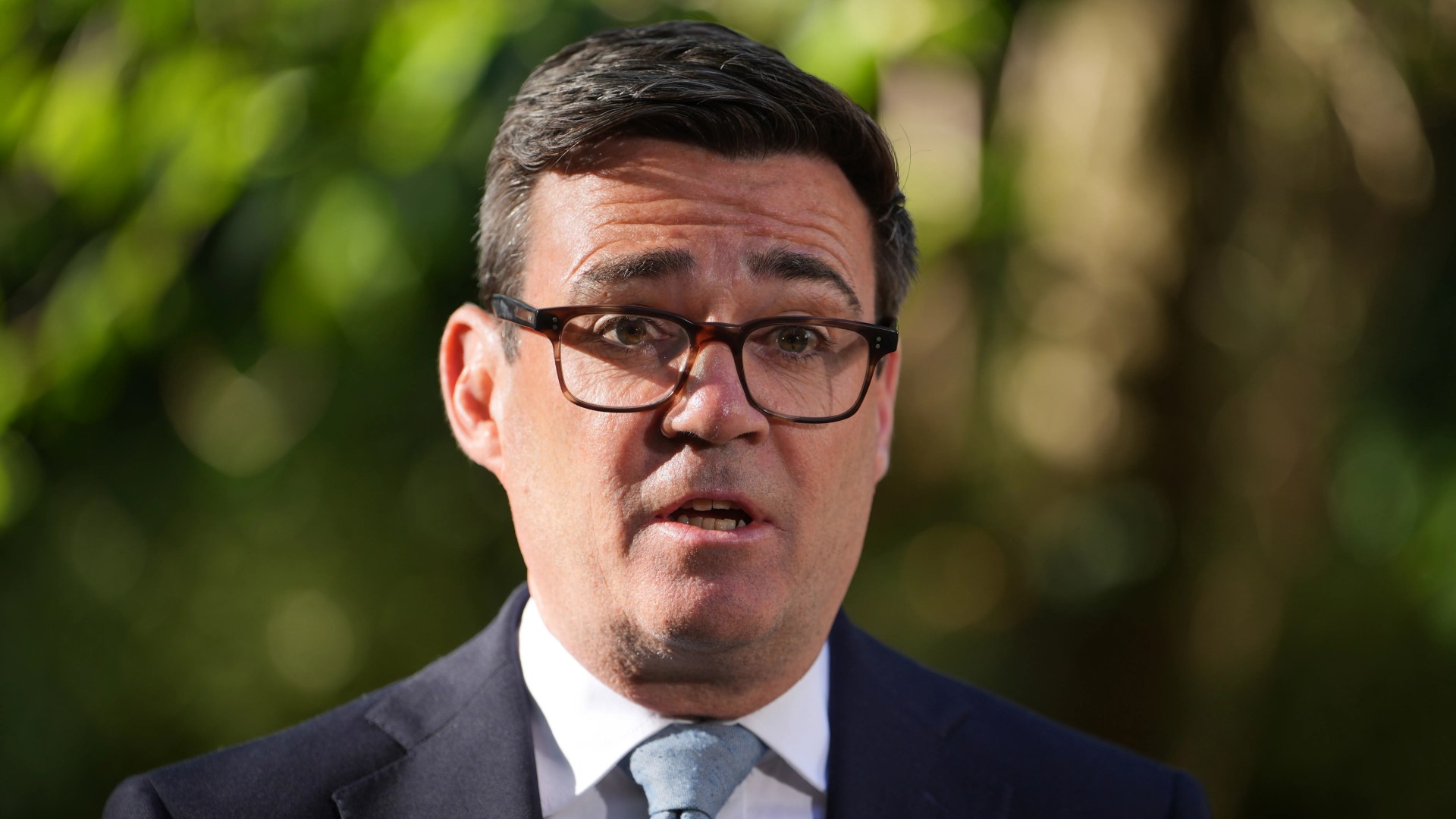
HOW typical of the water industry to exploit the current drought to try to push for the right to impose “surge pricing” on its customers. Ofwat, the regulator, has proposed that companies be allowed to charge more during periods of low rainfall. Andy Burnham has said he wants to exert more public control over the water industry Credit: Getty Water companies just want to push up our bills even further, while trying to ration water Credit: Alamy Funny enough, though, water companies are not planning to slash bills during wet periods when their reservoirs are brimming. They just want an excuse to push up our bills even further, while trying to ration water so they don’t have to invest much in new infrastructure, or in mending their leaky pipes. Sign up for The Sun newsletter Thank you! It is true, of course, that July and August have been exceptionally dry. Our parks have turned brown and our gardens are wilting. But Britain remains a country with a damp, temperate climate. Water companies are counting on us having short memories. Actually, we had an even wetter winter than usual. In January, England saw 150 per cent of its average rainfall in that month. February had 170 per cent. June, too, saw above-average rainfall. Over the year as a whole, there has been plenty of rain to top up reservoirs and replenish ground water. Most read in The Sun It is just that we don’t have the infrastructure to store enough of it for use during dry periods. Travel to the Pennines or the Welsh Hills and you can see the magnificent dams and reservoirs constructed between Victorian times and the mid-20th Century. But that investment has come to a shuddering halt in the past few decades. The last significant reservoir constructed in Britain, Kielder Water in Northumberland, was completed in 1981. At the same time, water companies are still losing vast quantities of their product to leaks. Every day, 3,000million litres, or about 20 per cent of all treated water, goes missing before it even reaches the consumer. Water companies claim they have reduced this by 40 per cent since privatisation, but they should have done far better than that. They inherited a system of cast iron water mains laid in Victorian times and which were coming to the end of their lives. A clean supply is an essential element of any civilisation, and neither government nor the water industry should be trying to stop us using what we need Credit: Getty Dead fish in a drought-hit Hampshire stream Credit: Alamy With the new materials they now have available, they should have reduced leakage to a tiny fraction of what it was 40 years ago. Why bother, they seem to calculate, when we could just ration the water supply instead, through regular hosepipe bans and now, it seems, through surge pricing? In no other kind of industry are businesses so reluctant to sell us their product. Can you imagine Tesco telling its customers they could only buy half a dozen rashers of bacon a week or jacking up the price of carrots in a deliberate bid to dissuade us from buying them? Supermarkets do sometimes find themselves short of certain products, but they will scour the Earth to find replacements. They invest in their supply chains — they don’t shake their heads and tell us sorry, we can’t have any food today because it is too much bother for them to go out and find any to offer us. And they certainly don’t let 20 per cent of their food fall out of the back of their lorries before it even reaches the shops. I have no rosy view of nationalised industry, and I remember how state-owned water companies struggled in the drought of 1976, forcing standpipes on some neighbourhoods. But it was a big mistake to privatise the water industry without ensuring there was some kind of competition in place. It was an error, too, to privatise the assets. Within years, much of the water industry had fallen into the hands of private equity groups who mortgaged the reservoirs, the sewers, and all the other infrastructure which had been built with taxpayers’ money, and awarded themselves big paydays. They loaded themselves with debt, making the calculation that the government would never allow them to go bust because it would cause too much disruption to the water supply. Water companies have done the same to the sewers as they have to the water supply: failed properly to invest in them. The result is that we still have raw sewage being released into rivers during periods of heavy rain. This is not entirely the fault of the people currently running the water industry: the problem goes back to a fateful decision in Victorian times to combine storm drains (which remove water from the streets when there is a downpour) with foul drains (which remove waste water and sewage from buildings). This means that when there is heavy rain, sewage treatment works are overloaded and effluent bypasses them. But water companies have done next to nothing to start work on separating the two systems. They appear to have made the cold calculation that it is cheaper for them to pay the fines rather than invest in new sewers. The result is dead rivers and foul beaches. PM Andy Burnham has said he wants to exert more public control over the water industry. It is unclear exactly what he means by this. But please can he not go down the route of rationing. A clean water supply is an essential element of any civilisation, and neither government nor the water industry should be trying to stop us using what we need. Comment now
Water companies want to hike our bills while RATIONING how much we use – why Burnham must not let it happen
Full Article
Original Source
Read the full article at Thesun →KhanList aggregates and links to publicly available news content. We do not host full articles from third-party sources. Always verify important information with original sources.