
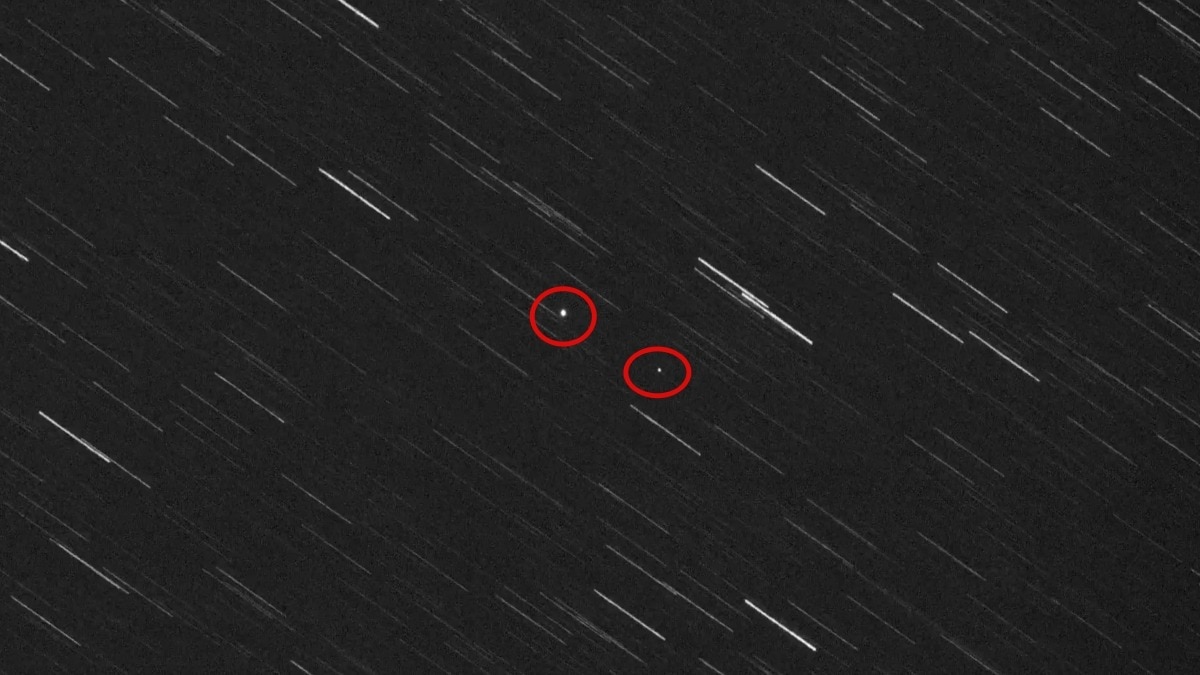
Russia's Kosmos 2612 moved into close proximity with Ukraine-linked radar satellite ICEYE-X36. The encounter underscores growing security concerns surrounding commercial spacecraft used for military intelligence.The space race was captured by S2A Systems, which operates systems for Space Situational Awareness.New Delhi,Oct 19, 2026 13:00 ISTA Russian military satellite has manoeuvred into close proximity with a commercial radar-imaging satellite linked to Ukraine's military, raising concerns that Moscow could be preparing to monitor, interfere with or potentially threaten Western space assets.Russia's Kosmos 2612 has adjusted its orbit to match that of ICEYE-X36, a satellite operated by Finland-founded ICEYE whose radar-imaging capabilities have supported Ukraine during its war with Russia.The space race was captured by S2A Systems, which operates systems for Space Situational Awareness.Short time-lapse of part of this morning’s first pass of ICEYE-X36 (59103) and COSMOS 2612 (68762) over South America under partly cloudy skies. https://t.co/t8RhwmKcV4— s2a systems (@s2a_systems) October 18, 2026The unusual manoeuvres have drawn scrutiny from space-security specialists, who say the Russian spacecraft's intentions remain unclear. According to orbital tracking analyses, Kosmos 2612 carried out a series of manoeuvres beginning on September 30, followed by further adjustments in October.These brought the Russian satellite into a similar orbital plane and altitude as ICEYE-X36, enabling it to approach the commercial spacecraft closely. On October 17, tracking data reported by Axios placed the Russian satellite roughly about five kilometres from ICEYE-X36.Subsequent orbital estimates suggested an even closer encounter, although precise distances are difficult to establish because of uncertainties in publicly available tracking data.WHY IS RUSSIA FOLLOWING THE SATELLITE?ICEYE operates synthetic aperture radar (SAR) satellites, which can capture images of Earth's surface at night and through cloud cover. This makes them valuable for military intelligence, including monitoring troop movements, vehicles and changes at strategic locations.Ukraine has used ICEYE's satellite-imaging capabilities, and the company has an agreement with a customer within Ukraine's Ministry of Defence to expand space-based intelligence cooperation. However, it has not been independently confirmed that ICEYE-X36 itself is currently providing direct support to Ukrainian forces.Matching another satellite's orbital plane is a significant manoeuvre because it requires fuel and can enable a spacecraft to approach its target with comparatively little additional expenditure.Such operations, known as rendezvous and proximity operations, can have legitimate purposes, but they can also enable close inspection or potentially hostile actions.Space-security researchers have warned that Kosmos 2612's movements could allow Russia to inspect the satellite, interfere with its operations or position itself for a possible anti-satellite attack.These remain potential scenarios, not confirmed Russian intentions. There is no public confirmation that ICEYE-X36 has been damaged or disabled.The encounter highlights how commercial satellites have become increasingly important in modern warfare. As Ukraine relies on space-based intelligence, satellites operated by private companies are increasingly exposed to geopolitical tensions far beyond Earth's surface.- Ends
Watch: Russian satellite's Fast & Furious chase with Ukraine-linked satellite
Full Article
Original Source
Read the full article at Indiatoday →KhanList aggregates and links to publicly available news content. We do not host full articles from third-party sources. Always verify important information with original sources.