
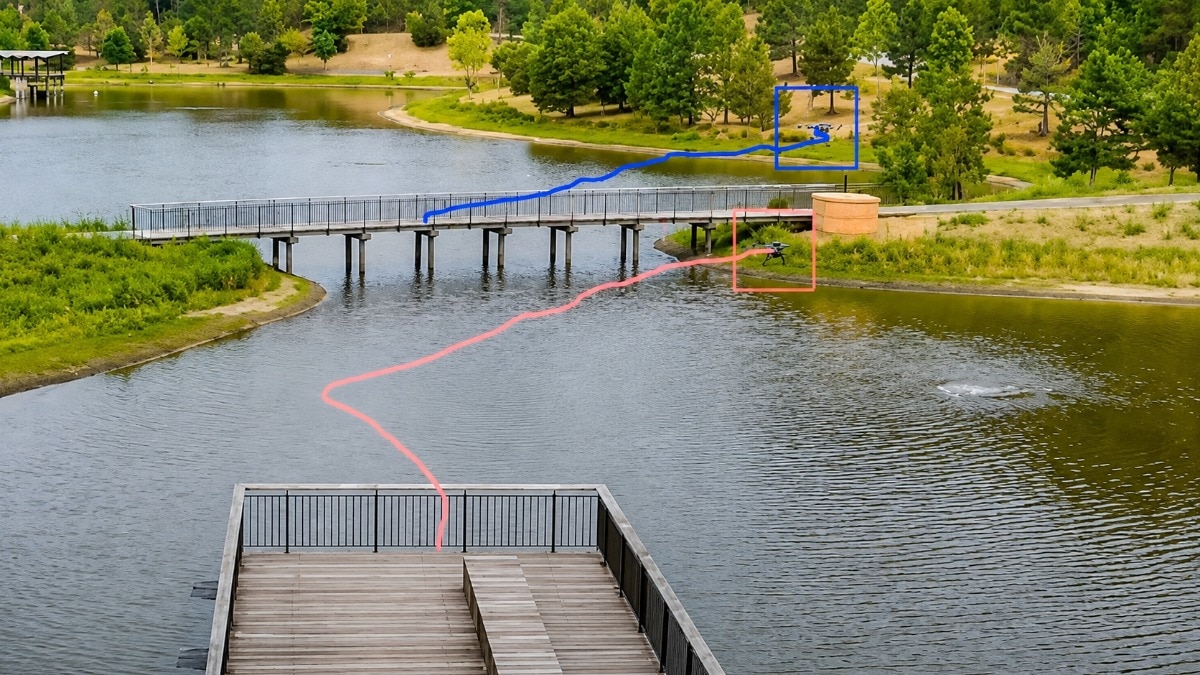
Engineers have developed SonicFly, a drone that tracks another aircraft by listening to rotor noise. The system could help drones coordinate when GPS, cameras or communications are unavailable.At the heart of SonicFly is a compact four-microphone array mounted on the pursuing drone. (Photo: Duke University)In a breakthrough that could transform the future of autonomous flight, engineers have developed a drone capable of tracking and following another drone simply by listening to the sound of its rotors.The system, called SonicFly, allows one unmanned aerial vehicle (UAV) to estimate the position of another using only the natural sound generated during flight.Remarkably, it does so without GPS sharing, radio communication, active acoustic signals, cameras, or any external tracking infrastructure.What if a drone could follow another drone simply by listening to the sound of flight?After more than 2 years of work, I'm excited to share SonicFly, our new work on embodied passive aeroacoustic perception. SonicFly enables one UAV to estimate and follow another using only the pic.twitter.com/SUQ8nyoxyv— Boyuan Chen (@Boyuan__Chen) August 16, 2026Researchers behind the project spent more than two years tackling what initially seemed like a simple idea but turned out to be a major robotics challenge. The team had to understand how drone rotors generate sound, design a lightweight microphone system, and develop artificial intelligence capable of extracting location information from noisy acoustic data. At the heart of SonicFly is a compact four-microphone array mounted on the pursuing drone.These microphones capture the unique aeroacoustic signature produced by the lead drone's spinning rotors. The sound data is then processed using drone-specific acoustic models and a neural network that estimates the target's direction and distance. One of the biggest hurdles was overcoming "ego-acoustic interference," the loud noise generated by the follower drone's own propellers. Despite this challenge, the system was able to identify and track another drone in real-world outdoor environments where wind, background noise and changing flight conditions constantly altered the acoustic landscape.During outdoor flight tests, SonicFly successfully pursued a target drone using sound alone, maintaining an average distance error of just 1.34 metres across a variety of trajectories and operating conditions.The research demonstrates that drone rotor noise contains far more information than previously thought. Scientists found that harmonic patterns, frequency separation and spatial acoustic cues can be used to determine the relative position of another aircraft with surprising accuracy. Aerial robots generate structured aeroacoustic fields during flight. (Photo: Duke University) The technology could have significant applications in swarm robotics, search-and-rescue missions, military operations and autonomous delivery networks, where drones may need to coordinate even when GPS signals are unavailable or communications are disrupted.By turning the natural sound of flight into a source of navigation data, SonicFly opens the door to a new form of robotic perception, one where machines don't just see their surroundings, but also listen to them.- EndsPublished By: Sibu Kumar TripathiPublished On: Aug 17, 2026 11:16 IST
Watch: New drone targets another just by listening to its rotor sound
Full Article
Original Source
Read the full article at Indiatoday →KhanList aggregates and links to publicly available news content. We do not host full articles from third-party sources. Always verify important information with original sources.