
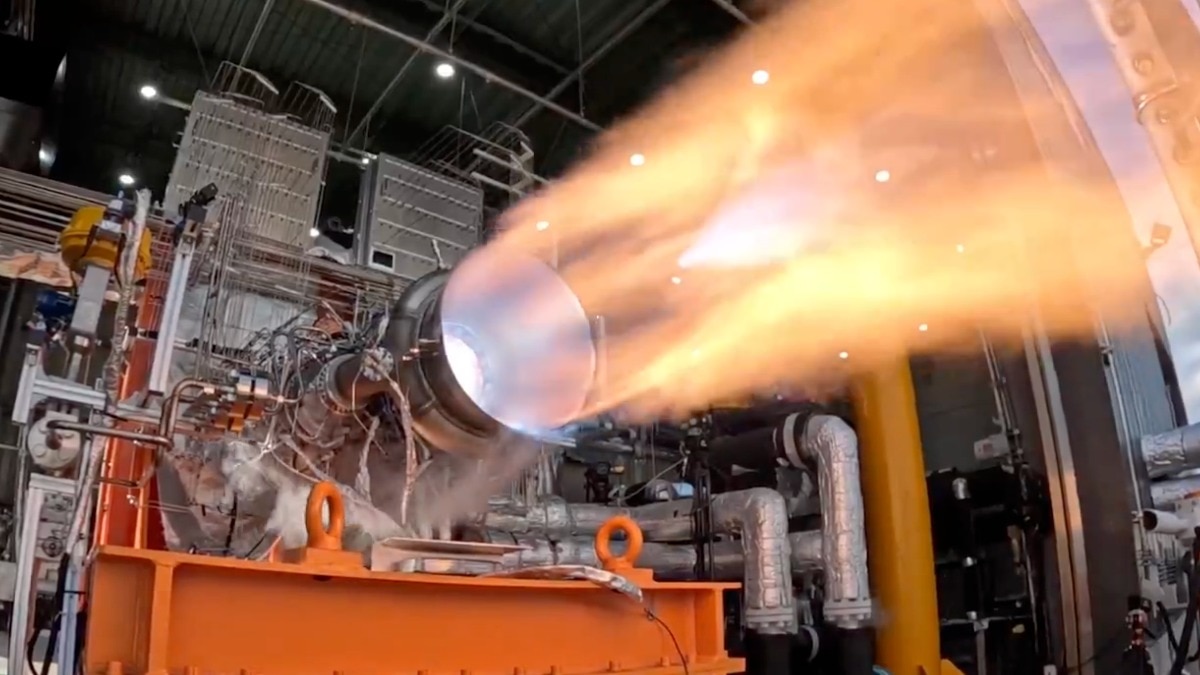
Interstellar Technologies has released a video of its methane-fuelled Cosmos engine completing a 60-second firing test. The test advances development of its Zero orbital vehicle for commercial satellite launches.The company said the test was part of its ongoing engine development programme. (Photo: Interstellar Technologies)New Delhi,Oct 22, 2026 16:39 ISTJapanese space startup Interstellar Technologies has shared a video of a 60-second firing test of its methane-fuelled rocket engine, offering a glimpse into the propulsion technology being developed for its Zero orbital launch vehicle.The clip captures a distinctive blue flame emerging from the engine nozzle, accompanied by clearly visible shock diamonds, diamond-shaped patterns that form in the exhaust plume when high-speed gases expand and compress as they interact with the surrounding atmosphere.The company said the test was part of its ongoing engine development programme as it works towards building a privately developed orbital rocket for satellite launches.This is a clip from one of our latest 60-second engine firing tests! The video captures the blue flame signature of our methane-fueled propulsion system, along with perfectly defined shock diamonds. Behind every successful test is the dedication of our engineering team https://t.co/31Y4Q4wSOt— Interstellar Technologies (@istellartech_en) October 22, 2026At the heart of Zero is the Cosmos engine, which uses liquid biomethane and liquid oxygen as propellants. Interstellar Technologies describes it as the first privately developed engine to use locally sourced liquid biomethane as rocket fuel. Biomethane can be produced from organic waste and other biological sources, offering a potential alternative to fossil-derived methane. However, its environmental benefits depend on how the fuel is produced, processed and transported.The Cosmos engine uses a gas-generator cycle, in which a portion of the propellant is burned to power the turbopumps that feed fuel and oxidiser into the main combustion chamber. It also employs regenerative cooling, which circulates propellant through channels around the engine to manage the intense heat generated during firing, and a pintle injector to mix the propellants.JAPAN'S PRIVATE ROCKET AMBITIONSInterstellar Technologies is developing Zero as a two-stage, expendable launch vehicle designed to carry satellites into low Earth orbit and other target orbits.The rocket is planned to measure 32 metres in length, weigh approximately 71 tonnes and carry payloads of up to 1,000 kilograms to low Earth orbit, according to the company's specifications. It is also designed to support dedicated launches and rideshare missions.The company previously made history as the first private Japanese company to reach space with its MOMO suborbital vehicle.Beyond launch services, Interstellar Technologies is pursuing a vertically integrated business model that combines rocket development with satellite communications.By developing satellites alongside launch vehicles, it aims to create synergies between access to space and communications services.The latest engine test highlights Japan's growing private-sector push to develop domestic launch capabilities and compete in the increasingly commercial global space transportation market.- Ends
Watch: Japanese startup fires methane-powered space rocket engine
Full Article
Original Source
Read the full article at Indiatoday →KhanList aggregates and links to publicly available news content. We do not host full articles from third-party sources. Always verify important information with original sources.