
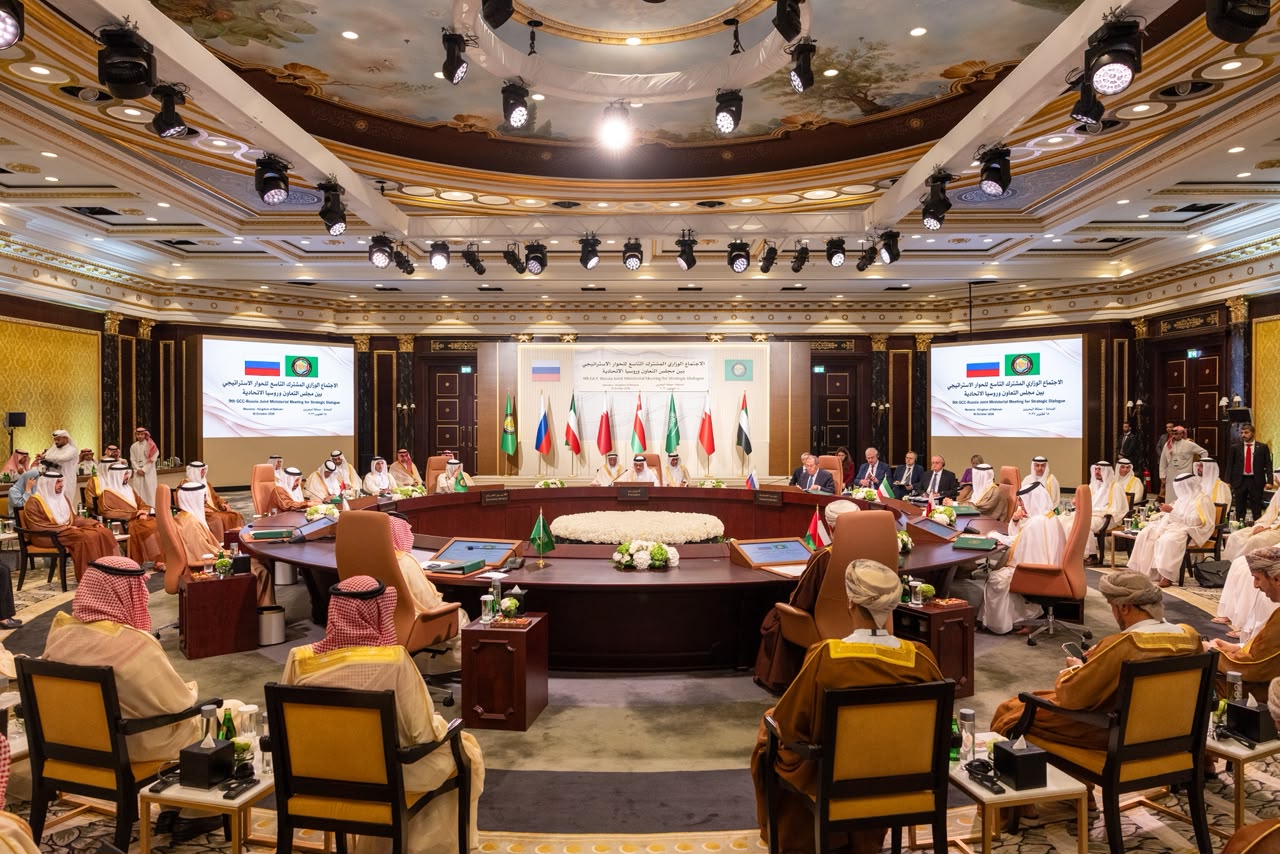
As Iranian attacks in the Persian Gulf return to wartime highs and Saudi Arabia faces deadly strikes on its infrastructure from the Iran-backed Houthis in Yemen, Gulf Cooperation Council (GCC) member states are asking for support. They shouldn’t expect sincere help from Russia. On October 18, during Russian Foreign Minister Sergey Lavrov’s visit to Bahrain, GCC officials urged Moscow to press Iran to halt its attacks on GCC members. The request came despite Russia’s deepening military cooperation with Tehran, its support for the Houthis, and its limited ability to influence Iranian decisions. For the Kremlin, however, diplomatic involvement offers an opportunity to expand its regional influence and accumulate leverage for future negotiations, even without delivering a settlement. Moscow’s Diplomatic Push in the Gulf Moscow’s efforts to secure a role as mediator began before Lavrov’s visit to Bahrain. On October 9, President Vladimir Putin relayed Iran’s position on a possible settlement to President Donald Trump, following talks with Iranian President Masoud Pezeshkian. At the Bahrain meeting, Lavrov promoted Moscow’s updated collective Gulf security framework, unveiled in June. One of the plan’s aims is to reduce reliance on the American security umbrella, something some Gulf countries are already exploring. The proposal also calls for Gulf states to prohibit third parties from using their territory to attack neighboring countries, a provision that could constrain U.S. military operations in the region. The following day, Lavrov traveled to Tehran, where he briefed Iranian officials on his discussions with GCC representatives and reiterated Russia’s willingness to help find a diplomatic settlement. Putin’s communication with Trump and Lavrov’s back-to-back meetings in Bahrain and Tehran demonstrate Moscow’s ability to maintain contact with Washington, Tehran, and the Gulf states. Russia has sought a greater role in Gulf security for decades, and the current crisis gives the Kremlin another opportunity to advance those ambitions. Moscow continues to cooperate militarily and economically with Tehran even as it offers to help mediate an end to the conflict, raising questions about its willingness to pressure its partner. Iran has transferred Shahed drone technology to Russia, which in turn helped Tehran upgrade its drones using technology developed during the war in Ukraine. Moscow reportedly provided intelligence, such as satellite imagery, to help Iran target American forces. Moscow and Tehran are also pursuing cooperation in energy, finance, transportation, and sanctions-busting. Russia’s partnership with Iran extends to the Houthis. The group has sought weapons and sanctioned materials — such as oil and stolen Ukrainian grain — from Moscow. A Houthi-affiliated company also trafficked hundreds of Yemeni men to Russia to fight in Ukraine. In 2024, The Wall Street Journal reported that Russia was supplying intelligence to the Houthis to help them attack vessels in the Red Sea. Lavrov’s remarks in Tehran further raised questions about Moscow’s willingness to pressure Iran. During his October 19 visit, he described Iran’s cause as just. Russia also abstained on a March UN Security Council resolution condemning Iranian attacks on Gulf states and vetoed a Bahrain-sponsored resolution in April aimed at protecting shipping through the Strait of Hormuz. Despite its deepening military and economic cooperation with Tehran, Moscow has not shown that it can sway Tehran’s decisions. In March, Putin offered to convey Gulf leaders’ concerns about Iranian attacks to Tehran and subsequently spoke with Pezeshkian, yet the strikes continued. Russia also benefits from higher oil prices and the diversion of Washington’s attention from Ukraine. The Kremlin has a track record of using diplomatic negotiations to advance its strategic interests, and involvement in Gulf mediation could provide opportunities to expand its regional influence and gain leverage in negotiations with Washington. Keep Moscow Out of Gulf Security Arrangements Washington should work closely with GCC partners to prevent Russia, a close partner of Tehran, from assuming any mediating role in the conflict or participating in future Gulf security arrangements. Instead, Washington should support increased GCC cooperation with partners that will meaningfully contribute to their security, like Ukraine, which has assisted Middle East countries with counter-drone defenses. Keti Korkiya is a research analyst with the Russia Program at the Foundation for Defense of Democracies (FDD). Bridget Toomey is a research analyst at FDD. For more analysis from Keti, Bridget, and FDD, please subscribe HERE. Follow Bridget on X @BridgetKToomey. Follow FDD on X @FDD. FDD is a Washington, DC-based, nonpartisan research institute focusing on national security and foreign policy.
Washington Should Resist Russia’s Gulf Mediation Bid
Full Article
Original Source
Read the full article at Fdd →KhanList aggregates and links to publicly available news content. We do not host full articles from third-party sources. Always verify important information with original sources.