
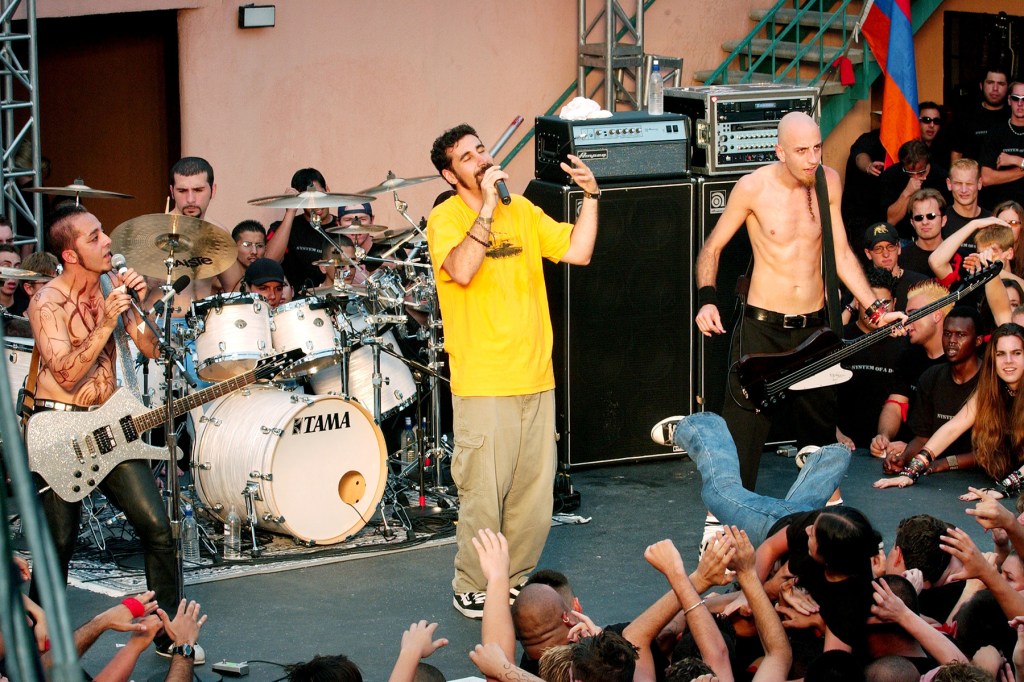
Our Vintage Almost-Pop Stardom theme month concludes with a look at the biggest alt-metal band of 2001, and how it got intertwined with the greatest American tragedy of the century. System of a Down at a video shoot at Hollywood Area Hotel on August 6 2001 in Hollywood, California, United States. L. Cohen/WireImage Trending on Billboard As America was reeling from the unthinkable horrors of the Sept. 11, 2001 attacks, the No. 1 album in the country was a chaotic, incredulous and absolutely incendiary alt-metal LP — full of songs that protested war, questioned authority and insisted listeners wake up to the disorder surrounding them. System of a Down didn’t write or record Toxicity with 9/11 or any of the events that followed in mind, but it became one of the timeliest soundtracks for the moment, as the Hollywood quartet of Armenian descent made the unlikely jump to stardom with its confrontational blend of crushing riffs, gorgeous harmonies, off-kilter humor and straight-faced politics. Explore See latest videos, charts and news This month on the Greatest Pop Stars podcast, we’ve returned with another mini-series spin-off of our usual Vintage Pop Stardom series, titled Vintage Almost-Pop Stardom. All October, we’ve been welcoming on some of our favorite guests (and one or two first-timers) to look at a quintet of really interesting artists during years in which they brushed against pop stardom, but perhaps never quite got all the way there (at least in this country). This week, we end the series with the brilliant Craig Jenkins of Vulture talking about System of a Down’s whirlwind 2001, where the band became controversial chart-toppers with music and rhetoric that was transfixing at the time, and has only gotten more resonant (and more popular) in the quarter-century sense. Along the way, we answer all the most pressing questions about 2001 System: What circumstances allowed this thrashy, arty, explicitly challenging form of metal to get in the mix for the top of the Billboard charts? Did the band’s combustibility — and the very different personalities of its four members — end up feeding its music? How much did the Clear Channel Memorandum actually affect the airplay of “Chop Suey”? How do we feel about Serj Tankian’s polarizing “Understanding Oil” essay and how he handled the blowback from it? Was it a big deal for Toxicity to be named SPIN’s No. 1 album of 2001? And perhaps most importantly: Will the band ever record new music again? Check it out above — along with a YouTube playlist of some of the most important moments from System of a Down’s 2001, all of which are discussed in the podcast. And subscribe to the Greatest Pop Stars podcast on Apple Music or Spotify (or wherever you get your podcasts) for weekly discussions every Thursday about all things related to pop stardom! Find Craig’s work at Vulture here, and follow him at Bluesky here. And finally, as we say in every one of these GPS podcast posts — if you have the time and money to spare, please consider donating to any of these causes in the fight for trans rights: Transgender Law Center Trans Lifeline Destination Tomorrow Gender-Affirming Care Fundraising on GoFundMe Get weekly rundowns straight to your inbox Sign Up
Was System of a Down the Defining Artist of the 9/11 Era in 2001? (Greatest Pop Stars Podcast)
Full Article
Original Source
Read the full article at Billboard →KhanList aggregates and links to publicly available news content. We do not host full articles from third-party sources. Always verify important information with original sources.