
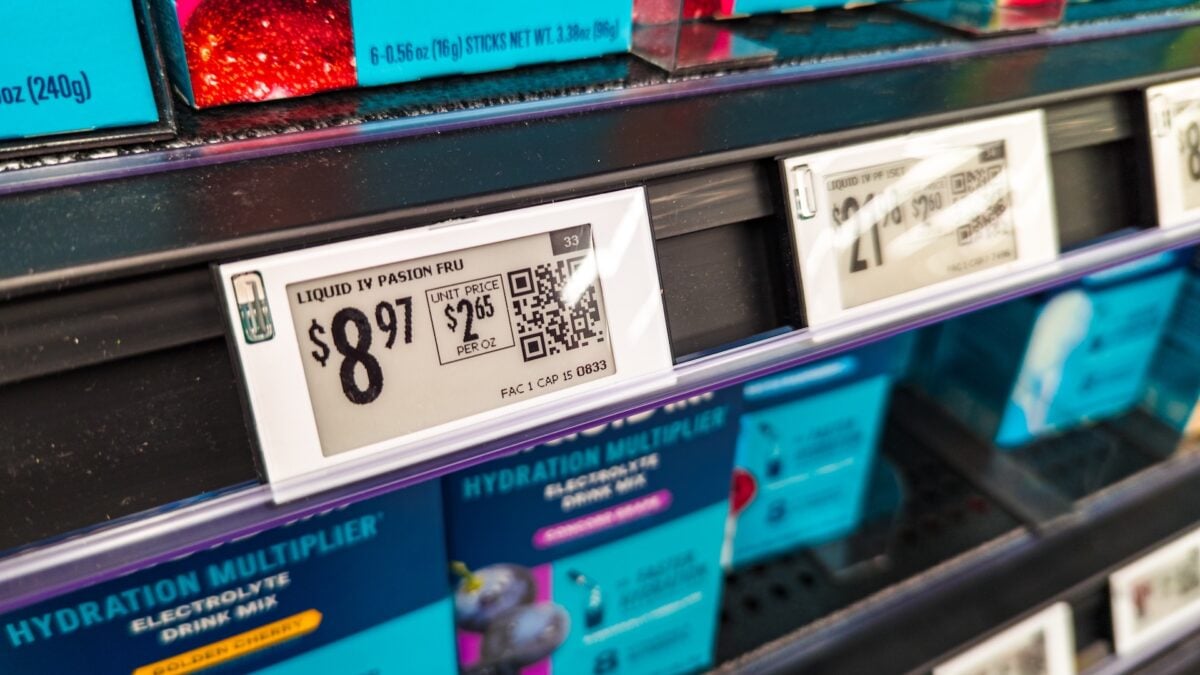
When is a patent just an idea and when is it a plan for the future? That question has been raised in recent weeks as the leading expert on surveillance pricing promoted her new book. Walmart is evidently upset about the national conversation, and this week the company denied that its patents for technologies to maximize sales would be used for surveillance pricing. Lindsay Owens, the author of Gouged: The End of a Fair Price—and What That Means for Your Wallet, has been giving interviews to everyone from Jon Stewart to Gizmodo recently. Owens has talked at length about the ways that companies like Walmart are acquiring patents that could potentially be used for surveillance pricing, the practice of adjusting prices for individual consumers based on their personal information. Owens is the preeminent expert on the topic, as CEO and President of the Groundwork Collaborative, and testified to Congress back in August about the ways that U.S. consumers are getting gouged. She was Sen. Josh Hawley’s expert witness, which was notable because Republicans aren’t exactly known as the most pro-consumer political party. But Owens has really upset Walmart by talking about things like their new electronic shelf labels and various related patents. Owens told Gizmodo in an interview last month about one of Walmart’s patents for changing prices through shelf labels that are being rolled out nationally. She talked about how “the example they give is tuna and mayonnaise. Once you have the tuna, they can change the price of mayonnaise.” But it’s not like you need to take Owens’s word for it. The patents that Walmart has been granted tell the story. She didn’t make them up. For example, here’s an excerpt from the patent Walmart submitted in 2018, which was granted by the U.S. Patent and Trademark Office in 2023 titled, “System and method for remote controlling of electronic shelf labels.” The labels and prices may be changed in a dynamic fashion. For example, for a customer using “scan and go” it may be known what items a customer has in their cart. The price for other items the customer purchases may be varied based on what items are already in the cart, e.g. if a customer has tuna fish, they may be offered a different price for mayonnaise. Prices may also be varied in a dynamic manner based on the supply of the product, low supply+high demand=change in price. Owens also talked about how companies could use similar tactics to raise the price of ice cream on hot days, something Coca-Cola experimented with in the 1990s to immense public outrage. She writes about numerous other examples in her book, which might be the book of the year. Patent US11687872B2, a “System and method for remote controlling of electronic shelf labels,” granted to Walmart in 2023. © U.S. Patent and Trademark Office But Walmart accused Owens of mischaracterizing their plans and said that it doesn’t plan to engage in surveillance pricing. Dan Bartlett, the executive vice president of corporate affairs at Walmart, wrote a long statement on X this week that asked Owens to “correct the record.” “You have inaccurately described Walmart’s rollout of digital shelf labels as part of an infrastructure for ‘real-time dynamic pricing’ and connected this rollout to the possibility of higher prices for ice cream on hot days and soup during snowstorms,” wrote Bartlett. “You framed these examples as what the technology could enable, but repeatedly using Walmart to illustrate them implies this is where our business is headed. It is not.” Bartlett, who was White House communications director under President George W. Bush during the start of the Iraq War, said Owens should “publicly correct these mischaracterizations and clearly share our practices and commitments with the audiences who heard them.” Bartlett insisted that having a patent doesn’t mean the company is going to use the underlying tech. “A patent describes an invention and potential capabilities,” wrote Bartlett. “It does not mean that Walmart has deployed a capability, used it with customers or decided to do so in the future. Those conclusions require evidence beyond a patent. The tuna-and-mayonnaise example illustrates the problem. Putting tuna in a customer’s cart does not cause Walmart to charge that customer more for mayonnaise. We do not do that, and we will not.” Dan Bartlett, counselor to the US President George W. Bush, speaks to reporters at the White House Briefing Room 01 June 2007 after announcing his resignation. © Photo by SAUL LOEB/AFP via Getty Images Bartlett also insisted that Owens is misleading people about the use of Sparky, the company’s AI helper. Owens released a new report on Oct. 5 titled “The Walmart Watchtower: Patents Speak Louder Than Pledges,” about the ways that Walmart has seen returns on its investments, quoting the CEO David Guggina directly, “when customers engage with Sparky, their average order value jumps 40%.” There are other Walmart patents that describe the use of machine learning and adjust prices, as we’ve written about before. But Walmart insists that none of these are going to be used to squeeze consumers for money. Walmart's customers deserve to know if, how, and when their personal data is being used – especially when it comes to pricing. It's time for Walmart to set the record straight.@owenslindsay1 on @cnn breaks down exactly what Walmart should do to regain their customers' trust. pic.twitter.com/BfF7P2xOG9 — Groundwork Collaborative (@Groundwork) October 7, 2026 But who are you going to believe? The expert on surveillance pricing or George W. Bush’s former communications director? It’s a very hard choice.
Walmart Denies Plans for Surveillance Pricing Despite Holding Patents for Surveillance Pricing
Full Article
Original Source
Read the full article at Gizmodo →KhanList aggregates and links to publicly available news content. We do not host full articles from third-party sources. Always verify important information with original sources.