
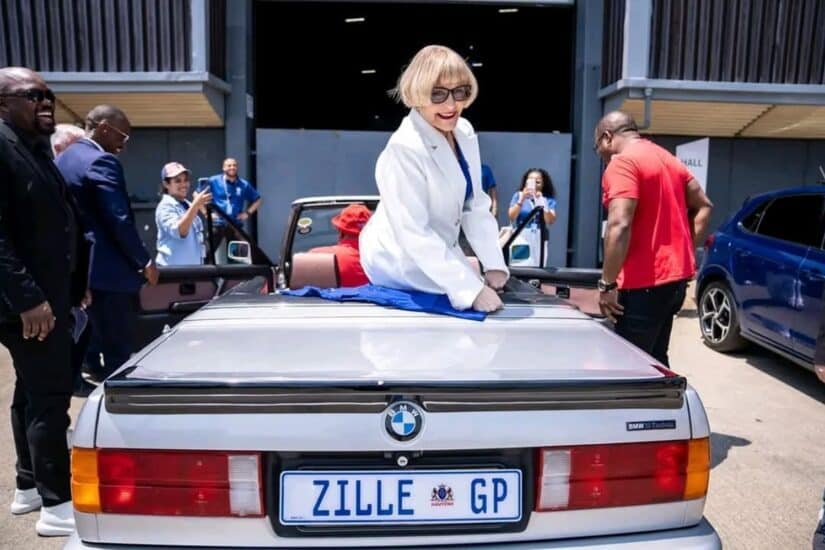
DA is not alone as ANC often leaned on the liberation struggle, reminding voters of its role in ending apartheid, but history cannot be ignored. Joburg DA mayoral candidate Helen Zille arriving at a campaign rally in a BMW 325i, the Gusheshe associated with township spinning culture, invites a question. Who decided this was the language through which black voters should be approached? The car is not the problem. Soweto is not a place where a BMW needs explaining and black people do not share one taste or idea of what makes someone relatable. The problem is the assumption that a cultural symbol can do the work of political understanding. LIVE interactive map, latest news, multimedia and more! View Map Zille’s campaign has used attention-grabbing interventions to highlight Johannesburg’s service delivery failures and supporters may argue that these stunts make problems visible. Visibility matters. But spectacle becomes a substitute for substance when the performance is remembered more clearly than the plan it is meant to promote. The DA is not alone. The ANC has often leaned on the moral weight of the liberation struggle, reminding voters of its role in ending apartheid. That history is real and should not be dismissed. But history cannot become an everlasting invoice presented to generations still waiting for decent schools, reliable water, safe streets, jobs and a fair chance at prosperity. These approaches look different, but share the same disrespect: the assumption that black voters can be won through a short cut. One reaches for symbols of township culture, the other reaches for the emotional authority of liberation. Neither gesture, on its own, tells a struggling household how it will escape poverty, how a young graduate will find work, or how a municipality will keep its lights on and taps running. Black voters are not an audience waiting to be impressed by a car, a slogan, a struggle song or a staged moment. They are citizens with varied tastes, ambitions and political convictions. They deserve to weigh competing plans, examine records and demand answers. To treat culture as a campaign costume is no more respectful than treating liberation history as a permanent guarantee of loyalty. The question is not whether politicians should connect with the communities they seek to represent. They should. The question is whether that connection survives after the cameras leave. A BMW can draw a crowd. A liberation legacy can stir memory. Neither should drive the voter’s decision alone. Black South Africans are still confronting poverty in its many forms. They need more than political choreography.
Voters want solutions, not stunts and township culture symbols
Full Article
Original Source
Read the full article at Citizen →KhanList aggregates and links to publicly available news content. We do not host full articles from third-party sources. Always verify important information with original sources.