
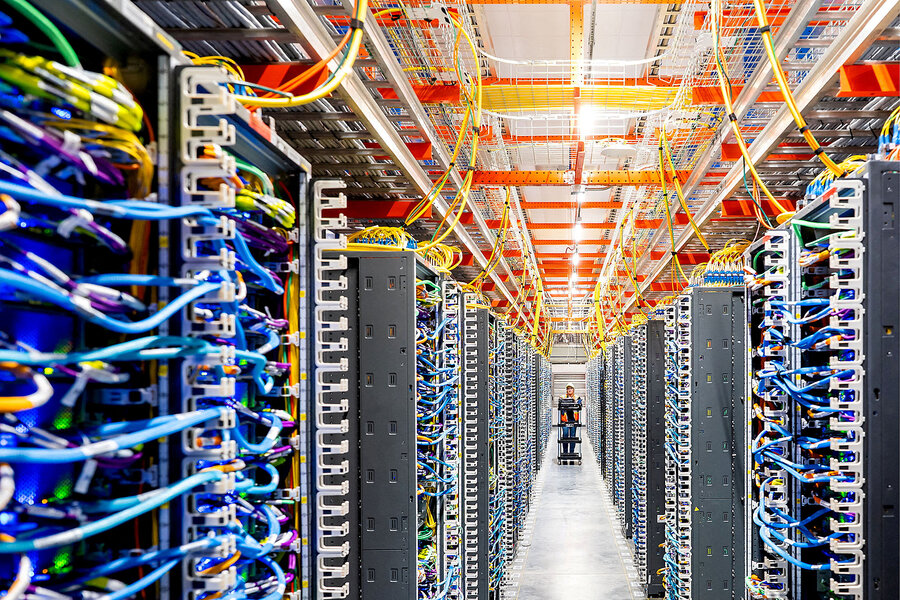
Republicans weren’t the only cohort to suffer monumental defeats on Election Day. Data centers, which have become an unusually unifying issue within American politics in 2026, lost big.In 41 referendums, initiatives, and referrals on ballots in localities across 10 states, data center development was constrained or banned in all but one instance. (A North Dakota town with a population of less than 900 declined to require additional review of data center projects.)“These developers did not expect this,” says Austin Baurichter, co-founder of Conserve Ohio, a bipartisan group that helped organize 10 of Ohio’s ballot initiatives. “They took it too far, and people are finally seeing how many levers of power have been skewed against them.” The actions include at least 18 bans for data center projects – either banning them outright, banning certain projects, or banning projects of a certain size, as well as four moratoriums. Ten measures created new restrictions on data center developments through zoning or otherwise, and the rest allowed voters to voice their opposition with no hard restrictions attached. Nathan Howard/ReutersA sign against the construction of a data center stands in a field in Leavenworth County, Kansas, Nov. 3, 2026. Beyond these ballot measures, opposition to data centers defined and determined races up and down the ballot. In Ohio, Democrat Sherrod Brown won his race to rejoin the Senate on Tuesday after painting his opponent, who had the financial backing of Silicon Valley, as “the face of data centers in Ohio.” Annie Andrews flipped a GOP-held Senate seat in South Carolina after calling for a statewide moratorium and repeatedly accusing pro-data center PACs of funding her opponent’s campaign.In Texas, Republican Gov. Greg Abbott lost his bid for a fourth term despite backtracking on a promise to make his state the “epicenter of AI development.” And in Kansas, Democratic gubernatorial candidate Cindy Holscher claimed a narrow victory Wednesday after campaigning on a moratorium opposed by her opponent. Data center backlash also played a role in the Senate races in Michigan and Georgia, among other places.The near-unanimous success of this week’s ballot measures, many by double-digit margins, reflects broad bipartisan voter pushback from Los Angeles suburbs to the industrial Midwest. Citizen concerns range from data centers’ physical footprints to their impacts on the local environment and electricity prices. The opposition also reflects public worries about the artificial intelligence revolution that the centers have come to represent. The results could give elected officials guidance for future public policies.“The data center issue is a unique issue that has a grassroots momentum that we haven’t seen in a long, long time,” says Stephanie Justice, policy communications manager at Americans for Responsible Innovation, a nonprofit pushing for stronger AI regulations.“Now that the campaigns are over, we need people in office to make good on the promises they made on the campaign trail,” she says. “Now they know what will happen if they don’t.” Daniel Cole/ReutersAn aerial view of data centers at the Apple Sparks Campus in Sparks, Nevada, near Reno, Oct. 9, 2026. Notable takeaways from data center opposition on Tuesday include: Partly thanks to the work of Conserve Ohio, the Buckeye State had more data center measures (21) than any other state. Piqua, Ohio, recalled three city commissioners, and Urbana, Ohio, recalled its mayor on Tuesday over data center developments – the same day that both cities banned data centers. Also on Tuesday, the mayor of Yukon, Oklahoma, and a council member in Mason, Michigan, lost their seats in recall elections. In all, there were as many as 30 recall attempts related to data center development in 2026. In Republican-leaning Madison County, Illinois, several cities rejected initiatives by double-digit margins that would have advised officials to permit the construction of more data centers. In an NBC exit poll, 56% of respondents said AI and data centers were “crucial” or “major” factors in their vote for Congress. Critics of data centers link their opposition to the larger issue of affordability that defined the 2026 midterms. But Dan Diorio, executive vice president of state policy and government affairs for Data Center Coalition, an industry trade association, says in an emailed statement that data centers could play a role in addressing the affordability crisis in America through tax revenue and jobs.“Communities that signal that they are closed for business and investment may miss out on those opportunities, relinquishing substantial long-term economic investment, high-wage jobs, and critical tax revenue to neighboring areas or other states,” he says. Deepen your worldviewwith Monitor Highlights.Politics with respectGet political stories with respectful analysis.There‘s a world of new ideas in everyBooks newsletter.There‘s more to life, enrich yours withCulture & Learning weekly.Follow humanity‘s discoveries withScience & Nature stories in your inbox.Gain a spiritual perspectivefrom the stories in your inbox.Want to understand the deeper impact of critical events? Learn the Monitor‘s insight.Already a subscriber? Log in to hide ads. The list of anti-data-center successes on Tuesday doesn’t include all of the voters’ failed attempts to add similar measures to their own ballots. There were 16 other localities whose ballot measures failed to make the ballot in 2026, including in Box Elder County, Utah, which is set to be home to the world’s largest data center. Six ballot measures related to data centers that already went before voters this year in New Hampshire, Wisconsin, Michigan, and California all came back against the industry by whopping margins.“Data centers in space looking pretty appealing right now,” Elon Musk, who spent hundreds of millions of dollars backing conservative candidates and is pursuing low-orbit data centers through his company SpaceX, wrote on X early Wednesday morning. ALREADY A SUBSCRIBER? LoginReal news can be honest, hopeful, credible, constructive.The Christian Science Monitor was founded in 1908 to lift the standard of journalism and uplift humanity. We aim to “speak the truth in love.” Our goal is not to tell you what to think, but to give you the essential knowledge and understanding to come to your own intelligent conclusions. Join us in this mission by subscribing.
Voters sent a resounding message against data centers
Full Article
Original Source
Read the full article at Csmonitor →KhanList aggregates and links to publicly available news content. We do not host full articles from third-party sources. Always verify important information with original sources.