
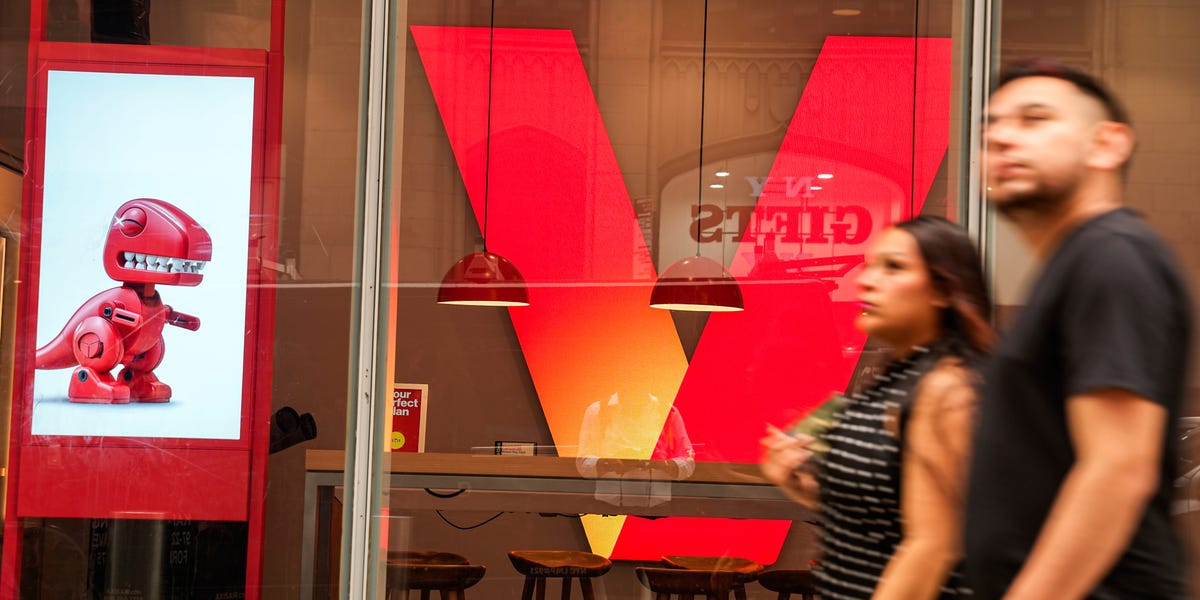
Verizon says SpaceX needs up to 8 years and a half trillion dollars to compete in wireless Verizon's CEO says SpaceX's Starlink faces some significant technical and financial hurdles to compete at scale in the US. Zamek/GVN/VIEW press/Corbis via Getty Images In business, as in war, the safest bet is often to avoid underestimating your competitors, even when the odds appear to be in your favor.Verizon CEO Dan Schulman says he's a student of that philosophy when it comes to Elon Musk's ambitions to develop SpaceX's Starlink into a significant US network player."Clearly, the tech and the wireless landscape is rapidly evolving, and we need to rapidly evolve along with that," he said during the company's third-quarter earnings call Monday. "I also operate under the assumption that everything SpaceX says they will do, they will do, and that they will execute flawlessly."Setting aside Musk's track record of delivering on his eyebrow-raising promises, Schulman said there are significant technical and financial hurdles that Starlink would have to clear to meaningfully compete with established networks like Verizon. But it is possible."If they build a terrestrial network, it will basically look and feel like every other network," he said. "I think we should take it quite seriously."News earlier this month that Starlink had acquired a batch of mobile-friendly low-band spectrum sent the share prices of the major US mobile carriers falling by approximately 10%. Verizon is the only one of the three to partially recover from the drop."Their service just can't compete with a terrestrial network in suburban and urban areas, where like 98% of our revenues are," he said of the satellite-based system. "We're somewhere between 100 to 1000 times more efficient than they are."Building a competitive US network, especially for mobile, would require building as many as 80,000 large cell towers on Earth linked with some combination of satellites and fiber optics, Schulman said.Schulman estimates that project would cost up to a half trillion dollars over six to eight years, with a minimum of four to six years to actually build out the network. "Then they need to build retail customer service, back office systems, et cetera., and all of that gets them basically the same network and same capabilities and same cost structure as what we have today," Schulman said.The Verizon chief's remarks come less than a week after his AT&T counterpart, John Stankey, brushed off concerns that Starlink's mobile network could pose a threat to his business."I wouldn't over-rotate on what I would call one carrier of low band spectrum," he said. Read next Business Insider tells the innovative stories you want to know Business Insider tells the innovative stories you want to know Business Insider tells the innovative stories you want to know Business Insider tells the innovative stories you want to know Dominick Reuter is a senior retail reporter for Business Insider, primarily covering Walmart, Target, Costco, and other big box retailers. His stories tend to focus on issues and trends that affect employees and customers, such as affordability challenges and the growing race to provide ultra-fast delivery services on e-commerce orders.Prior to joining BI in 2019, Dominick worked for more than a decade as an independent photojournalist covering a wide range of stories for global wire services and newspapers, including Reuters, the Wall Street Journal, and Agence France-Presse.Dominick studied photojournalism at Boston University and later earned a Masters in business and economics journalism from Columbia University.If you're an employee or customer with a story to share, please contact me via email or text/call/Signal at 646-768-4750. Verizon Starlink SpaceX More
Verizon says SpaceX needs up to 8 years and a half trillion dollars to compete in wireless
Full Article
Original Source
Read the full article at Businessinsider →KhanList aggregates and links to publicly available news content. We do not host full articles from third-party sources. Always verify important information with original sources.