
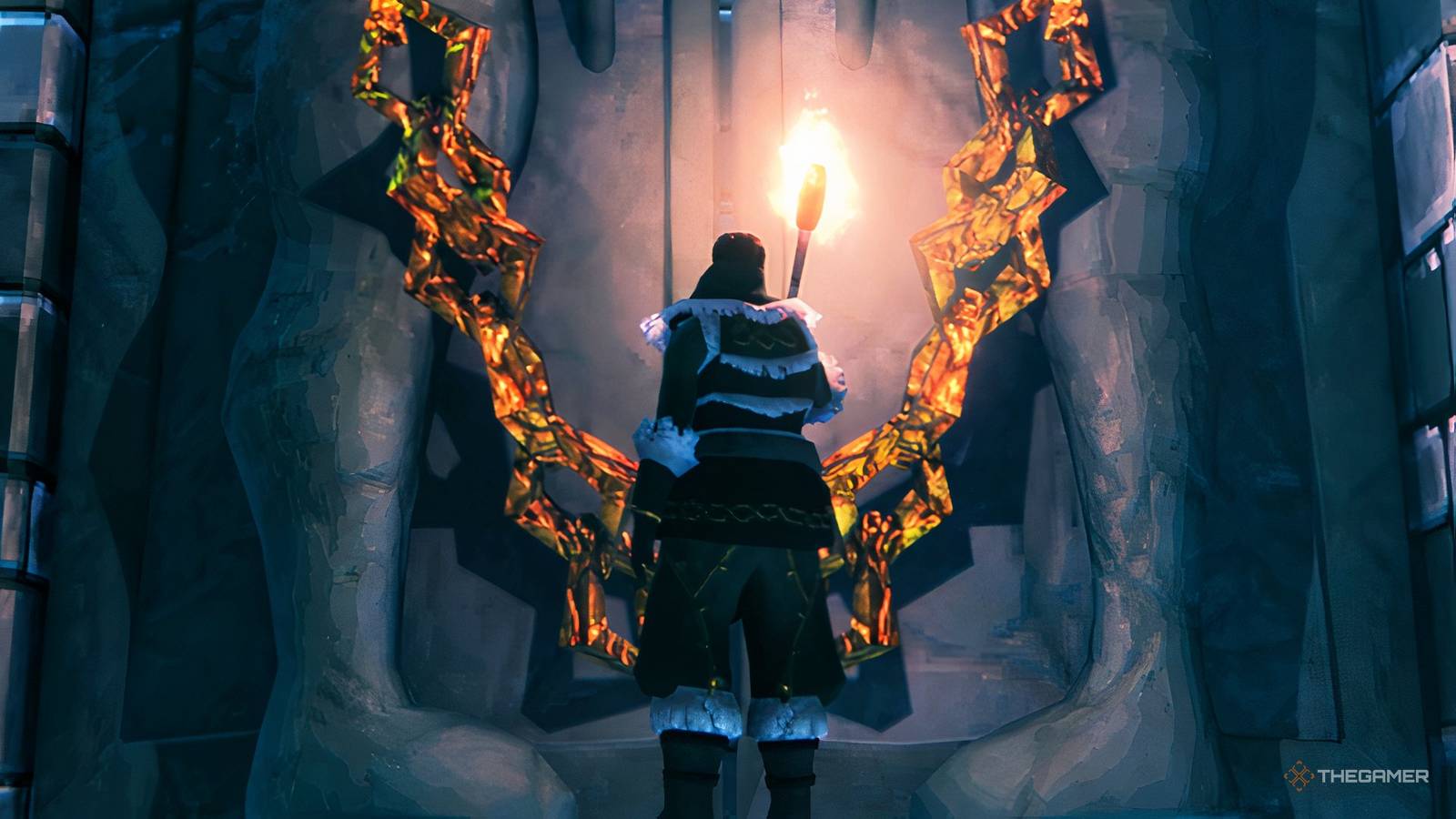
Published Oct 9, 2026, 9:53 AM EDT In our interview, Valheim art director Robin Eyre discusses the Deep North, the road to 1.0, and what's next. Valheim’s Final Update Almost Looked Completely Different I have a certain expectation when asking a game developer to define what ‘deep’ means to them. It feels like a simple command: head north, keep going, and watch the terrain deepen. Yet for Valheim studio Iron Gate, the word triggered an existential design puzzle that meant reconsidering their entire world’s geography. For Valheim 1.0's release, I spoke with Robin Eyre, art director at Iron Gate Studio, about the long-awaited Deep North, how the team shaped the game's final chapter, and what it means for Valheim to finally leave Early Access. For Eyre, figuring out the Deep North was one of the more complicated parts of that journey. The team had been thinking about the biome for years, and its final form was far from inevitable. The Deep North Had To Figure Itself Out “At first we did a lot of thinking about what ‘deep’ means in this case, and what a ‘deep north’ means in general,” Eyre said. The team considered everything from prehistoric jungles to towering mountains and enormous chasms. “Something we also considered was if the Deep North should be focused on a cave system, where you could enter a dungeon in one place, and then exit it somewhere else. We really did go through so many different approaches.” Eventually, the team arrived at the landscape players encounter in-game: a kind of greatest-hits collection of Valheim's existing environments. There is a combination of elements from the Mountains, Meadows, and Black Forest. Fitting for the final biome of a game that has spent years accumulating ideas. Valheim went into Early Access in 2021 with a destination in mind, but the road there had plenty of unexpected scenery. Eyre said Iron Gate already knew roughly what the finished game would require because its biomes had been laid out from the beginning. The surprises were what came in between. “There were things we didn’t know that we were going to add from the start,” Eyre said, pointing to updates ranging from Hearth & Home to one of Valheim's most improbable additions: the Pet Rock. The Pet Rock is maybe the purest expression of what happened to Valheim during Early Access. It began as the kind of idea that normally exists for approximately 45 seconds before everyone gets back to work. Instead, the team ran with it. The rock got an update, then a trailer, then a jingle, and finally a plushie. Somewhere along the way, the joke became canon. “It was such a spur of the moment idea that just happened,” Eyre said. “A ‘wouldn’t it be cool if…’ kind of thought that led into a whole update.” This sort of creative detour might sound like a luxury for a small studio, but Iron Gate has built Valheim around the opposite idea: make ambitious things by keeping the machinery behind them manageable. Eyre said the studio has always believed small teams can accomplish great things, provided they are realistic about scope. “We have always treated Valheim in a way that would let the game be managed by the size of the team we have, with all of us wearing many different hats and being involved in many aspects of the process,” he said. That idea can be seen in the game's distinctive art direction. Valheim looks purposefully rough around the edges, but its low-poly, low-fidelity aesthetic isn't an excuse for a small team to do less. It is designed to let one person, if necessary, create all the graphical assets required for the game. The result is an art style that can look deceptively simple while supporting a world that has become enormous in both scale and cultural footprint. 1.0 Is The End, Except It's Not Now, after years of Early Access, Valheim finally approached the conclusion it was always built for. Eyre is careful about what that conclusion actually means. The Deep North is the final major challenge, but Iron Gate isn't interested in treating the ending as a door that abruptly slams shut. "Valheim is done, but we're not finished," he said. "There will be more things coming, but what they are and what shape they take, we're currently working on." Some of Eyre's proudest accomplishments reflect that same willingness to follow an idea somewhere unexpected. He singles out Valheim's cinematics, something he "really fought to make" happen, as one of them. Film, he said, "has always been very close to my heart", and working on the cinematics gave him an unexpected opportunity to direct and storyboard alongside Brikk. “It has been a sidetrack of game design that I wasn’t expecting to fall completely in love with, and it’s so wonderful to see that the community appreciates the result as well,” he said. That idea of following your instincts feels particularly appropriate after five years of Valheim development. When I ask Eyre what advice he would give the team that first entered Early Access, he doesn't offer a complicated postmortem or a list of things he wishes they had done differently. "Just have faith in yourselves and do what you believe in," he said. "It has worked so far, and it will continue to do so." Valheim Systems Released February 2, 2021 ESRB r Developer(s) Iron Gate AB Publisher(s) Coffee Stain Studios Engine Unity Multiplayer Online Multiplayer Cross-Platform Play PC, Xbox One & Xbox Series X|S Genre(s) Sandbox, Survival Platform(s) Linux, PC, Xbox One, Xbox Series X, Xbox Series S OpenCritic Rating Mighty How Long To Beat 75 Hours X|S Optimized Yes File Size Xbox Series 1 GB (November 2023) Platforms That Support Crossplay PC, Xbox One & Xbox Series X|S Steam User Rating 95%
Valheim's Final Chapter Wasn't Always Going To Look Like This
Full Article
Original Source
Read the full article at Thegamer →KhanList aggregates and links to publicly available news content. We do not host full articles from third-party sources. Always verify important information with original sources.