
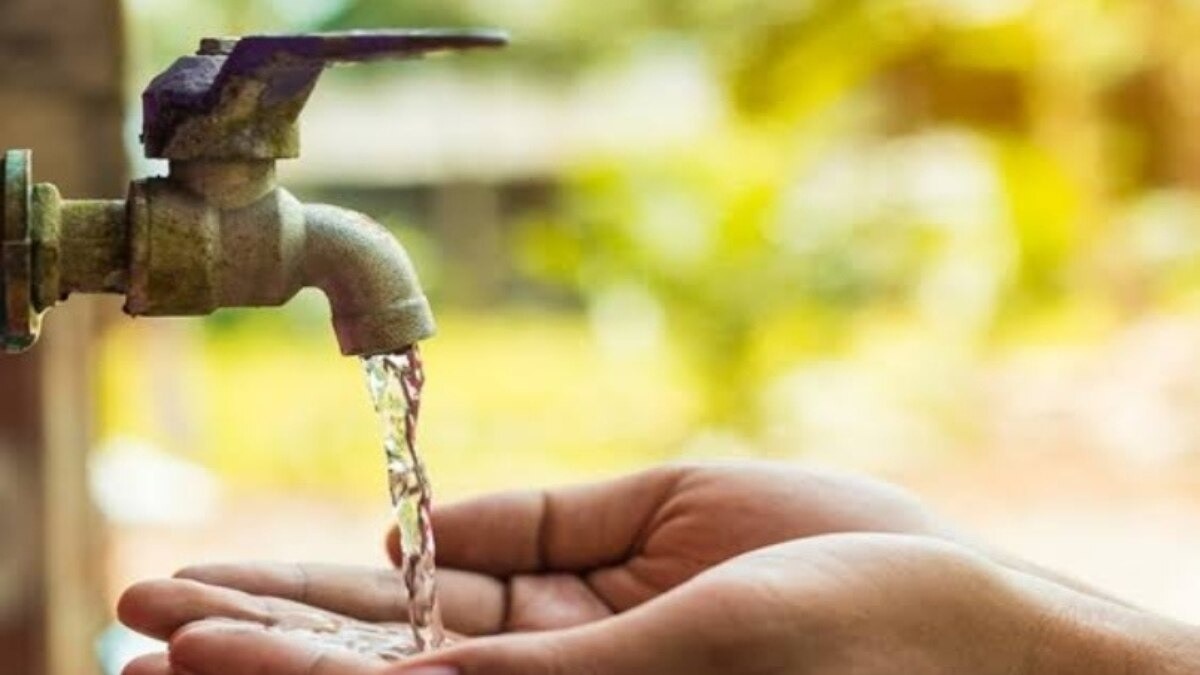
More than two crore rural households in Uttar Pradesh have already gained tap water connections, backed by an enormous pipeline network. But the long-term test will be whether those taps continue to deliver safe and reliable water.Har Ghar Jal: How Uttar Pradesh is taking tap water to millions of rural homes (File Photo)Uttar Pradesh has emerged as the biggest contributor to India's rural tap water expansion under the Jal Jeevan Mission, connecting more than 2.36 crore households and laying over five lakh km of pipelines as it works towards bringing piped drinking water to every rural home.The scale of the task is significant. Uttar Pradesh has India's largest rural household base, making its progress crucial to the success of the Jal Jeevan Mission, launched on August 15, 2019, with the aim of providing functional tap-water connections to every rural household.When the mission began, only 3.23 crore of India's roughly 19.36 crore rural households had tap-water connections, accounting for about 16.7%. By March 2025, the figure had climbed to around 15.54 crore households, or 80.29%.MILLIONS OF HOMES CONNECTEDUttar Pradesh has been a major driver of that expansion. By March 2025, more than 2.36 crore rural households in the state had received tap-water connections under the mission. To support the network, around 5.07 lakh km of pipelines have been laid across villages. The state is targeting tap water connections for all 2.62 crore rural households by 2028.The progress has also reached the village level. By early 2026, more than 26,000 villages in Uttar Pradesh had been certified under the Har Ghar Jal programme, indicating that every household in those villages had been reported as having tap-water access.WHY UTTAR PRADESH MATTERS Uttar Pradesh's role in the national water push is closely linked to its vast rural population. Connecting even a fraction of households translates into hundreds of thousands of new connections, while extending supply across thousands of villages requires extensive pipelines, treatment facilities, pumping infrastructure and dependable water sources.The Jal Jeevan Mission, however, goes beyond installing household taps. Its objectives include ensuring safe and adequate drinking water, along with source sustainability, water conservation, rainwater harvesting and grey-water management.FROM CONNECTIONS TO RELIABLE SUPPLYThe next challenge is ensuring that a tap connection translates into regular water supply. A functional system requires a reliable source, treatment and pumping capacity, energy support and continuous maintenance.Uttar Pradesh has also adopted the Jal Saarthi mobile app for live, village-level monitoring of water-supply projects. The emphasis is increasingly shifting from creating infrastructure to ensuring that the infrastructure remains functional.JJM 2.0 EXTENDS THE DEADLINEIn March 2026, the Union Cabinet extended the Jal Jeevan Mission until December 2028 and restructured it as JJM 2.0. The total outlay was raised to Rs 8.69 lakh crore, including central assistance of Rs 3.59 lakh crore.The revised programme places greater emphasis on structural reforms and reliable service delivery, while a proposed digital framework aims to map and track village water-supply systems from source to household.For Uttar Pradesh, the extension offers more time to connect the households that remain outside the network.More than two crore rural households in Uttar Pradesh have already gained tap-water connections, backed by an enormous pipeline network. But the long-term test will be whether those taps continue to deliver safe and reliable water.For a state of Uttar Pradesh's scale, achieving universal coverage is not just a construction exercise. It also means maintaining water sources, networks and infrastructure after the pipelines are laid.- EndsPublished By: Priyanka KumariPublished On: Sep 7, 2026 21:00 IST
Uttar Pradesh leads Jal Jeevan Mission with 2.36 crore rural tap connections
Full Article
Original Source
Read the full article at Indiatoday →KhanList aggregates and links to publicly available news content. We do not host full articles from third-party sources. Always verify important information with original sources.