
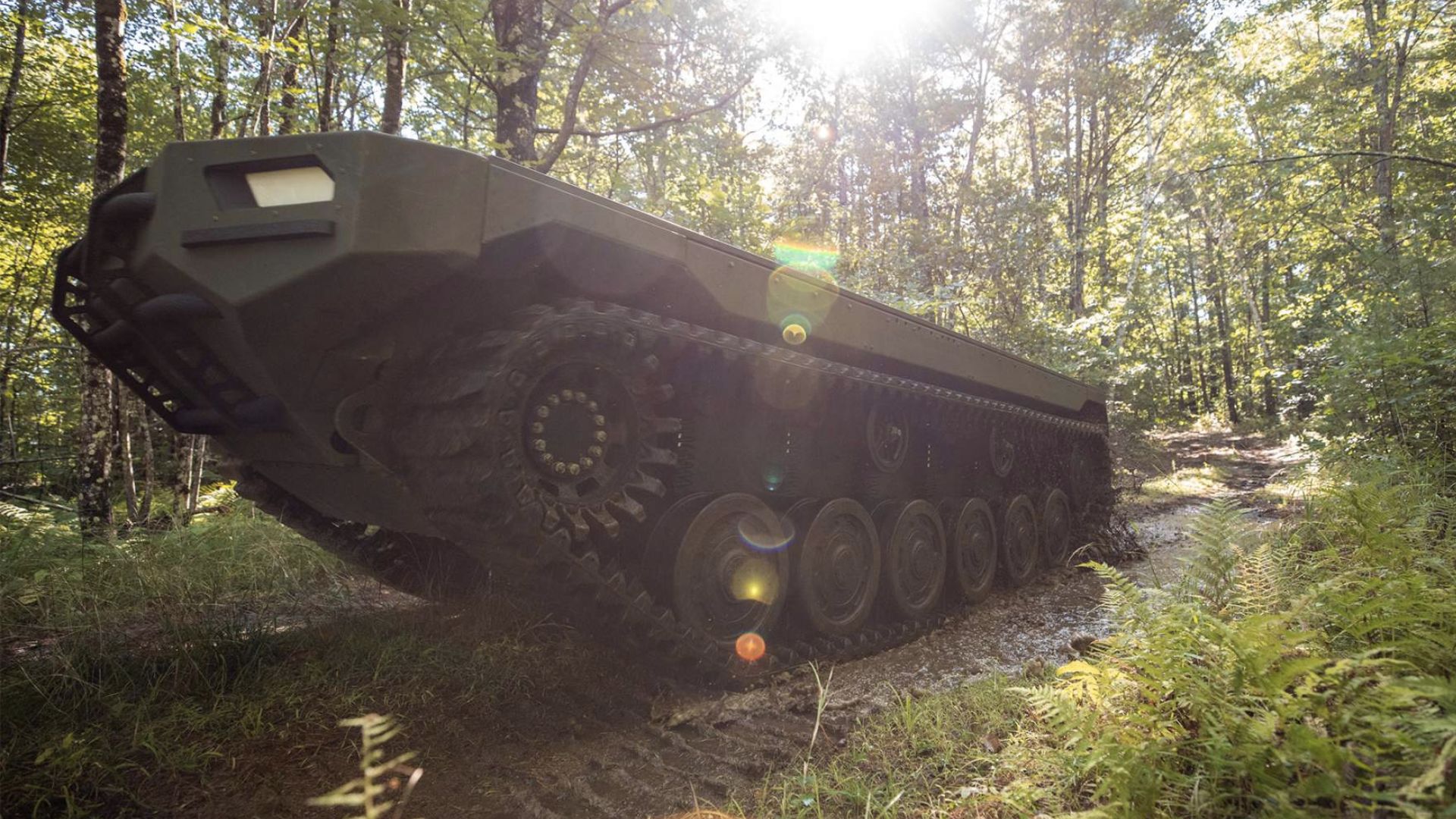
The vehicles will enable Marines to integrate various mission payloads and sensors.Textron SystemsKey TakeawaysThe M3 robotic vehicles will serve as experimentation and integration testbeds.The M3 vehicle incorporates modular open systems architecture (MOSA) to provide the warfighter with increased agility.The platforms will initially function as experimentation and integration testbeds, allowing Marines to evaluate different payloads, sensors and mission configurations.The U.S. Marine Corps is set to get increased uncrewed warfare capabilities. The U.S. Marine Corps Warfighting Laboratory (MCWL) in Quantico is now acquiring two RIPSAW M3 robotic ground vehicles from Textron Systems and its subsidiary, Howe & Howe. Rather than serving as conventional operational vehicles, the platforms will initially function as experimentation and integration testbeds, allowing Marines to evaluate different payloads, sensors and mission configurations. Robotic ground vehicles set the bar for speed, agility “Textron Systems’ M3 robotic ground vehicles set the bar for speed, agility and multi-mission flexibility,” said Vice President of Programs, Sara Willett. “Pairing the M3’s proven capability and reliability with the MCWL mission to drive future operational concepts and capabilities will enable the Marine Corps to advance uncrewed force design and battlefield utility.”Textron revealed that the M3 vehicles will serve as experimentation and integration testbeds, providing Marines the opportunity to integrate various payloads and sensors, demonstrate mission sets and inform additional robotics requirements. M3 robotic vehicle incorporates modular open systems architecture Leveraging Textron Systems’ more than sixty years of experience in multidomain uncrewed technologies for air, land and sea, the M3 vehicle incorporates modular open systems architecture (MOSA) to provide the warfighter with increased agility and functionality in even the most complex battlefield environments. The vehicle offers more than 5,000 pounds of payload capacity, a flat deck to support a variety of payloads, and operational speeds in excess of 30 miles per hour to support missions in complex terrains across the globe, according to a press release.“For over two decades, Howe and Howe, Inc. has been developing highly capable off-road multi-domain platforms where consideration for extreme use and durability have been paramount design characteristics,” said Senior Vice President, Michael Howe. “The M3 will be a great fit for the Marine Corps and its demanding environmental requirements. Howe and Howe Inc. is not only proud to deliver the RIPSAW M3 vehicle but also pleased to work closely with the Marine Corps to develop technologies that fit their specific needs well into the future.”With more than three million operational hours of uncrewed experience across air, land and sea domains, Textron Systems claims that it continues to expand its autonomous technology to support current and future mission sets. The acquisition reflects the growing importance of robotic and autonomous technologies in modern warfare. Militaries worldwide are increasingly exploring uncrewed systems to improve operational flexibility, reduce risks to personnel and expand their ability to conduct missions in challenging environments.Through the RIPSAW M3 programme, the Marine Corps will have an opportunity to experiment with different robotic capabilities and assess how uncrewed ground vehicles can support its evolving operational requirements.The vehicles will enable Marines to integrate various mission payloads and sensors, demonstrate potential mission applications and identify additional requirements for future robotic systems. The findings from these activities are expected to help inform the Marine Corps’ broader approach to uncrewed force design and battlefield integration.By using the RIPSAW M3 as a test platform, the Marine Corps can evaluate how different payloads and sensor systems perform in various mission scenarios. This will help identify practical applications for robotic ground vehicles and provide insights into the technologies required for their future integration.Get the latest in engineering, tech, space & science - delivered daily to your inbox.Prabhat, an alumnus of the Indian Institute of Mass Communication, is a tech and defense journalist. While he enjoys writing on modern weapons and emerging tech, he has also reported on global politics and business. He has been previously associated with well-known media houses, including the International Business Times (Singapore Edition) and ANI.
US’ uncrewed warfare capabilities to get boost with robotic vehicle that offers 5,000-lb payload capacity
Full Article
Original Source
Read the full article at Interestingengineering →KhanList aggregates and links to publicly available news content. We do not host full articles from third-party sources. Always verify important information with original sources.