
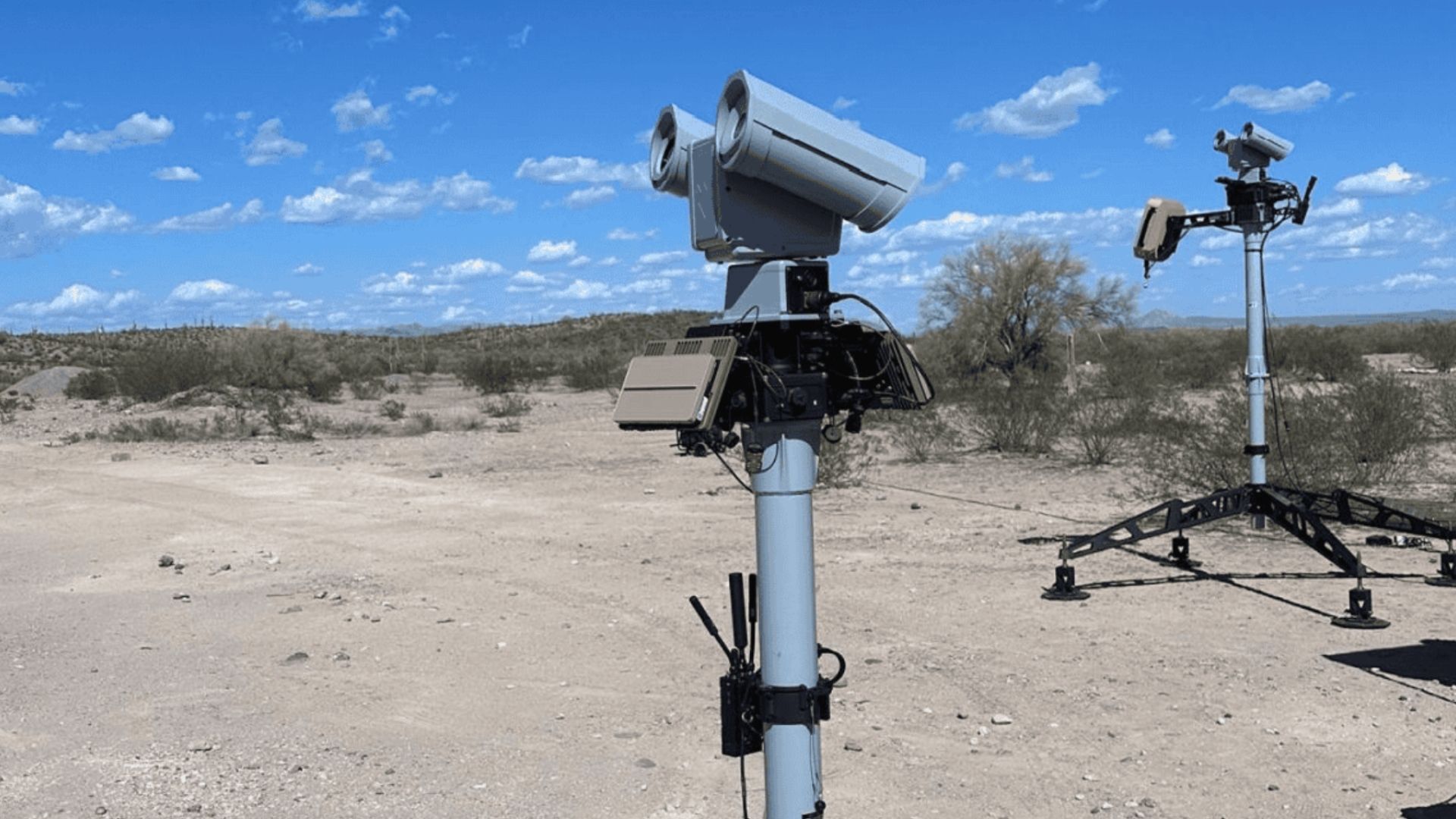
Digital Force Technologies (DFT) has secured a US contract to supply counter-drone systems that combine sensor data, autonomous threat assessment and engagement capabilities in a single software-driven architecture. The San Diego-based company announced the $500 million Indefinite Delivery, Indefinite Quantity (IDIQ) award from Joint Interagency Task Force 401 on September 29. It supports the task force’s Domestic Shield program, which aims to accelerate layered drone defenses for military installations, critical assets and personnel. DFT will provide its counter-unmanned aerial systems and counter-small unmanned aerial systems capabilities for force protection, base defense and counter-drone operations. The contract covers requirements within the continental United States and overseas. Sensor fusion at the tactical edge At the center of DFT’s systems is SeraphimOS, an edge-based software architecture designed to combine information from multiple sensors. According to the company, it autonomously assesses and classifies threats while delivering actionable information to operators in real time. The architecture brings sensing, decision-making and action together at the tactical edge. Its intended role is to help operators respond to drone threats while accommodating changes in equipment and mission requirements. “This award represents a significant milestone for DFT and reinforces the importance of rapidly delivering adaptable, mission-ready technology to the warfighter,” said Justin MacLaurin, President and CEO of Digital Force Technologies. “The UAS threat is evolving at an extraordinary pace, and defending our forces and critical infrastructure requires systems that can evolve just as quickly.” Open architecture connects sensors and effectors SeraphimOS uses an open architecture that supports integration with sensors, effectors, platforms and third-party systems. DFT said this allows it to configure capabilities for specific missions without requiring a closed technology stack supplied by a single vendor. That flexibility is central to the company’s approach as drone threats change. Operators can integrate new sensing and engagement capabilities as their requirements evolve. “Our SeraphimOS™-powered mission systems bring sensing, decision and action together at the tactical edge, giving operators the flexibility to integrate new sensors, effectors and capabilities as the mission changes,” MacLaurin said. For counter-drone missions, the platform supports detection, tracking and identification through engagement using kinetic and non-kinetic effects. DFT also said SeraphimOS enables advanced orchestration of uncrewed systems. This includes coordinated sensing across multiple domains and autonomous operations in contested, disconnected, and degraded environments. Domestic Shield targets layered protection The award supports Domestic Shield’s push to deploy layered counter-drone capabilities against rapidly evolving unmanned aerial threats. The initiative focuses on protecting military installations, critical assets and personnel. “Safeguarding our critical assets against increasingly agile drone threats demands flexible, highly mobile protection that can deploy rapidly where it is needed most,” said U.S. Army Brig. Gen. Matt Ross, director of Joint Interagency Task Force 401. “By continuing to provide capabilities on the marketplace through a streamlined framework, JIATF-401 is able to cut through red tape and rapidly deliver state-of-the-art counter-UAS solutions into the hands of warfighters,” he added.The announcement describes the systems’ intended capabilities but does not provide detection ranges, engagement distances, or performance results. It also does not specify deployment quantities or individual delivery orders under the IDIQ contract.Get the latest in engineering, tech, space & science - delivered daily to your inbox.Atharva is a full-time content writer with a post-graduate degree in media & amp; entertainment and a graduate degree in electronics & telecommunications. He has written in the sports and technology domains respectively. In his leisure time, Atharva loves learning about digital marketing and watching soccer matches. His main goal behind joining Interesting Engineering is to learn more about how the recent technological advancements are helping human beings on both societal and individual levels in their daily lives.
US Task Force 401 taps drone defenses that autonomously classify threats
Full Article
Original Source
Read the full article at Interestingengineering →KhanList aggregates and links to publicly available news content. We do not host full articles from third-party sources. Always verify important information with original sources.