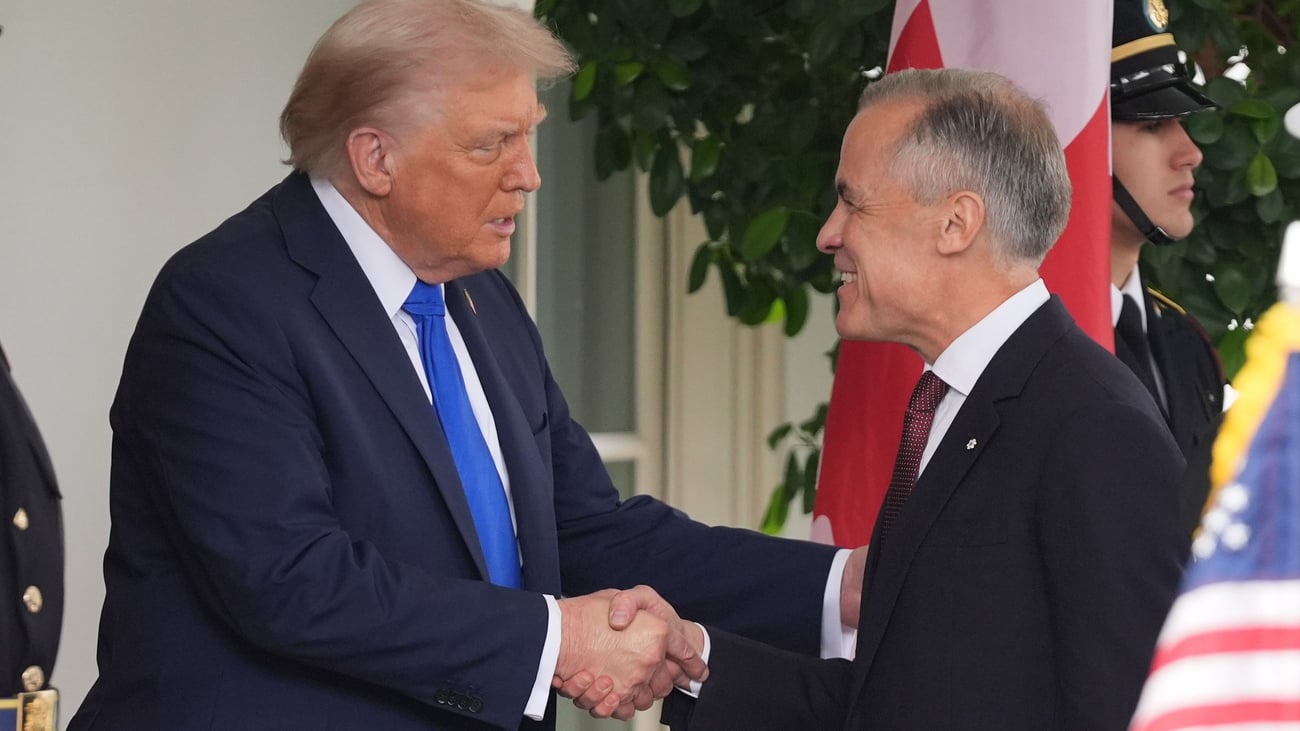
The Trump administration's tariffs on Canadian goods were set to launch at midnight, but the neighbors may have reached an 11th-hour deal.(CN) — The Trump administration announced Tuesday it will hold off on instituting a 50% tariff policy on many Canadian goods, which had been set to go into effect at midnight. The neighboring nations appeared poised to reach an 11th-hour deal after weeks of negotiations, when President Donald Trump announced a three-day pause on the implementation of the tariffs.Trump announced this reprieve on Truth Social in a post in which he included an AI-generated image of himself destroying a grave with President Joe Biden’s name on it with the Keystone pipeline.“I have paused the 50% Tariffs against Canada, that were scheduled to kick in tomorrow morning for a three-day period, based on the fact that Canada and the U.S.A., subject to the finalization of documents, have a DEAL! The great Keystone XL Pipeline, long ago killed by Sleepy Joe Biden, may be awoken from the grave! Thank you for your attention to this matter," Trump wrote in the post.The Canadian Government has yet to comment on the matter.On Aug. 19, a variety of goods, including whisky, honey, cement, milk, and hockey sticks, with a value of almost $30 billion Canadian dollars, are set to be affected by new duty measures. Electronics, plastics and machinery and industrial equipment industries will also be among the most affected businesses if no deal is signed in three days. The tariffs would affect products that were previously protected from duty fees by the U.S.-Mexico-Canada Agreement.According to the Oval Office, the tariffs announced in July were a response to Canada’s own economic policies, particularly the provincial removal of American alcohol from Canadian liquor stores, the duty for imported American vehicles in Canada and quotas in the dairy industry.Alongside China, Canada has been one of a few nations to fight back against the Trump administration’s tariffs with its own retaliatory policies.Earlier this year, the U.S. Supreme Court ruled the president doesn’t have emergency powers to issue unilateral international tariffs.Trump’s new wave of tariffs against Canada relied on a 1930s law that allows such measures to be enforced against countries the president believes are discriminating against American products.The U.S. and Canada have been negotiating for weeks regarding the tariffs. At the forefront of the negotiations are Federal Minister for Canada-U.S. Trade Dominic LeBlanc and U.S. Trade Representative Jamieson Greer, who have been talking all week in Washington in a last-ditch effort to reach a deal, after many failed attempts to do so.Trump and Canadian Prime Minister Mark Carney shared a phone call Tuesday afternoon, but details of their conversion were not immediately shared.The U.S. Chamber of Commerce released a statement Tuesday warning of the impact of the tariffs on both countries.“The introduction of higher tariffs would damage both economies, drive up costs for U.S. families, further disrupt critical supply chains, and risk the 13 million American jobs that depend on trade under the U.S.-Mexico-Canada Trade Agreement,” said Neil Herrington, senior vice president for the Americas Department of the U.S. Chamber of Commerce.During the negotiations, Carney offered to split half of the toll revenue from the Gordie Howe bridge, which connects Michigan and Ontario, and he was widely criticized in Canada for doing so. His government also said last week it was open to the return of American wines and spirits on the shelves.A survey led by the Canadian Federation of Independent Business found that two in five Canadian businesses that export to the U.S. sell goods that would be affected by the tariffs, and 35% said they could lose up to half of their revenue.“When a company bases its business model on exporting to the United States, and there are 50% tariffs on its products, that company won’t necessarily be able to continue operating normally for very long,” Jasmin Guénette, vice president of National Affairs for the Canadian Federation of Independent Business said.For Canadian business owners, the trade instability of the past few years has made the future uncertain, even if Canada and the U.S. manage to find a compromise soon.“How do we know there won’t be other tariffs imposed by the Americans later?” Guénette asked. “The fact is it is very stressful and complicated for an entrepreneur.”Subscribe to our free newslettersOur weekly newsletter Closing Arguments offers the latest about ongoing trials, major litigation and rulings in courthouses around the U.S. and the world, while the monthly Under the Lights dishes the legal dirt from Hollywood, sports, Big Tech and the arts.Additional Reads
US tariffs on Canadian goods paused for three days
Full Article
Original Source
Read the full article at Courthousenews →KhanList aggregates and links to publicly available news content. We do not host full articles from third-party sources. Always verify important information with original sources.