
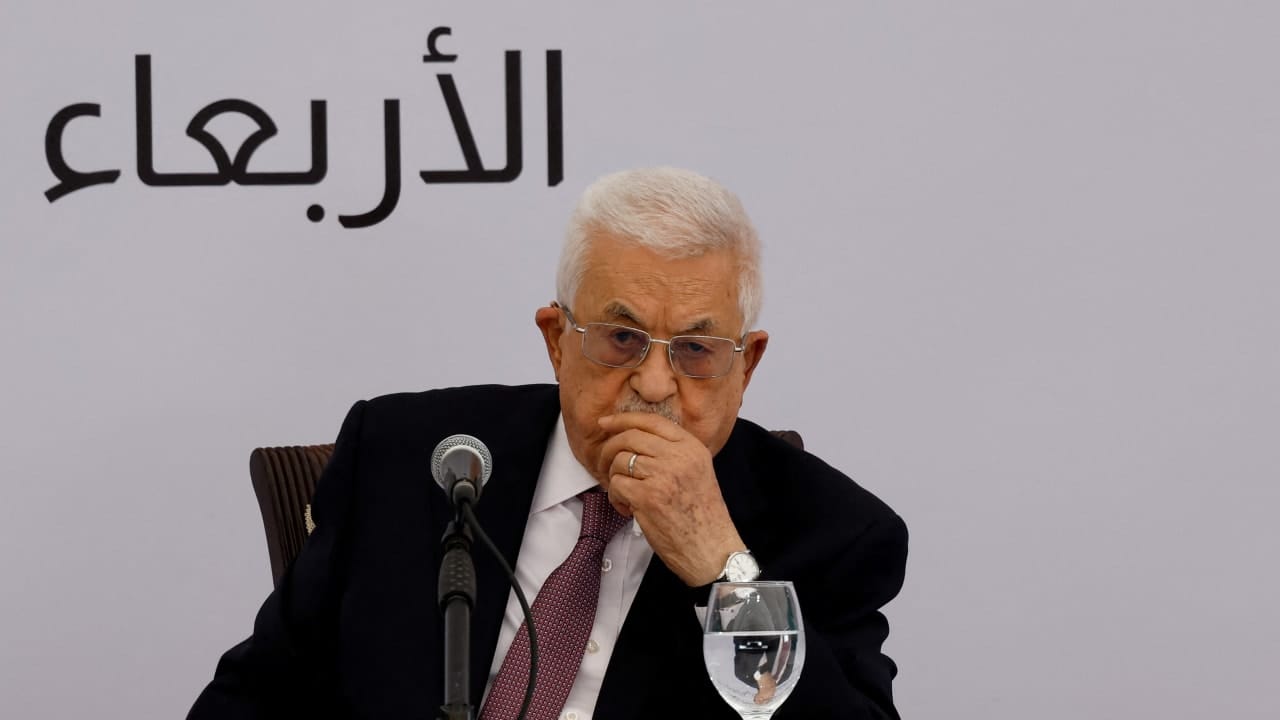
SEPTEMBER 17, 2026 18:03Updated: SEPTEMBER 17, 2026 18:41The Palestinian population, already critical of Palestinian Authority President Mahmoud Abbas, may view renewed US sanctions against the PA and Palestinian Liberation Organization as another sign that the current leadership’s approach to Washington has “not produced sufficient political results,” Dr. Nabil Kukali, president and founder of the Palestinian Center for Public Opinion (PCPO), told The Jerusalem Post on Thursday.The US State Department confirmed on Wednesday that the PLO and PA had failed to maintain their commitments under the PLO Commitments Compliance Act of 1989 (PLOCCA) and the Middle East Peace Commitments Act of 2002 (MEPCA), resulting in sanctions against Palestinian officials.Beyond citing the PA’s continued stipends to Palestinian terrorists and failure to reform textbooks to remove the glorification of terrorism, the department said that the PA and PLO were initiating and supporting actions at international organizations that undermine or contradict prior commitments. These included efforts to internationalize the Israeli-Palestinian conflict through the International Criminal Court (ICC) and International Court of Justice (ICJ), as well as attempts to bypass negotiations by seeking unilateral recognition. As a result, the department announced that the US would deny visas to PLO members and PA officials.The sanctions will prevent Abbas from attending the UN General Assembly in New York in person for the second consecutive year.Kukali said he would be “cautious” about determining whether the sanctions alone would be enough to weaken Abbas’s camp electorally, given that there is not yet “enough evidence to isolate their effect from the much broader set of factors shaping Palestinian voters’ attitudes,” including the economic situation, security, the war and its consequences, governance, institutional performance and the prospects for a political solution.Palestinian President Mahmoud Abbas poses for a group picture on the day of the newly elected Fatah Central Committee meeting in Ramallah in the West Bank, June 3, 2026. (credit: PPO/Handout/REUTERS)However, Kukali said there may still be significant domestic political consequences beyond the potential impact on the Palestinian Legislative Council elections, particularly among Palestinians already critical of the PA.“The US measures may reinforce the argument that the PA’s diplomatic approach and its relationship with Washington have not produced sufficient political results,” he said, arguing that the announcement could spark a broader debate over Palestinian political strategy.Pro-Abbas Fatah supporters may see sanctions as external pressure effortFatah supporters in the pro-Abbas camp may instead view the sanctions as an attempt to apply external pressure on the Palestinian leadership following its efforts to take Israel to international courts, Kukali said. In such a case, he explained, it would be inaccurate to assume that Abbas would suffer a domestic political loss.He noted that while more than half (57.2%) of Palestinians polled by PCPO previously said that Washington would continue to support Israel, only 20.4% said they believed the US would adopt a “more balanced role in the future.” At the same time, he said there are significant indications that American voters support recognition of Palestinian statehood.“The recent US measures toward Palestinian officials themselves illustrate how official Washington policy may continue to move differently from some of the trends emerging within American society,” he said, suggesting that the sanctions could potentially generate a greater reaction among American voters than among Palestinians.“Some Palestinians may increasingly perceive a gap between attitudes within American society and the policies of the US administration toward Palestinians. Whether that perception will actually affect how they evaluate President Abbas or Fatah is a separate question, and I do not think its outcome should be assumed in advance.”While Kukali said he doubted the measures would automatically affect Palestinian politics, he acknowledged that the timing of the sanctions mattered. The PLC elections are scheduled for November 28, and “any developments affecting the Palestinian leadership’s international standing, its relationship with Washington, or public perceptions of the effectiveness of its political strategy” could shape the electoral debate.Though Kukali was uncertain about the impact the sanctions would have on the elections, Prof. Kobi Michael, a senior researcher at the Institute for National Security Studies (INSS) and a visiting professor at the International Center for Policing and Security at the University of South Wales, told the Post that he thought Hamas would use Abbas’s failures as a way to demonstrate to voters that Fatah’s political struggle has been ineffectual compared to Hamas’s armed “resistance.”Michael: Fatah reform bloc, Hamas will use Abbas's failures against him The Fatah Reform Democratic bloc and Hamas “will use it to claim that [Abbas] is history and must leave and only they will be able to make the changes [needed] to recruit international support,” he theorized.Although he saw the restrictions on Abbas as a potential avenue for Hamas to market itself as a more powerful and effective alternative, Michael said he doubted Abbas would let the elections go ahead in November as planned.Follow us on Google
US sanctions on Abbas may reinforce argument of PA's lack of political results, expert tells 'Post'
Full Article
Original Source
Read the full article at Jpost →KhanList aggregates and links to publicly available news content. We do not host full articles from third-party sources. Always verify important information with original sources.