
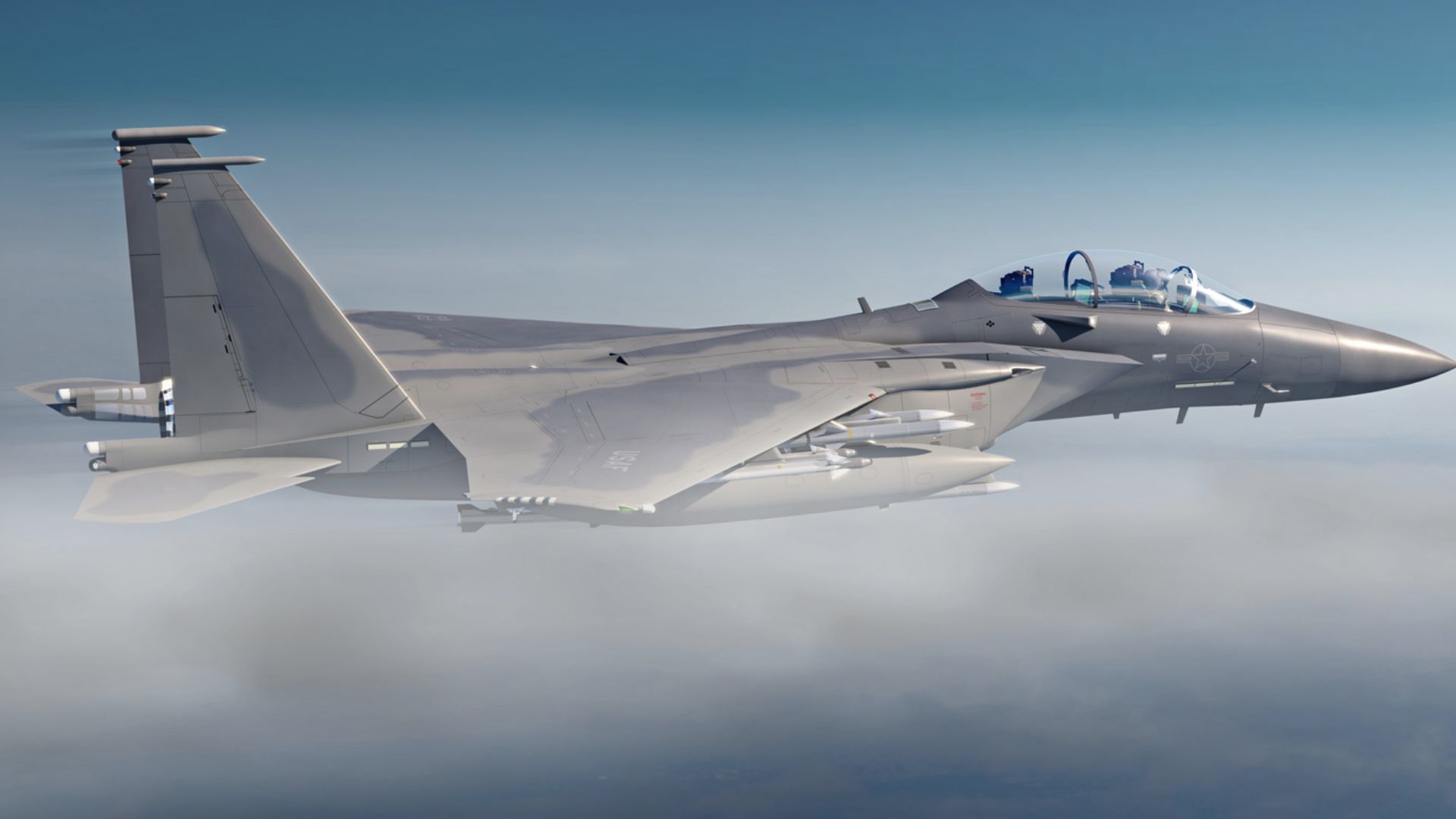
The U.S. Air Force has taken a significant step toward modernizing its fighter force in the Indo-Pacific. The USAF’s first F-15EX Eagle II, which is destined for Kadena Air Base, has departed Boeing’s facility in St. Louis for Portland Air National Guard Base, Oregon.The aircraft’s departure on August 28 marked an important stage in the transition from the long-serving F-15C/D fleet to the significantly upgraded F-15EX. After reaching Portland, the aircraft is scheduled to undergo additional preparations and updates before eventually making its way to Kadena. The Air Force expects F-15EXs to begin arriving at the Japanese base in fiscal year 2027. The USAF also revealed that the F‑15EX is built to anchor tactical fighter forces today and tomorrow. Drawing on a legacy of air dominance, it features digital fly‑by‑wire controls, an all‑glass cockpit, modern mission systems and software, open mission systems architecture and the ability to carry hypersonic weapons. Advanced AESA radar and the EPAWSS electronic‑warfare suite enable confident operations in highly contested airspace and advanced networking — both line-of-sight and beyond-line-of-sight — enables collaborative operations with manned and unmanned systems. Base provides critical platform for maintaining U.S. air superiority With a payload capacity of 29,500 pounds (13,300 kilograms), it delivers affordable massed effects at extended ranges to counter rapidly evolving threats. Kadena Air Base has long been one of the United States’ most important airpower hubs in the Indo-Pacific. Located on Okinawa, the base provides a critical platform for maintaining U.S. air superiority and supporting regional operations.The arrival of the F-15EX will represent a major technological shift for the base. The aircraft is the latest development of the F-15 Eagle family, combining the proven airframe with modern avionics, greater payload capacity and enhanced multi-role capabilities.For the Air Force, the transition is about more than replacing an aging fighter. It is intended to provide Kadena with a more capable and adaptable combat aircraft while sustaining the base’s ability to generate ready airpower in a strategically important region.Brig. Gen. John Gallemore, commander of the 18th Wing, described the aircraft’s movement to Portland as an important step toward bringing the F-15EX to Kadena and placing the new capability in the hands of the personnel who will operate and maintain it. Transition to the F-15EX The journey of the first Kadena-bound aircraft illustrates that the transition to the F-15EX involves more than simply delivering a new fighter to Japan.Following its departure from Boeing’s St. Louis facility, the aircraft is moving to Portland Air National Guard Base, home of the Oregon Air National Guard’s 142nd Wing. Portland is already operating combat-coded F-15EX aircraft, making it an important part of the Air Force’s broader transition to the new Eagle variant.At Portland, the Kadena-bound aircraft will receive further preparation before its eventual transfer to Japan.This process also highlights the growing role of Portland in the F-15EX program. According to the Air Force, Kadena will become the second Air Force location with combat-coded F-15EX aircraft after the 142nd Wing. The introduction of the F-15EX is particularly significant because it will replace the legacy F-15C/D fleet at Kadena.The F-15C/D has served the Air Force for decades, but many of the aircraft have reached an age at which modernization and sustainment have become increasingly challenging. The F-15EX offers the Air Force a way to retain the Eagle’s large airframe and substantial weapons-carrying capacity while introducing modern systems and capabilities.Its increased payload capacity is particularly relevant for missions in the Indo-Pacific, where range, weapons capacity and flexibility can be important factors in maintaining combat power over large distances.The aircraft’s multi-role design also gives commanders greater flexibility in employing it for different missions rather than limiting it to the traditional air-superiority role associated with earlier Eagle variants. The F-15EX deployment is also closely tied to the broader U.S.-Japan defense relationship.Kadena-based U.S. Air Force units regularly train with Japan Air Self-Defense Force F-15s operating from Naha Air Base. The introduction of the F-15EX is expected to provide additional opportunities for bilateral training and integration with Japanese and other allied forces.Such cooperation is increasingly important as the United States and its allies seek to improve interoperability and maintain credible airpower across the Indo-Pacific. The F-15EX will therefore serve not only as a replacement for an older.Get the latest in engineering, tech, space & science - delivered daily to your inbox.Prabhat, an alumnus of the Indian Institute of Mass Communication, is a tech and defense journalist. While he enjoys writing on modern weapons and emerging tech, he has also reported on global politics and business. He has been previously associated with well-known media houses, including the International Business Times (Singapore Edition) and ANI.
US’ new fighter jet that can integrate 12 AMRAAM missiles, 30,000-lb payload leaves Boeing facility
Full Article
Original Source
Read the full article at Interestingengineering →KhanList aggregates and links to publicly available news content. We do not host full articles from third-party sources. Always verify important information with original sources.