
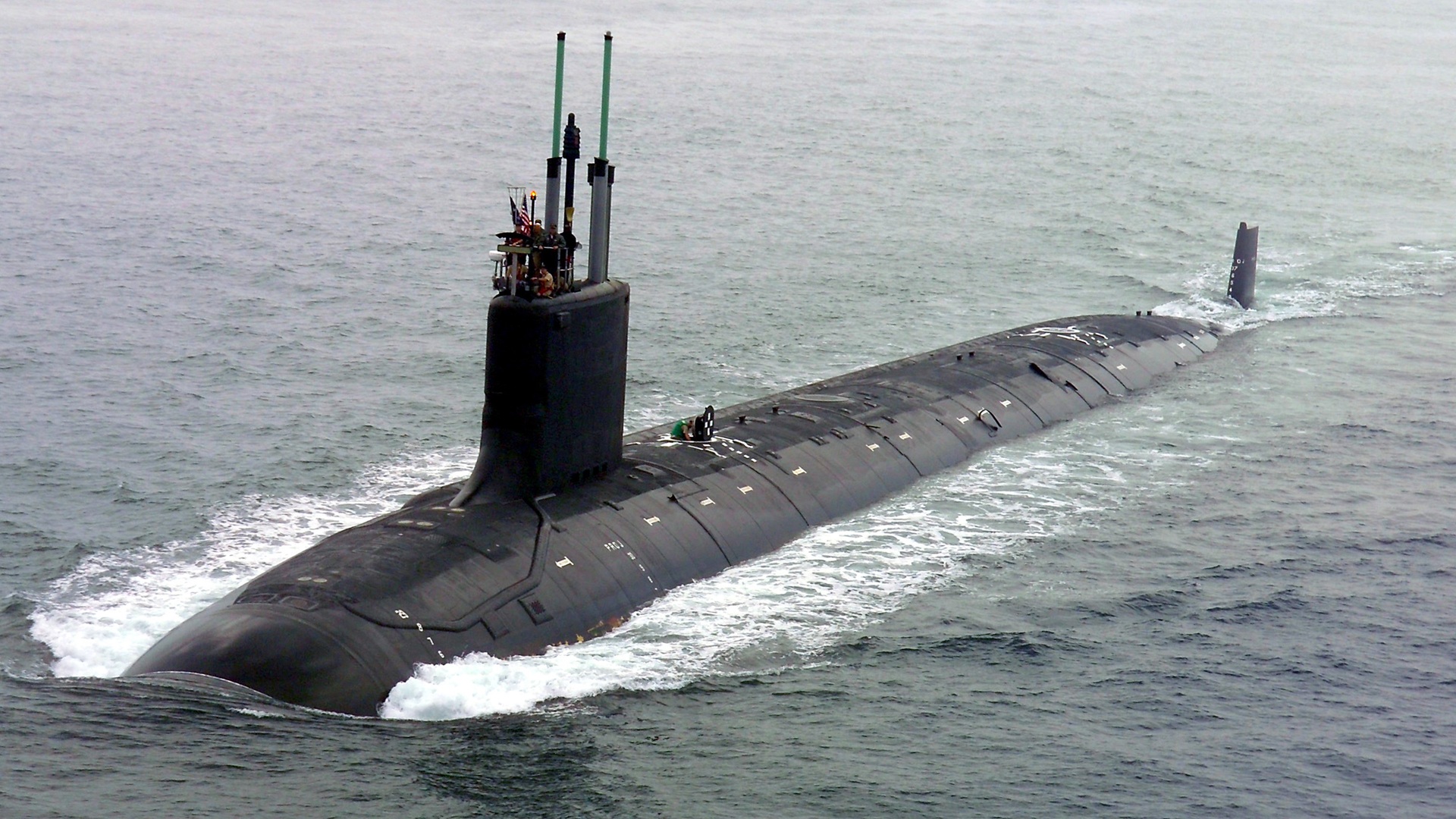
The US Navy has announced a novel strategy to speed up its nuclear submarine construction, and will reportedly deliver three boats a year from 2031 in order to expand its undersea fleet. The strategy was outlined by Vice Adm. Robert Gaucher, the Navy’s Director of Submarine Programs. He is the Pentagon’s first-ever direct reporting portfolio manager (also called submarine czar), after officially taking office in early 2026. Gaucher detailed a four-pillar approach that’s set to increase the production of Virginia-class nuclear-powered attack submarines, and Columbia-class ballistic missile submarines. The Navy is reportedly targeting two Virginia-class and one Columbia-class submarine annually. According to the czar, the Navy aims to achieve that rate by 2031 or sooner. The strategy aims to expand the fleet while easing submarine production bottlenecks. “The Navy’s requirement to increase the submarine production rate to at least one Columbia-class and two Virginia-class submarines per year remains the top industrial base priority,” he said. Expanding the submarine fleet According to Naval News, the lead Columbia-class submarine, which is designed to replace the Ohio class, is expected to be delivered in 2028. Construction of the first vessel began on 1 October 2020. It is scheduled to enter service in 2031. The Navy aims to reach a production rate of one Columbia-class submarine per year by 2030. Production of Virginia-class submarines, intended to replace older Los Angeles-class attack submarines, is expected to reach two boats annually by 2031. In earlier testimony before the House Appropriations Defense Subcommittee on May 12, Adm. Daryl Caudle, the US Navy’s 34th Chief of Naval Operations, said the Navy expects to hit the higher production rate around 2032. The planned Columbia-class submarine.Credit: A total of 12 Columbia-class submarines are planned. At the same time, another 44 Virginia-class submarines are under construction or planned as part of an eventual 70-boat class. Both programs depend on the same industrial base. The submarines are made by General Dynamics Electric Boat in Connecticut, and Huntington Ingalls Industries’ Newport News Shipbuilding in Virginia. “You can’t look at Virginia and Columbia in a vacuum because you’re sharing workforce, it’s the same shipyard, you’re sharing footprint,” Gauche explained. Fewer design changes The first of Gaucher’s four-pillar strategy involves locking in submarine designs to prevent modifications from slowing construction. “We’re done with engineering churn,” he said. The czar has reportedly ordered a “pencils down” approach for the Virginia-class submarines. This means that any design changes will generally be avoided unless required for safety or critical operational reasons. This is set to become particularly important as production moves through the final Virginia-class variants, Blocks VII and VIII. The second pillar allows the main shipyards to focus on assembling submarines, installing equipment and carrying out final tests. The third pillar expands on this approach by increasing the capacity of the wider submarine industrial base. Finally, the last pillar looks beyond the Virginia class to the future SSN-X nuclear attack submarine. “At some point, if I could have two submarines instead of one submarine, that might be better than paying an exorbitant cost with money and time for the added capability,” Gaucher concluded.Get the latest in engineering, tech, space & science - delivered daily to your inbox.Based in Skopje, North Macedonia. Her work has appeared in Daily Mail, Mirror, Daily Star, Yahoo, NationalWorld, Newsweek, Press Gazette and others. She covers stories on batteries, wind energy, sustainable shipping and new discoveries. When she's not chasing the next big science story, she's traveling, exploring new cultures, or enjoying good food with even better wine.
US Navy targets 3 nuclear submarines a year from 2031 under new four-pillar plan
Full Article
Original Source
Read the full article at Interestingengineering →KhanList aggregates and links to publicly available news content. We do not host full articles from third-party sources. Always verify important information with original sources.