
To maintain decisive maritime advantage, the U.S. Navy has established a new warfighting center (RASWDC) to rapidly integrate robotic and autonomous systems into operations, training, and deployment. Launched on September 24, the new center is led by Rear Admiral Melvin Smith as its inaugural commander, according to a U.S. Navy news release. Headquartered at Joint Expeditionary Base Little Creek-Fort Story in Virginia, the RASWDC will serve as the Navy’s dedicated operational integration point for robotic and autonomous systems across maritime operations. “To maintain our decisive maritime advantage, we must rapidly integrate robotic and autonomous systems into how we operate, train, and deploy,” said Chief of Naval Operations Adm. Daryl Caudle. “The establishment of RASWDC will equip Sailors with the tactical edge, advanced training, and specialized doctrine required to win the high-end fight.” Navy moves to integrate autonomous systems RASWDC is an Echelon 3 warfighting development center operating under U.S. Fleet Forces Command. It will equip sailors with “the tactical edge, advanced training, and specialized doctrine required to win the high-end fight,” said Caudle. The Navy has spent years experimenting with these technologies across “multiple warfare communities, commands, laboratories, and acquisition organizations,” Caudle wrote in an administrative note. “That work has produced important capability and invaluable experience. But much of it has advanced independently within individual domains,” which the Navy now intends to integrate. The Navy has pursued a range of systems, including unmanned aerial systems, uncrewed surface vessels and unmanned underwater vehicles. RASWDC will have three core missions: developing warfighting concepts, training sailors, and fielding and testing new technologies. The center will test uncrewed platforms under realistic operational conditions and threats, including degraded or denied communication environments. “Systems that work will move forward,” added Caudle in the administrative note. The Navy plans to improve, redirect, or stop systems that don’t. Connecting development with the Fleet RASWDC will operate alongside the recently announced Direct Reporting Portfolio Manager for Robotic and Autonomous Systems (DRPM RAS). While DRPM RAS provides portfolio authority for RAS acquisition, requirements implementation, budgeting, technical standards, and fielding, RASWDC will focus on employment. The Navy said the two organizations will create a direct feedback loop between the acquisition enterprise and operational forces. Lessons and performance data gathered through testing, experimentation, and training can be returned to developers and program managers to improve future capabilities. “RASWDC is the critical bridge between capability development and operational employment,” Caudle said in the press release. “By forging a direct feedback loop, we are accelerating the delivery of unmanned capabilities from the foundry directly to the Fleet, ensuring our forces are postured to meet any challenge.” Preparing sailors for autonomous warfare “Ultimately,” the news release said, “to prepare sailors for ‘The Fight,’ the center will develop specialized doctrine, tactics, techniques, and procedures, as well as an advanced tactical instruction framework for sailors operating and deploying autonomous platforms.” Rear Adm. Melvin Smith will oversee a phased implementation plan as the organization progresses toward full operational capability. “This is just day one,” Smith said in a news release. “Our purpose here is to consolidate the Navy’s autonomous efforts across air, surface, and undersea domains, and give them a single home here at Little Creek.” Smith highlighted that the center’s mandate includes educating warfighters, equipping the Fleet with systems that can survive operational environments, and developing combined tactics for their use. “We are here to make sure our forces don’t just field unmanned systems, but dominate with them,” Smith said. RASWDC will not replace existing Warfighting Development Centers, Type Commanders, Systems Commands, or operational commands. Instead, the Navy said it will coordinate with those organizations as a dedicated integration point, incorporating emerging requirements and sharing lessons learned as robotic and autonomous systems move into fleet operations. Get the latest in engineering, tech, space & science - delivered daily to your inbox.Originally from LA, Maria Mocerino has been published in Business Insider, The Irish Examiner, The Rogue Mag, Chacruna Institute for Psychedelic Plant Medicines, and now Interesting Engineering.
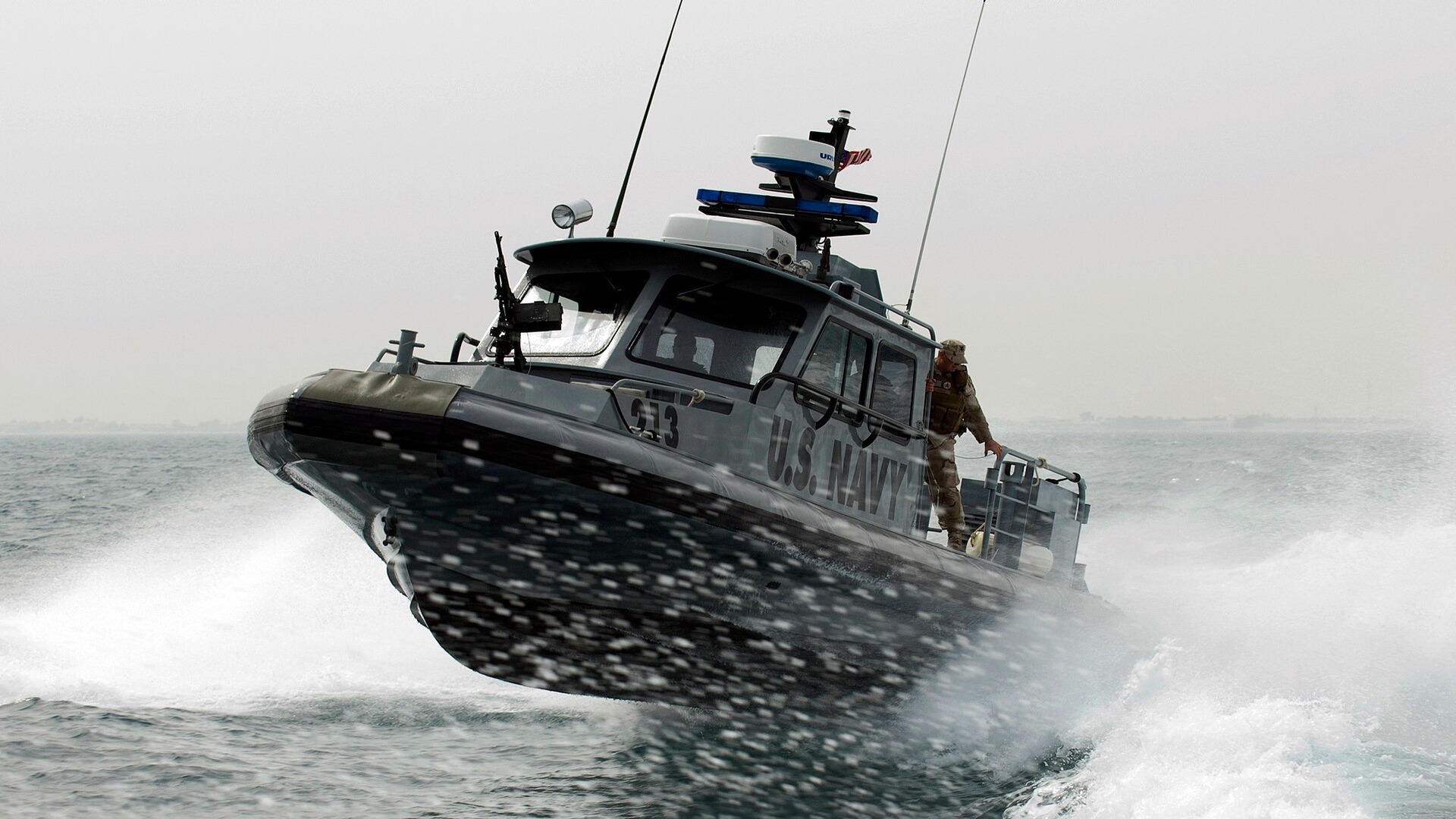
US Navy preparing sailors for robot warfare, launches autonomous systems warfighting center
Full Article
Original Source
Read the full article at Interestingengineering →KhanList aggregates and links to publicly available news content. We do not host full articles from third-party sources. Always verify important information with original sources.