
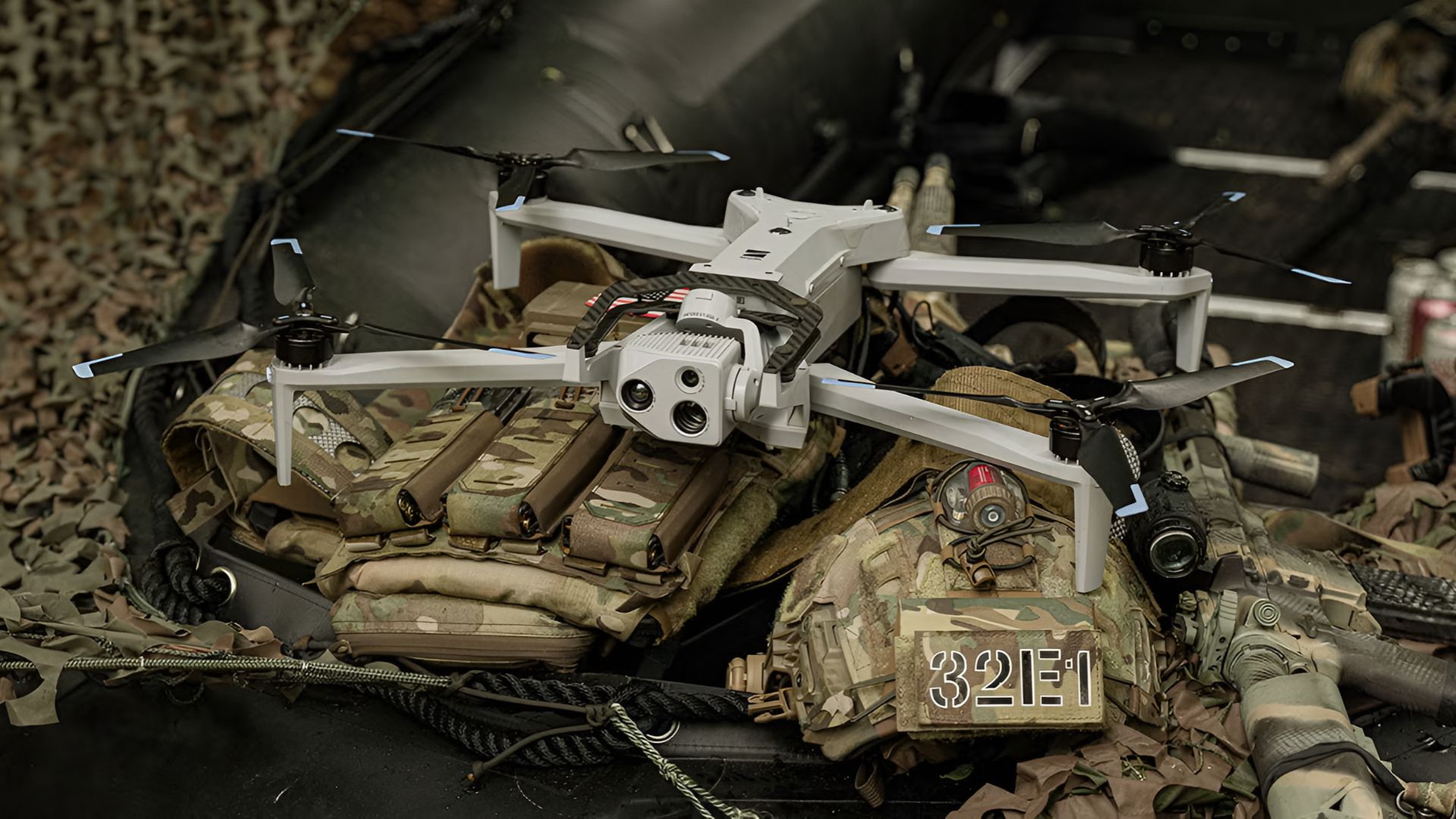
L3Harris Technologies and Skydio are integrating military drones with tactical radio technology to help U.S. forces maintain communications under electronic warfare threats. The partnership combines Skydio’s X10D drone with L3Harris radios and specialized waveforms designed to protect command links in contested environments. The integration could help American troops operate uncrewed aircraft systems (UAS) when adversaries attempt to disrupt battlefield communications. It also connects drone operations with tactical radio networks already deployed across U.S. and allied forces. The X10D is a compact drone designed for military reconnaissance, giving troops an aerial view of potential threats without exposing personnel to the same risks. Drone integrates tactical radios The companies have integrated L3Harris’ Falcon IV embeddable radios and Wraith waveform into Skydio’s X10D drone. The combination provides layered protection against jamming and adds electronic warfare capabilities to the aircraft. Radio integration gives the drone access to communications technology designed for military operations. Maintaining command-and-control links matters when troops rely on aerial sensors to gather information beyond their immediate positions. Electronic interference can disrupt the connection between operators and unmanned aircraft. Losing that link can complicate flight control and limit the delivery of useful battlefield information. L3Harris and Skydio aim to reduce that vulnerability through their integrated system. The setup is designed to help warfighters continue flying drones and communicating in environments where electronic warfare threatens those functions. Existing radio networks expand reach The partnership also draws on a substantial installed base of military communications equipment. More than 150,000 tactical radios in U.S. and allied inventories can host the Wraith waveform, according to L3Harris. That compatibility could help defense forces incorporate the capability into existing communications networks. It also offers a path to connecting autonomous aircraft with equipment already fielded by military units. The companies have also incorporated Wraith Shield, a waveform designed to scan radio-frequency spectrum and identify threats. The technology can detect and neutralize adversarial drones, adding another layer to the integrated electronic warfare capability. These functions extend the partnership beyond keeping a drone connected to its operator. They also address the electromagnetic environment in which military aircraft and communications systems must operate. Open systems support integration The collaboration relies on open-system architectures that allow different technologies to work together. Such designs can help militaries integrate new equipment without rebuilding their entire communications infrastructure around a single platform. Faisal Munir, president of mission-critical communications at L3Harris, said the partnership combines complementary technologies with resilient networks. He added that the integration helps warfighters communicate and operate unmanned aircraft in electronic warfare-constrained environments. The approach reflects a growing engineering challenge for modern militaries. Autonomous aircraft need reliable links to deliver information and support operations, but adversaries can target those links with electronic interference. Integrating drones with established tactical radios offers one way to address that problem. The effectiveness of the approach will depend on how well the systems perform under operational conditions and against evolving electronic warfare threats.Get the latest in engineering, tech, space & science - delivered daily to your inbox.Aamir is a seasoned tech journalist with experience at Exhibit Magazine, Republic World, and PR Newswire. With a deep love for all things tech and science, he has spent years decoding the latest innovations and exploring how they shape industries, lifestyles, and the future of humanity.
US Military drones tap 150,000 radios in push to beat battlefield jamming threats
Full Article
Original Source
Read the full article at Interestingengineering →KhanList aggregates and links to publicly available news content. We do not host full articles from third-party sources. Always verify important information with original sources.