
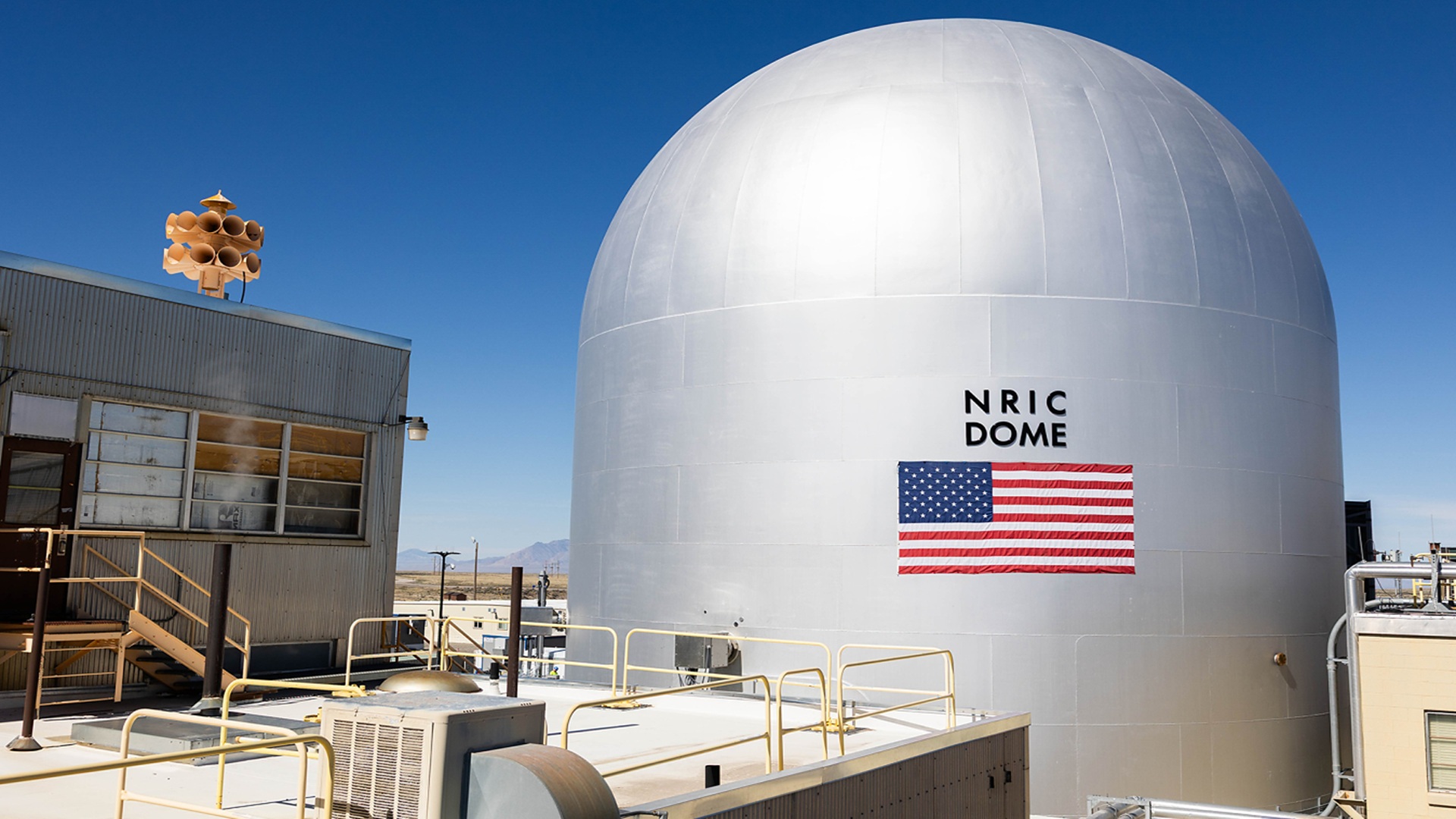
A US-developed nuclear battery that achieved its first controlled chain reaction in roughly 150 days is set for a full-power demonstration in 2027 at Idaho National Laboratory (INL). Deployable Energy, a US developer of transportable nuclear reactors, announced October 7 that the Department of Energy (DOE) selected its Unity Nuclear Battery for testing at the laboratory’s Demonstration of Microreactor Experiments (DOME) facility. The upcoming test will examine whether the compact reactor can operate at full power, be transported with nuclear fuel already loaded, and be moved to another location after operation. The company is developing Unity to provide continuous electricity for industrial sites, ships and remote locations. The selection follows a June 30 milestone when Unity achieved criticality, the point at which a reactor sustains a controlled nuclear chain reaction. According to the company, this occurred about 150 days after the project began, making it the first developer under the National Reactor Innovation Center’s (NRIC) Nuclear Energy Launch Pad initiative to reach that stage. From criticality to power Achieving criticality confirms that a reactor can sustain a chain reaction, but it does not establish that the system can deliver its intended power output under operating conditions. The 2027 campaign is intended to test that next stage. Deployable Energy plans to fuel Unity at a factory, transport the fueled reactor to INL, install it inside DOME and operate it at full power. After the test, the company intends to move the reactor to another location within the laboratory and complete the process of managing its nuclear fuel. Together, these steps would test more than the reactor itself. They would provide data on transportation, installation, operation and redeployment, all important for a system designed to deliver power without requiring a conventional nuclear plant at each location. DOME is housed within the former Experimental Breeder Reactor-II containment structure at INL. The facility can accommodate experimental reactors producing up to 20 megawatts of thermal power. That figure describes the test facility’s capacity, not Unity’s stated output. “Build the reactor, learn quickly, and move to manufacturing: that is the model the advanced nuclear industry needs,” said Bobby Gallagher, co-founder and CEO of Deployable Energy. Testing transportable reactor operations Unlike large nuclear plants built at permanent sites, Unity is being developed as a modular system that can be manufactured and transported to locations requiring reliable power. Potential applications include industrial facilities, maritime operations and remote sites where conventional electricity infrastructure may be unavailable or difficult to establish. The demonstration will also examine whether a fueled reactor can be moved and installed through a repeatable process, rather than requiring extensive construction at every deployment site. Deployable Energy said the Nuclear Regulatory Commission (NRC), which observed its earlier criticality test, will continue observing the demonstrations. The planned campaign is intended to support future licensing discussions, but it does not itself constitute commercial regulatory approval. The company will spend the coming months working with NRIC and INL on engineering, fuel preparation, safety reviews and test planning. Deployable Energy also said it has been selected for a separate DOE-authorized commercial nuclear maritime demonstration. That project is distinct from the 2027 DOME campaign. The full-power test remains a future milestone. Its results will help determine whether Unity’s reactor design and proposed deployment process can support repeatable manufacturing and commercial use. Get the latest in engineering, tech, space & science - delivered daily to your inbox.With over a decade-long career in journalism, Neetika Walter has worked with The Economic Times, ANI, and Hindustan Times, covering politics, business, technology, and the clean energy sector. Passionate about contemporary culture, books, poetry, and storytelling, she brings depth and insight to her writing. When she isn’t chasing stories, she’s likely lost in a book or enjoying the company of her dogs.
US microreactor that reached criticality in 150 days set for full-power test in 2027
Full Article
Original Source
Read the full article at Interestingengineering →KhanList aggregates and links to publicly available news content. We do not host full articles from third-party sources. Always verify important information with original sources.