
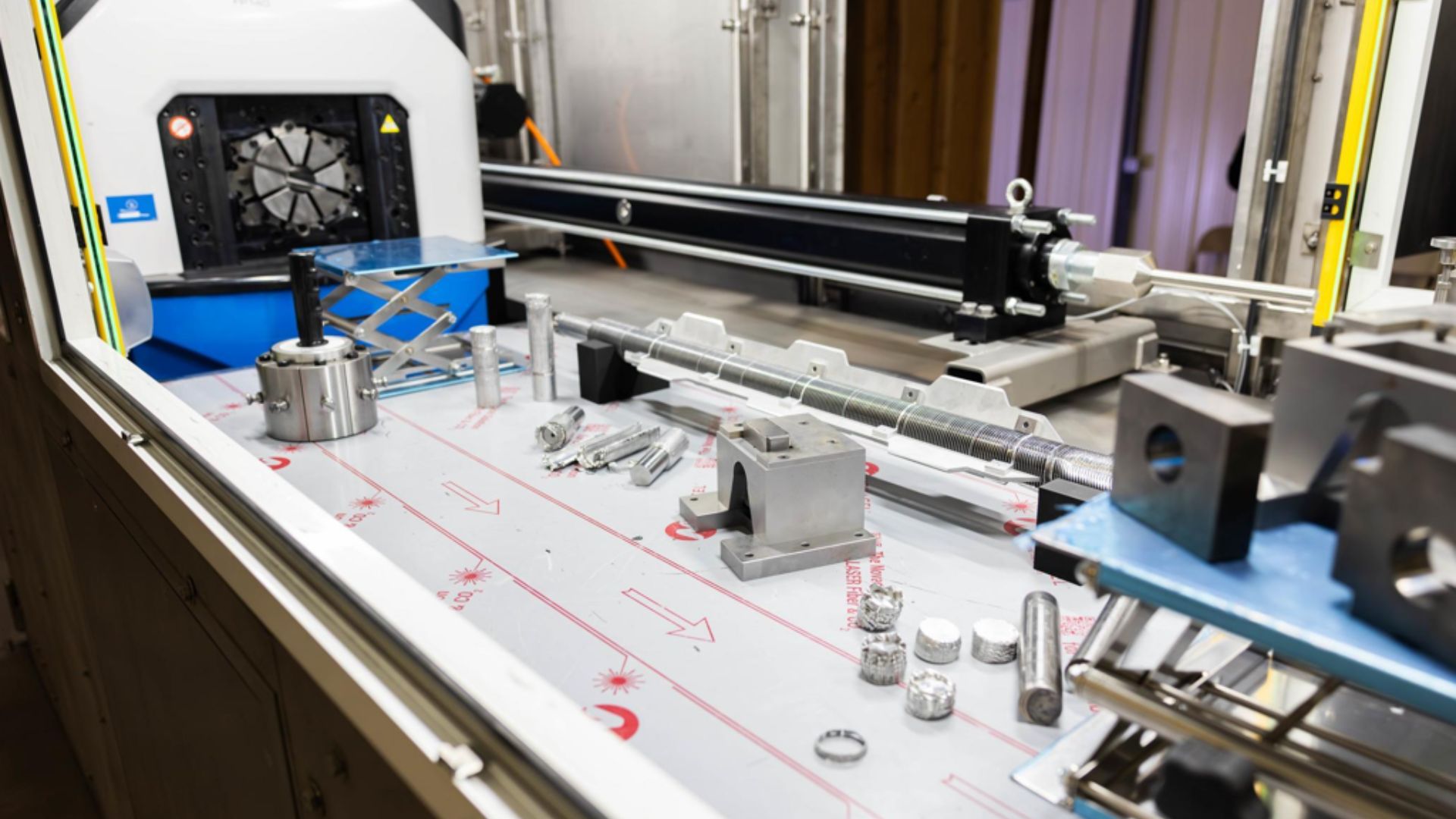
The interior of the skid during the final stages of construction before installation at the Moran facility.INL Engineers at Idaho National Laboratory have brought a custom dismantling rig online to peel the metal casings off radioactive fuel rods. Known among its designers as the “nuclear-grade banana peeler,” the mobile system prepares spent fuel for scientific study. It operates inside the Moran Nuclear Fuels Test Facility, an isolated desert complex in southeastern Idaho. Before researchers can examine used nuclear fuel, they must crack open its outer shell. This exterior metal, called cladding shields the radioactive core inside a reactor, but it also blocks access to the uranium when testing ends. The new skid solves that problem mechanically. An automated sequence crimps, peels, and chops the fuel rods using specialized electric tooling. Built-in high-speed cameras record the action in real time, helping researchers collect process data and optimize cutting parameters for different fuel types. “The skid was designed to be highly adaptable,” said Kevin Lyon, a senior manager at the laboratory. “Every major component is modular, which means its systems can be removed, adjusted, repositioned or upgraded as future mission needs evolve. This is not a one-trick pony.” Targeting legacy Magnox The rig’s immediate assignment involves Magnox fuel. Developed decades ago for early British commercial reactors, Magnox rods rely on a magnesium-alloy casing. Idaho received a shipment of this vintage fuel in 2024. Studying how to handle, chop, and declad Magnox remains critical for global security. Many legacy reactors across the world share similar characteristics, and understanding their fuel cycle helps inspectors detect illicit proliferation. “This new skid not only provides a much-needed source of relevant fuel for use at the Moran facility, but it also represents a new capability for innovative fuel cycle and nonproliferation research,” added J’Tia Hart, director of the lab’s Nuclear Nonproliferation Division. From concept to reality Turning the concept into working hardware took 20 months. The national laboratory teamed up with two private engineering firms, Integrated Solutions & Designs and Campbell Technical Services. After fabrication, crews shipped the platform to Idaho in April. “Campbell Technical Services worked directly with our team throughout the design process, gathering feedback from engineers, designers, electricians and operators,” noted Nathan Stevens, an INL portfolio manager. Technicians spent weeks running inert dummy rods through the cutters to verify tolerances before introducing live radioactive fuel. The machine passed its first live crimping test on May 5, followed by a complete fuel-chopping run on June 2. Training next-gen of weapons-control specialists The project was funded by the National Nuclear Security Administration’s Athena Initiative, an effort launched in 2022 to safeguard nuclear materials. Beyond laboratory research, US officials intend to use the equipment as a training ground for apprentices and university recruits, helping train the next generation of weapons-control specialists. “The new system expands INL’s ability to support fuel processing, nonproliferation research and advanced fuel cycle development while providing a flexible platform for future mission needs,” concluded the US lab. Get the latest in engineering, tech, space & science - delivered daily to your inbox.An active and versatile journalist and news editor. He has covered regular and breaking news for several leading publications and news media, including The Hindu, Economic Times, Tomorrow Makers, and many more. Aman holds expertise in politics, travel, and tech news, especially in AI, advanced algorithms, and blockchain, with a strong curiosity about all things that fall under science and tech.
US lab activates automated ‘nuclear-grade banana peeler’ to strip and chop reactor fuel
Full Article
Original Source
Read the full article at Interestingengineering →KhanList aggregates and links to publicly available news content. We do not host full articles from third-party sources. Always verify important information with original sources.