
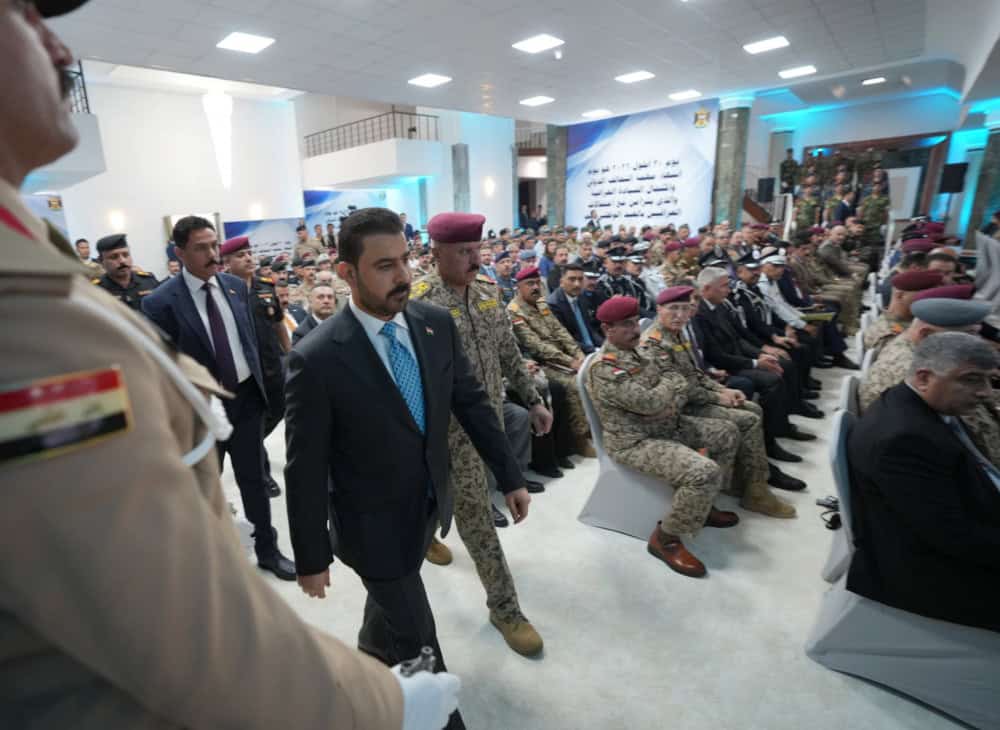
US forces deployed as part of Operation Inherent Resolve, the anti-Islamic State mission, completed their departure from Iraq on September 30. Iraqi Prime Minister Ali al Zaidi held a ceremony to mark the occasion and called it “Sovereignty Day” for Iraq. The US withdrawal was expected and in process throughout the last year. Iranian-backed militias in Iraq released several statements indicating that they felt emboldened by the development. Admiral Brad Cooper, commander of US Central Command (CENTCOM), praised the tens of thousands of Americans who had supported the war on the Islamic State in Iraq. “As we step back and hand full primary responsibility for Iraq’s security to the Government of Iraq and the brave people of Iraq, U.S. and Coalition forces stationed across the region will remain ready to respond to any ISIS [Islamic State] threats that arise,” he added. CENTCOM noted that US forces had begun departing Iraq last October. The statement also said that most of the forces had been based in Erbil, the capital of the Kurdistan Region, over the last year. US forces had largely shifted to Erbil after Iranian-backed attacks in Iraq in 2019–2020. The US also handed over facilities in Baghdad. The Diplomatic Support Center at Baghdad International Airport was transferred to Iraqi officials in the wake of a deal signed on September 25. The facility had been targeted by Iranian-backed militias numerous times in 2026 and in past years. In May, a State Department official said these groups had attacked US facilities in the country 600 times since US and Israeli strikes on Iran began in February. Iraq’s prime minister and other officials marked the occasion of the US leaving Iraq, presenting it as Iraq regaining its sovereignty. “The Commander-in-Chief of the Armed Forces announced, in a speech delivered on this occasion, the official conclusion of the International Coalition’s mission to combat ISIS, affirming that Iraq is today reaping the fruits of immense sacrifices and heroic efforts that extended over years, until our security apparatus, in all its branches, established its control over the security and field landscape across all of Iraq,” Zaidi’s office said. Iraq held events to celebrate the US leaving, none of which appear to have included any US officials or a public handover ceremony. US forces had arrived in Iraq in 2014, at the invitation of the Iraqi government, to help Baghdad fight a resurgent Islamic State. “After September 30, not a single foreign soldier will remain anywhere in Iraq,” Sabah al Numan, spokesperson for the commander in chief of Iraq’s armed forces, said. This includes the Kurdistan Region. Across Iraq, reactions to the US withdrawal have varied. In the Kurdistan Region, there is concern about what comes next. Rudaw Media Network in Erbil noted that Iraq now faces an air-defense challenge, which is particularly significant after more than 1,000 Iranian missile and drone attacks on the Kurdistan Region since February. Kurdistan Region Prime Minister Masrour Barzani thanked the US and Coalition forces for their role and noted that the region stood ready to confront future threats. Iranian-backed militias see the US withdrawal as a turning point. “Asaib Ahl al-Haq [a US-designated terrorist group] described the completion of the US forces’ withdrawal as a historic milestone,” Shafaq News noted. Kataib Hezbollah, also a US-designated terrorist group, threatened to shoot down “hostile” aircraft in the wake of the withdrawal. Four Iranian-backed militias reiterated their demand for various conditions to be met before they disarm as part of a government initiative. The militias include Kataib Hezbollah, Kataib Sayyid al Shuhada, Harakat al Nujaba, and Ansar Allah al Awfiya. Among their demands is for the Kurdistan Region’s Peshmerga military to be dissolved. This has raised concerns in Erbil about future pressure on the Peshmerga. Iraq’s Council of Ministers also voted on a new draft law for the Popular Mobilization Forces, a state-sanctioned security force comprising dozens of militias, including many Iran-backed Shiite groups, on September 29, referring the bill to the parliament in Baghdad. The draft law has faced some US opposition, and it is unclear if the timing of the referral was linked to the coalition withdrawal. The US withdrawal could also lead to a new type of partnership with Iraq. “Iraqi Prime Minister Ali Al-Zaidi’s special security adviser Qasim Al-Araji said on Wednesday that the end of the US-led Coalition’s mission and troop presence in Iraq does not end security ties, but shifts them toward bilateral intelligence and security cooperation,” Shafaq noted on September 30. “Parliament Speaker Haibat al Halbousi said on Wednesday that the conclusion of the Global Coalition’s mission did not mean the end of cooperation relations,” Iraq’s state Iraqi News Agency reported. Reporting from Israel, Seth J. Frantzman is an adjunct fellow at FDD and a contributor to FDD’s Long War Journal. He is the senior Middle East correspondent and analyst at The Jerusalem Post, and author of The October 7 War: Israel’s Battle for Security in Gaza (2024).
US forces complete departure from Iraq as anti-Islamic State mission in Iraq ends
Full Article
Original Source
Read the full article at Fdd →KhanList aggregates and links to publicly available news content. We do not host full articles from third-party sources. Always verify important information with original sources.