
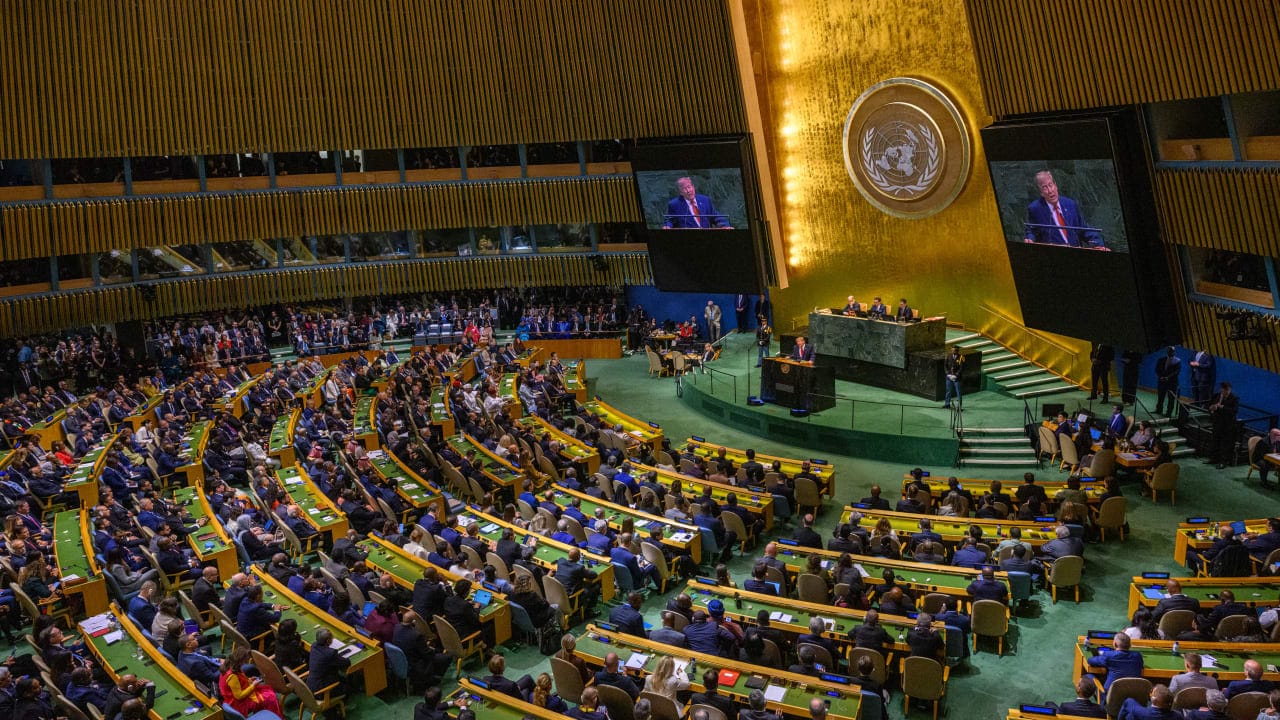
SEPTEMBER 27, 2026 03:37The US and European Union rejected a declaration by member countries of the United Nations (UN) that promised international collaboration in preparing for and responding to any future pandemics, on Friday, the New York Times reported.The declaration itself was not legally binding, and did not set rules for how countries should manage pandemics, the report explained. Rather, universal endorsement of it would have shown global commitment.The EU claimed that it rejected the document because it "crossed red lines" on intellectual property protections, the NYT reported. "Technology transfer must be voluntary and on mutually agreed terms.”In contrast, the Trump administration objected for ideological reasons. Director of the Centers for Disease Control and Prevention Dr. Erica Schwartz claimed that the declaration included "divisive ideologies that lack definitional consensus.”“The United States is not in a position to support this text in full,” she explained. NYT reported that an early iteration of Schwartz's statement showed the US requesting that the UN remove "mentions of equity, solidarity and universal access to sexual and reproductive health care services," to make the Trump administration comfortable with the language in the declaration, an anonymous source explained.A sign of the CDC is seen on a podium during the meeting of the members of the Advisory Committee on Immunization Practices, as the U.S. Centers for Disease Control and Prevention's (CDC) advisory panel for vaccines convenes in Atlanta, Georgia, U.S. June 25, 2025. (credit: MEGAN VARNER/REUTERS)US and EU rejection of the declaration emphasized the disparity between wealthy nations, such as those declining it, and low-income countries.During the Coronavirus pandemic, low-income countries struggled to provide vaccination, taking over a year longer to roll out the vaccine than their wealthier counterparts.International responses to the US, EU decision“Agreeing to collaborate to prevent, prepare for and respond to pandemics should not be controversial,” Helen Clark, a former prime minister of New Zealand and a co-chair of the Independent Panel for Pandemic Preparedness and Response, told the NYT.“It is disappointing that the high-level meeting was not asked to endorse the political declaration which had been negotiated by member states."The US and EU failing to support the declaration "is not a problem," as UN member states will still be able to vote on it and decide to adopt it at a later meeting, Director General of the World Health Organization (WHO) Dr. Tedros Adhanom Ghebreyesus said at a press conference on Friday.Last year, member states of the WHO agreed to a pandemic treaty after several failed rounds of negotiations. The treaty aims to allow for a more coordinated and equitable response to global outbreaks; however, it has not yet become international law due to controversy surrounding a section of it that would require countries to swiftly share genetic sequences and samples of emerging pathogens to allow for rapid development of diagnostic tests, vaccines, and treatments.The US officially left the WHO in January 2026.Previous US rejections of international public health declarationsUS Health Secretary Robert F. Kennedy Jr. told the UN in September 2025 that the US would not join a declaration about the link between chronic diseases and mental health, adding that it was a part of "radical gender ideology" and promoted abortion.Earlier that year, the Trump administration rejected a different international declaration regarding public health, claiming that a commitment to attempting to reduce road traffic accidents was being used “as a backdoor vehicle to enforce global climate pacts.” The US cast the sole dissenting vote against the motion, with all other 162 member states voting in favor.Follow us on Google
US, EU reject UN declaration promising international collaboration in face of another pandemic
Full Article
Original Source
Read the full article at Jpost →KhanList aggregates and links to publicly available news content. We do not host full articles from third-party sources. Always verify important information with original sources.