
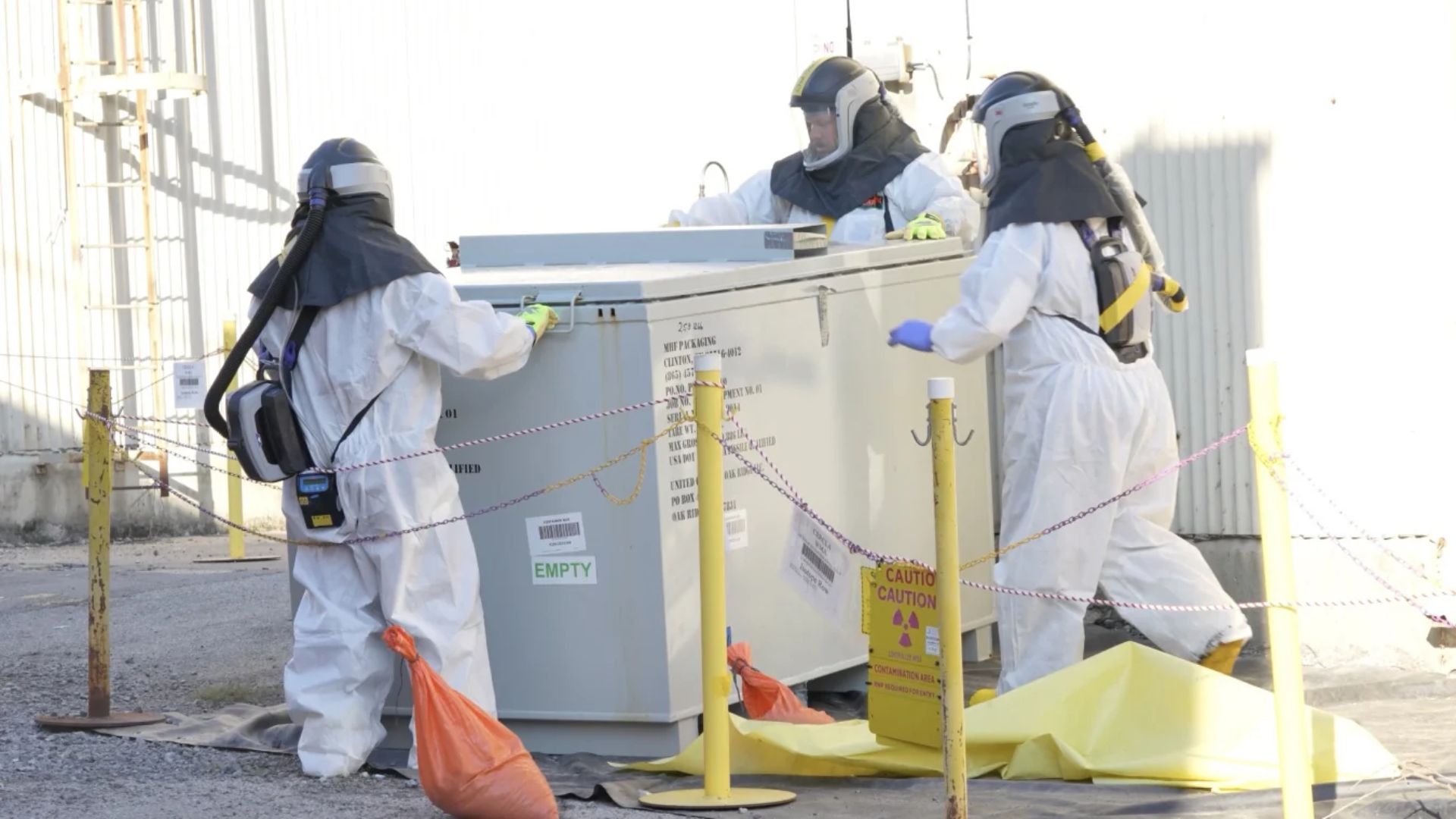
Key TakeawaysCleanup crews demolished 10 contaminated Cold War buildings at Oak Ridge National Laboratory.Workers removed nearly three million pounds of hazardous waste during the six-year project.Clearing the 12,000-square-foot Isotope Row frees prime space for future scientific research missions. Ten historic, heavily contaminated buildings at the heart of Oak Ridge National Laboratory (ORNL) have been reduced to rubble. The demolition marks the end of a six-year environmental cleanup campaign. Known collectively as Isotope Row, the tightly packed cluster spanned more than 12,000 square feet across the laboratory’s central campus. Removing the derelict structures eliminates long-standing radiological risks. It also frees up prime real estate for next-generation science. “After decades standing at the heart of ORNL, Isotope Row is gone and ORNL’s skyline is forever changed,” said Clint Wolfley, senior vice president of end state delivery for prime cleanup contractor United Cleanup Oak Ridge (UCOR). Coordinating a delicate teardown The US Department of Energy’s (DOE) Oak Ridge Office of Environmental Management worked alongside UCOR to execute the project. Preparing the aging complex took six years of meticulous engineering. However, crews demolished the physical buildings in just two months. To keep neighboring laboratories running without disruption, demolition teams limited heavy teardown work to afternoon hours. This schedule required close coordination with laboratory operator UT-Battelle and the DOE’s Office of Science. Workers also disposed of most demolition debris directly on site. This approach spared taxpayers the high cost of hauling contaminated rubble to distant facilities. Isotope Row dates back to the late 1940s through the early 1960s. For decades, scientists inside these buildings produced radioisotopes used in medicine, industry, scientific research, and national defense. Operations shut down in the early 1990s. The facilities were left behind with radioactive isotopes, mercury, asbestos, and contaminated machinery still inside. Before demolition equipment could move in, crews had to sever all utility connections and strip out hazardous insulation. This preparatory phase is known as transitioning the buildings to “cold-and-dark” status. Clearing complex hazards Deactivation teams entered the buildings in 2020 to tackle the interior hazards step by step. Multidisciplinary workers removed combustible materials, six contaminated hot cells, and several specialized gloveboxes. They also hauled out four 2,000-pound tanks that previously stored inert gas. In total, teams removed nearly three million pounds of waste from the site. The trickiest engineering challenge hung 10 to 15 feet above the laboratory floors. Central ventilation and process off-gas pipes were partly made of a concrete-and-asbestos blend that had soaked up radioactive contamination over decades. Crews used strict containment barriers and specialized packaging to dismantle the overhead ducts without releasing hazardous dust. Federal Project Director Michael Griswold said the project demanded high-level technical skill and an unwavering focus on worker safety. “This accomplishment reduces risks today while opening new opportunities for the laboratory’s tomorrow,” Griswold said. Wolfley credited the cleanup workforce for six years of creative problem-solving. He noted that their efforts have turned one of ORNL’s most hazardous footprints into an asset for future discovery. “After decades standing at the heart of ORNL, Isotope Row is gone and ORNL’s skyline is forever changed, clearing the way for its next generation of scientific discovery,” concluded UCOR.Get the latest in engineering, tech, space & science - delivered daily to your inbox.An active and versatile journalist and news editor. He has covered regular and breaking news for several leading publications and news media, including The Hindu, Economic Times, Tomorrow Makers, and many more. Aman holds expertise in politics, travel, and tech news, especially in AI, advanced algorithms, and blockchain, with a strong curiosity about all things that fall under science and tech.
US demolishes 10 historic contaminated Cold War buildings covering 12,000 square feet
Full Article
Original Source
Read the full article at Interestingengineering →KhanList aggregates and links to publicly available news content. We do not host full articles from third-party sources. Always verify important information with original sources.