
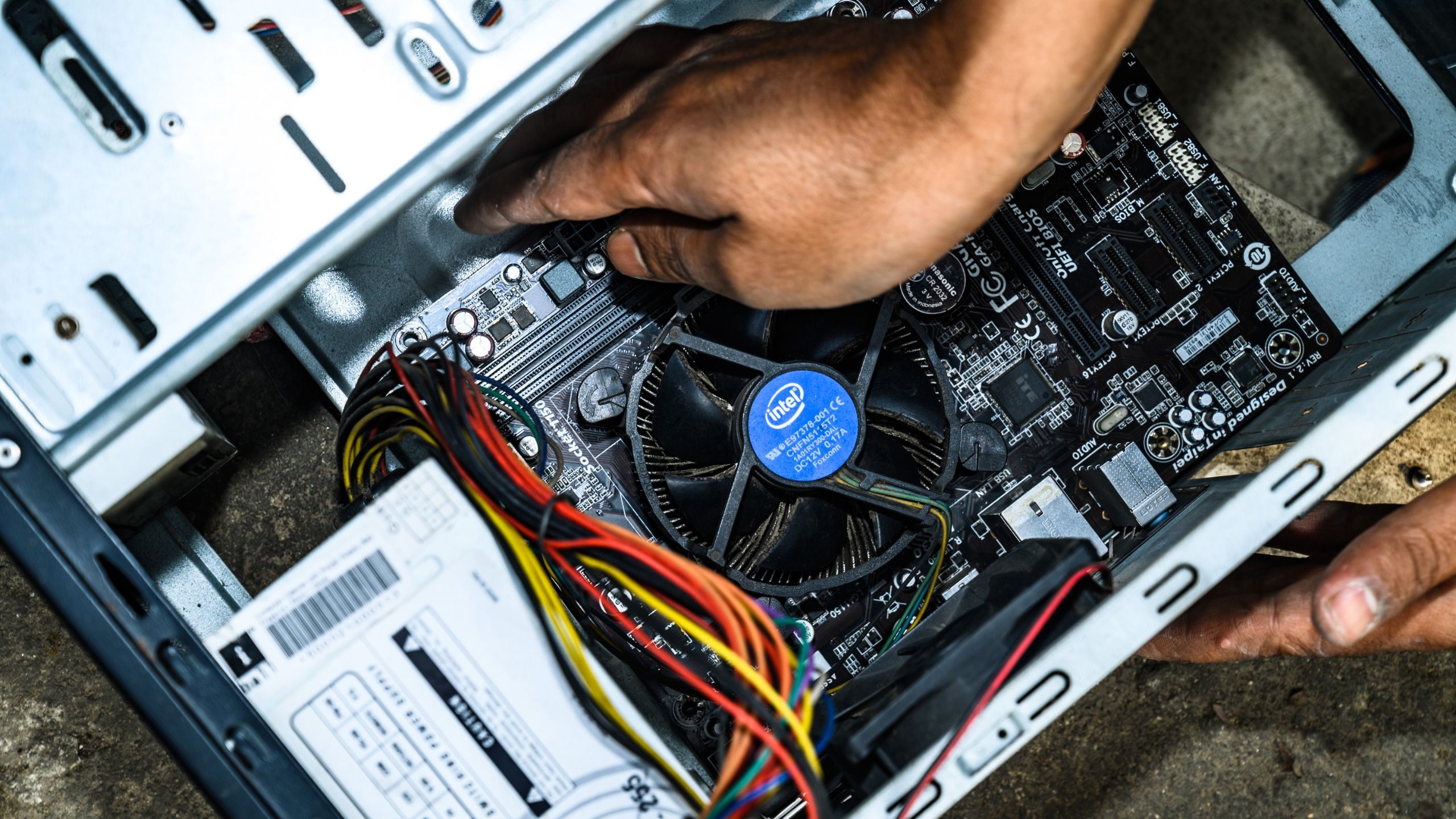
(Image credit: Getty Images) According to a report from The Maine Wire, the FBI has arrested and charged Terry “Jiajia” Liu, a Customs and Border Protection supervisor based in Calais, Maine, for theft and damage to government property. Liu allegedly stole computer hardware, including Intel 14th Generation Raptor Lake Refresh processors, memory modules, and hard drives, from at least 46 Department of Homeland Security computers across three Maine border facilities. They replaced the stolen parts with inferior hardware and exchanged the stolen equipment through Newegg’s trade-in program for store credit.Go deeper with TH Premium: CPULiu’s official responsibilities were limited to information-technology support, so they did not have access to modify any government computer. Port Director Theodore Cummings made the restriction abundantly clear to Liu in a written order: “Please do not move any computers or computer parts.” However, criminals rarely listen.Hidden surveillance cameras captured Liu opening government computers and swapping hardware during the midnight shift. The perpetrator would take the systems to a training room to commit the crime. One camera recording showed Liu using a screwdriver to scrape thermal paste off a processor and installing a replacement chip in one system. Meanwhile, another recording caught Liu removing a memory module from a system and storing it in their desk drawer.According to the affidavit, investigators found that thirty-nine computers had their processors replaced, six machines with memory modules swapped, and eight had hard drive changes. The original systems used Raptor Lake Refresh chips but were later discovered to have older hardware, sometimes downgraded to Pentium chips. Beyond the processor swap, other computers had less memory and storage capacity than their original configurations.Instead of trying to sell the stolen hardware on the open second-hand market, Liu used a less conspicuous approach: Newegg’s Trade-In program. According to investigators, Liu sent 13 emails between a personal account and an official CBP email address containing shipping labels and trade-in receipts for processor models matching the missing components from the government computers.The Newegg trade-in offers varied between $200 and $210 per processor. According to the transaction records from the U.S. retailer, Liu traded in Core i7 Raptor Lake Refresh chips 16 times over 14 months, from May 2025 to July 2026. Investigators also found three $200 credits from Newegg in Liu's American Express records.During an interview, Liu confessed to replacing hardware in the government computers with lower-performing parts bought on Amazon and Newegg. They also acknowledged submitting the government-owned parts to Newegg's Trade-In program. At first, Liu claimed their actions were motivated by a desire to improve the computers' performance and how long computer repairs took. However, they later admitted that the changes resulted in degraded performance.Get Tom's Hardware's best news and in-depth reviews, straight to your inbox.Restoring the stolen hardware could cost about $20,460, while fully replacing all 46 compromised computers with equivalent hardware would cost an estimated $105,800. However, additional labor to configure each system for government use will drive the bill even higher. Follow Tom's Hardware on Google News, or add us as a preferred source, to get our latest news, analysis, & reviews in your feeds. Zhiye Liu is a news editor, memory reviewer, and SSD tester at Tom’s Hardware. Although he loves everything that’s hardware, he has a soft spot for CPUs, GPUs, and RAM.
US Customs supervisor busted for stealing Core i7 CPUs, RAM, and hard drives from Homeland Security PCs — stolen tech swapped with inferior hardware and cashed out on Newegg
Full Article
Original Source
Read the full article at Tomshardware →KhanList aggregates and links to publicly available news content. We do not host full articles from third-party sources. Always verify important information with original sources.