
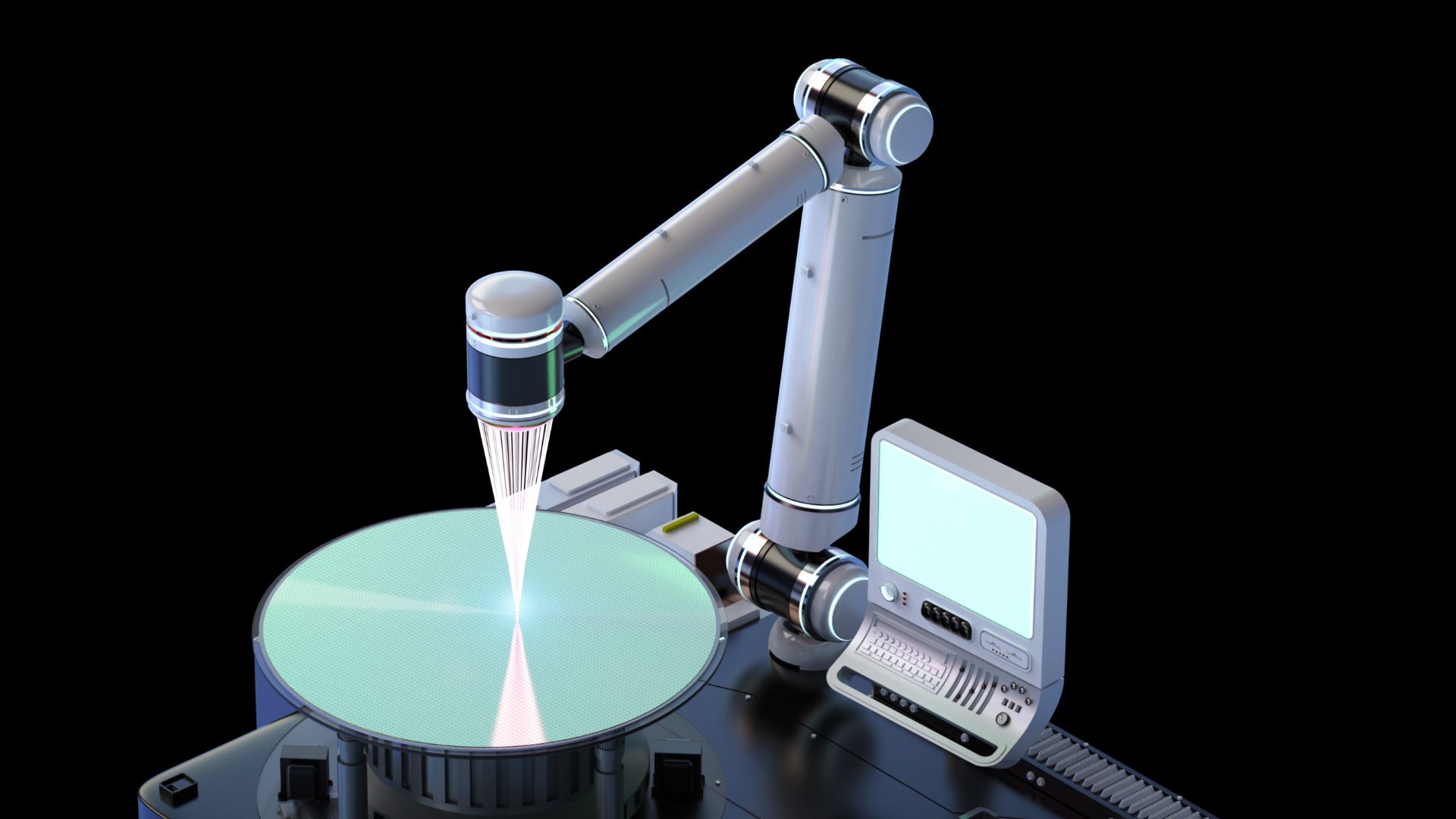
These advanced chips power everything from today’s smartphones to artificial intelligence and self-driving cars. (Representational image)PhonlamaiPhotoResearchers in the United States are working with partners from industry to develop new EUV lithography materials that will enable the fabrication of smaller, faster, higher-density chips at the scale of just a few atoms. Researchers highlighted that the EUV lithography works like a very sophisticated photocopier. It can print circuit patterns that are 50 thousand times thinner than a human hair. These patterns are then transferred to silicon wafers to manufacture microchips. Advanced computer chips are critical to every part of lives “Advanced computer chips are critical to every part of lives and staying at the forefront of this technology is essential to our economic security as well as national defense,” said Patrick Naulleau, CEO of EUV Tech Inc. and former director of Berkeley Lab’s Center for X-Ray Optics. “To maintain our edge and our access to the world’s most advanced chips, we must continue to be leaders in the technologies needed to manufacture these chips.” Energy-efficient computer chips Researchers also highlighted that the commercialization of EUV lithography has enabled a whole new generation of ultrapowerful, compact, and energy-efficient computer chips. These advanced chips power everything from today’s smartphones to artificial intelligence and self-driving cars.“CXRO at Berkeley Lab has played a pivotal role in developing core expertise in EUV lithography and enabling new photoresist materials,” said Eric Panning, Lavorro’s Vice President of Product Engineering and former Intel founder of the CXRO EUREKA program for advanced EUV patterning. Beginning in the late 1990s, Berkeley Lab researchers at the CXRO pioneered techniques to replace visible light with higher energy extreme ultraviolet light for lithography. This advance enabled chip manufacturers to print smaller features. That improvement in turn allowed more transistors to be squeezed into next-generation microchips with unprecedented speed and energy efficiency. “The Center for X-Ray Optics has played a key and pioneering role in enabling EUV lithography, so that it could be used by leading-edge chipmakers in their most advanced manufacturing processes,” said CXRO Director Bruno La Fontaine. “CXRO will continue to play a vital role in helping push the boundaries of Moore’s Law even further in the many years to come.”In 2001, EUV lithography was gaining more traction across the industry as a whole. At that time, Berkeley Lab established a partnership with SEMATECH, a broad-based semiconductor industry consortium, to continue advancing EUV lithography research.This technology enables chip manufacturers to print billions of transistors onto a chip the size of a fingernail. Chips with more transistors allow a computer to quickly and securely retain and process data. The best microchip today contains more than 100 billion transistors. Microchip manufacturers want to equip even smaller chips with even more transistors, according to details shared by the Department of Energy’s Office of Science.“Having industry-accessible pathfinding capabilities at the CXRO is an excellent example of how well government and industry can work together in advancing EUV lithography and extending Moore’s Law,” said Eric Panning.Get the latest in engineering, tech, space & science - delivered daily to your inbox.Prabhat, an alumnus of the Indian Institute of Mass Communication, is a tech and defense journalist. While he enjoys writing on modern weapons and emerging tech, he has also reported on global politics and business. He has been previously associated with well-known media houses, including the International Business Times (Singapore Edition) and ANI.
US could soon develop new EUV lithography materials to enable fabrication of higher-density chips
Full Article
Original Source
Read the full article at Interestingengineering →KhanList aggregates and links to publicly available news content. We do not host full articles from third-party sources. Always verify important information with original sources.