
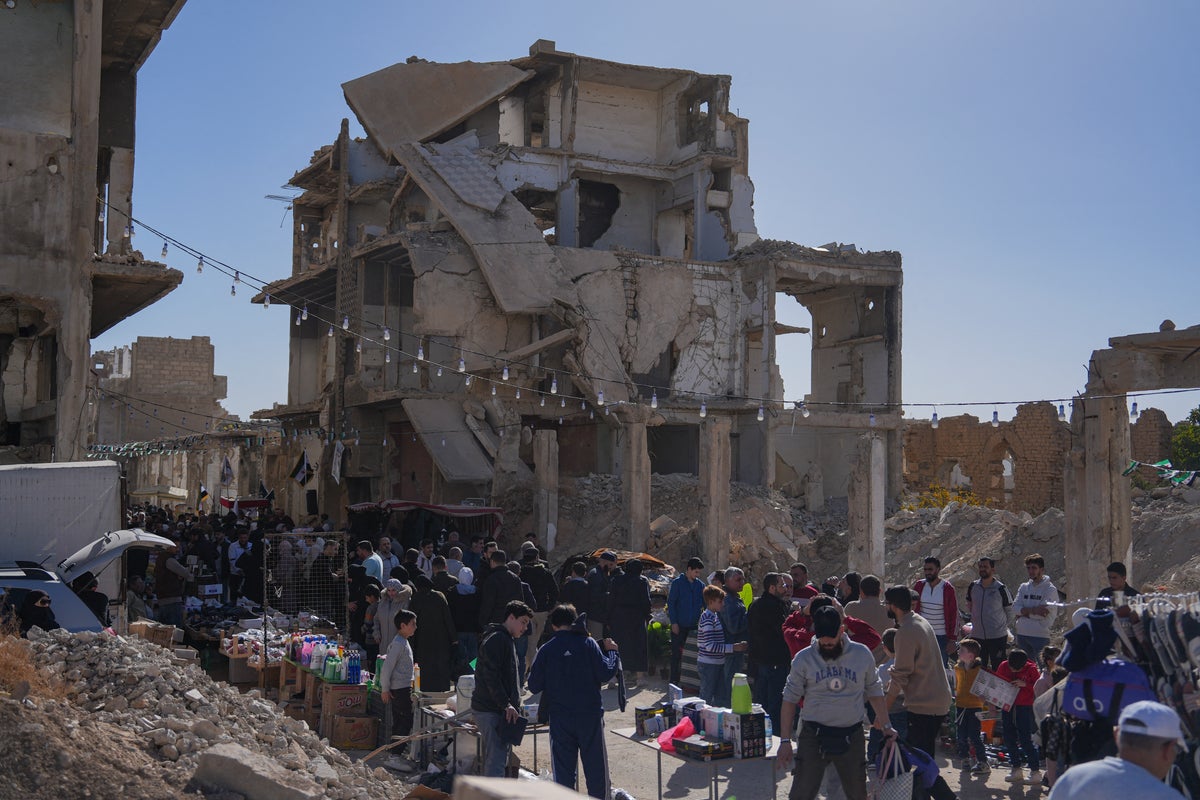
Discussions are underway regarding a U.S. proposal to train Syrian military personnel in mine clearance, according to five individuals familiar with the matter. The initiative would mark the first U.S. training effort alongside Syria's armed forces since former rebel fighters assumed control in Damascus in 2024.Although the proposed multinational mission still faces legal hurdles in the United States and skepticism within Syria's military command, approval could result in a small number of American troops returning to Syria as early as next year. This would occur just a year after Washington ended a decade-long deployment aimed at defeating Islamic State.Four sources noted that the initial program would concentrate on training in landmine removal and the safe disposal of unexploded ordnance, serving as a potential model for expanded future collaboration if successful.The concept envisages building upon the Damascus Coordination Center (DCC), an entity established last year in Jordan to manage joint efforts among Syrian authorities, American troops, and regional allies.Captain Tim Hawkins, a spokesperson for the US military's Central Command, stated that the DCC continues its work to support a stable, unified, and peaceful Syria, adding that final decisions regarding its future structure and operational focus have not yet been reached.A spokesperson for the US State Department indicated that Washington welcomes having a partner in Damascus dedicated to countering Islamic State. The Syrian Defence Ministry did not reply to a request for comment.According to a person involved in the discussions, the proposed framework would also incorporate personnel from approximately 15 U.S. allies, including Britain, France, Germany, Australia, Saudi Arabia, and the United Arab Emirates.Expanding military cooperation represents a further step in the gradual rapprochement between Washington and Damascus following the overthrow of President Bashar al-Assad in December 2024.Washington terminated broad economic sanctions against Syria in December 2025, revoked its designation as a state sponsor of terrorism in August 2026, and relaxed restrictions on defense services and arms exports in October, permitting case-by-case licensing. Nevertheless, significant impediments to direct military cooperation remain on both sides.In the United States, statutory provisions under the Leahy Laws prohibit US assistance to foreign security forces' units when credible information indicates they have committed gross human rights violations.American officials would need to thoroughly vet prospective Syrian recipients prior to allocating any funding, two of the sources explained.(AFP/Getty)Human rights concerns stem partly from the backgrounds of certain commanders in Syria's new security forces, including former members of armed Islamist factions, alongside UN documentation of abuses committed by forces linked to the new authorities.On the Syrian side, some officials within Syria's defense ministry have been reluctant to grant American military personnel access to local institutions and facilities, complicating efforts to establish training programs.Throughout Syria's civil war from 2011 to 2024, hundreds of US troops were deployed in the country without cooperating with Assad's government or the primary Sunni Muslim rebel forces that ultimately ousted him. American troops operated mainly alongside Kurdish forces under Operation Inherent Resolve, a mission to combat Islamic State across Syria and Iraq.The final US troops were withdrawn from Syria in April of this year and from Iraq in September, though the broader operation has not been fully wound down. Syrian state news agency SANA reported that Syrian Defence Minister Murhaf Abu Qasra met the operation's commander, Rear Admiral Liam Hulin, in Damascus on November 12.A Syrian military source confirmed the meeting included discussions regarding the proposed multinational coordination mechanism, plans for training Syrian forces in demining and explosive ordnance disposal, as well as unspecified assistance with border security.One option under consideration involves instructing Syrian soldiers in both Jordan and Syria, potentially beginning in March, with limited direct US military participation.The arrangement might also involve the Syrian National Mine Action Centre (SNMAC), a government body responsible for coordinating mine clearance, to help facilitate cooperation. The SNMAC did not respond to a request for comment.US officials are currently exploring whether remaining funding from Operation Inherent Resolve could support the program, two sources said. One source estimated the available funds at roughly $200 million, an amount that could not be independently verified.
US considering sending troops to Damascus for Syrian forces’ military training
Full Article
Original Source
Read the full article at Independent →KhanList aggregates and links to publicly available news content. We do not host full articles from third-party sources. Always verify important information with original sources.