
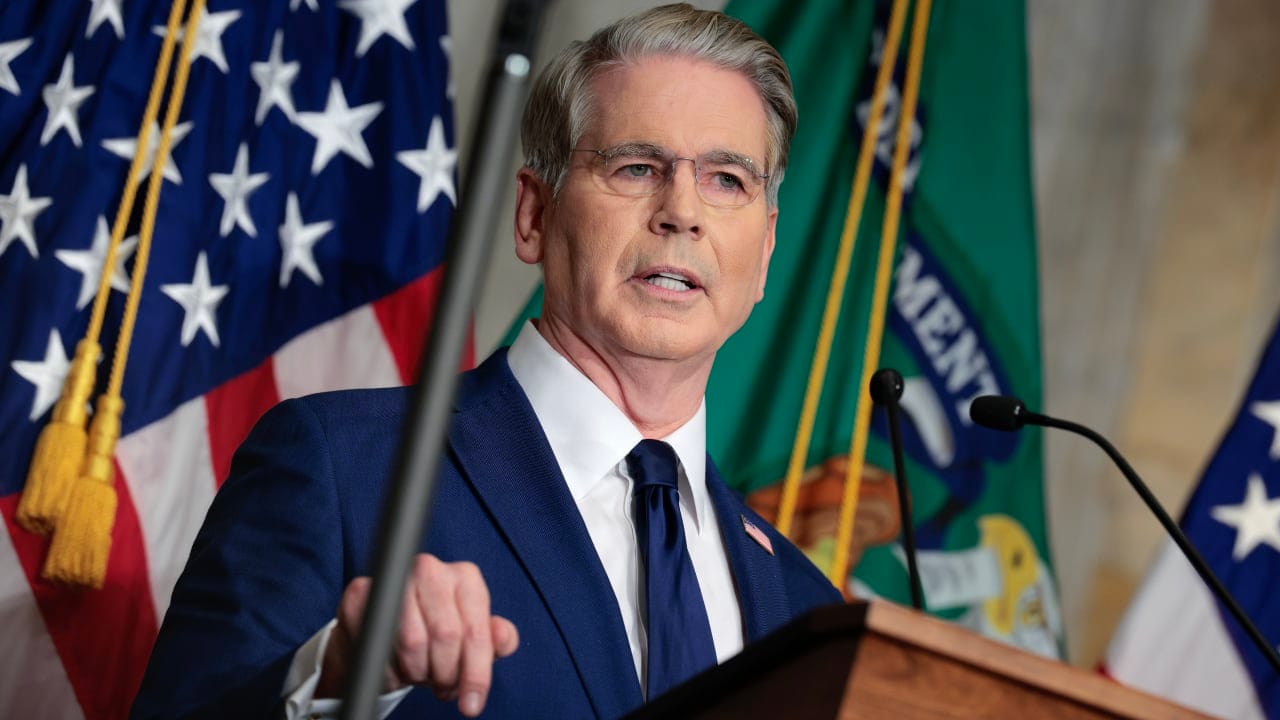
Jerusalem Post/World NewsWashington Institute experts warn that the economic campaign on Iran needs stronger international sanctions coordination and counterterrorism cooperation to disrupt Iran's financial networks.Follow us on GoogleUS Treasury Secretary Scott Bessent announces a new set of sanctions against Iran, describing them as "an economic D-Day", in the Cash Room at the Treasury Department on August 24, 2026 in Washington, DC.(photo credit: CHIP SOMODEVILLA/GETTY IMAGES)OCTOBER 28, 2026 19:35The United States’ Operation Economic Outcast, designed to sever the economic lifelines sustaining the Iranian regime, is falling short of its full potential without greater coordination with international partners, according to a new assessment published earlier this week by two experts from the Washington Institute for Near East Policy.Michael Jacobson, the Mark and Wayne Levy Senior Fellow at the Washington Institute for Near East Policy, and Matthew Levitt, the Fromer-Wexler Senior Fellow and director of the institute’s Reinhard Program on Counterterrorism and Intelligence, argued that closer coordination with allies on sanctions would strengthen Washington’s efforts to undermine the Iranian regime alongside the ongoing blockade of the Strait of Hormuz.Criticizing Washington for relying on targeted, limited diplomatic efforts to address Iran-linked terrorism, the fellows argued that the results achieved so far demonstrated the value of a more international approach.On October 12, the United States and 29 other governments issued a statement accusing Iran of orchestrating plots to destroy US air assets at RAF Fairford in the United Kingdom, following a similar statement a week earlier in which the US and eight countries in the Western Hemisphere condemned Iran’s terrorist and malign activities in the region. In June, the US State Department and more than 20 other governments also accused Iran of being behind a series of attacks in Europe, North America, and Australia.The fellows noted that some governments had initially been hesitant to condemn Iranian plots, including those on their own soil, because of concerns about Iranian retaliation and the fate of their nationals wrongfully detained in Iranian prisons, but eventually did so with American support.Guided-missile destroyer USS Rafael Peralta (DDG 115) enforces the US blockade on Iranian ports against an Iranian-flagged ship attempting to sail to a port in Iran, April 24, 2026. (credit: X/CENTCOM)US sanctions against Iran-backed groups require stronger enforcement capabilities, experts warnWashington’s efforts had also helped multiple countries in Central and South America designate or sanction the Islamic Revolutionary Guard Corps (IRGC), Hezbollah, and Hamas in recent years, the fellows wrote, arguing that such measures carry symbolic weight while giving governments additional tools to counter the groups’ activities. However, they cautioned that designations and sanctions must be backed by the material capabilities, skills, and knowledge needed to address the complex Iranian threat, including its sophisticated financial schemes, if they are to translate into meaningful action against the regime.The fellows argued that the Trump administration could use foreign assistance funding to advance these efforts, noting that Congress has already allocated almost $300 million to the State Department this fiscal year to strengthen partners’ counterterrorism capabilities. Although the department has publicly committed some of that funding to addressing cartel and gang threats in Central America, similar support could also help countries counter Iran’s malign activities.US experts urge funding to disrupt Iranian smuggling and terror financing networksThe funding could be directed toward programs to train and equip Syrian border security authorities to intercept Iranian and Hezbollah smuggling operations, including bulk cash transfers; help Yemeni Coast Guard officials detect and disrupt Houthi weapons and procurement networks; and improve Iraqi financial institutions’ ability to identify illicit Iranian financing schemes, the fellows suggested. Other initiatives could strengthen efforts by authorities in West Africa and South America to uncover and prosecute Hezbollah’s illicit financial networks.Follow us on Google
US campaign to cripple Iran's economy risks falling short without global partners, experts say
Full Article
Original Source
Read the full article at Jpost →KhanList aggregates and links to publicly available news content. We do not host full articles from third-party sources. Always verify important information with original sources.