
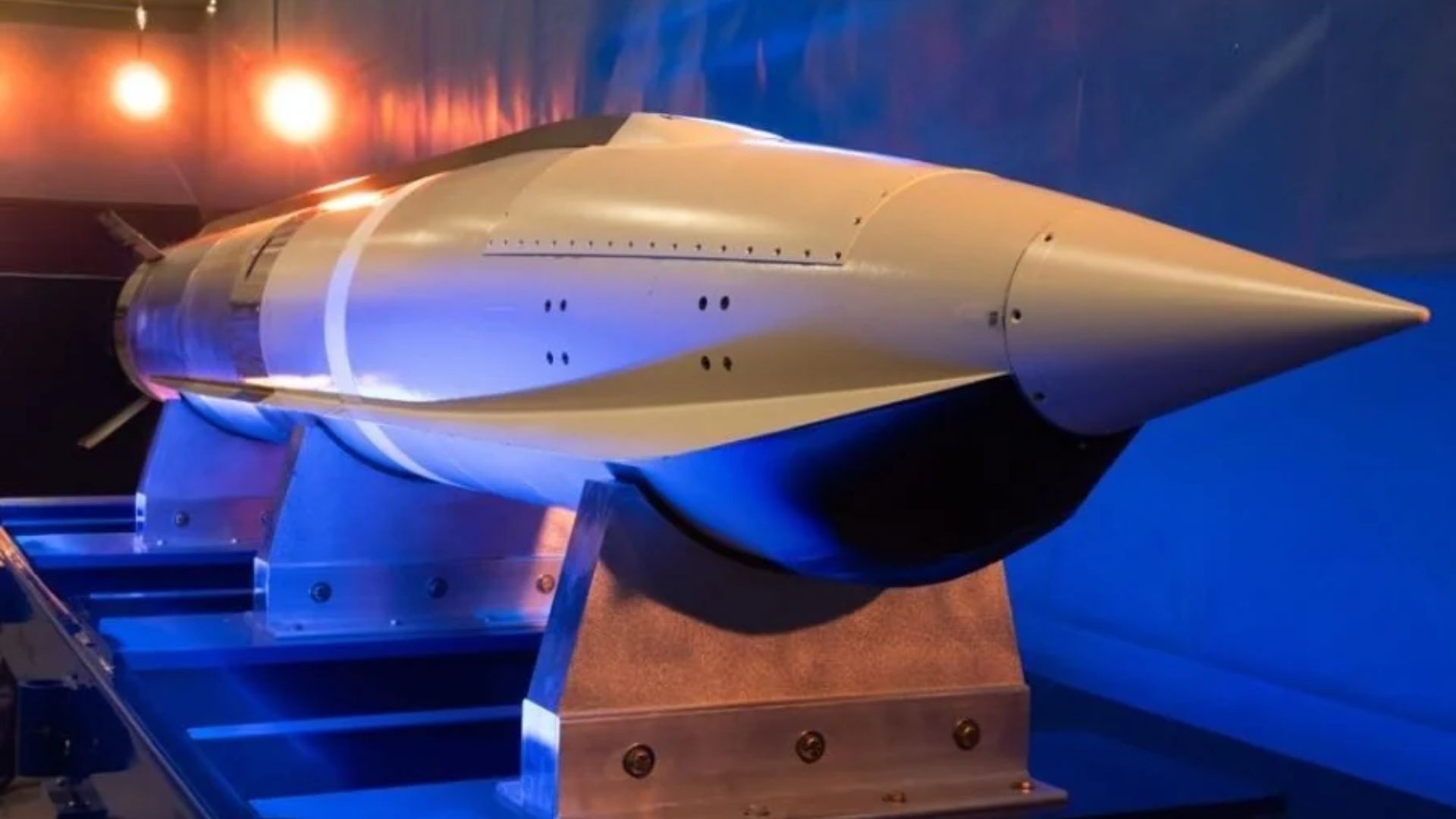
Lockheed Martin has been selected to develop and test a longer-range version of the US Army’s Precision Strike Missile (PrSM), designed to strike targets at least 621 miles (1,000 kilometers) away. The PrSM Increment 4 variant is intended to engage moving maritime targets and relocatable land targets when launched from the High Mobility Artillery Rocket System (HIMARS). The missile will use an advanced propulsion system supplied by L3Harris, which Lockheed Martin says could roughly double the range of the baseline PrSM. Flight competitions planned for 2027 and 2028 will evaluate the competing designs, with Lockheed Martin developing prototypes and investing in propulsion, sensors, and manufacturing capabilities. The missile is intended to engage moving maritime targets and relocatable land targets from existing launch systems. Its development focuses on extending range through advanced propulsion while retaining compatibility with current launchers and established guidance and control systems. PrSM Increment 4 uses an advanced propulsion system supplied by L3Harris. Lockheed Martin says the technology could roughly double the standoff range of the baseline PrSM, allowing the missile to engage targets at significantly greater distances. The design incorporates ramjet propulsion alongside guidance and control subsystems developed for the PrSM family. Ramjet technology is intended to sustain high-speed flight by using the missile’s forward motion to compress incoming air, supporting propulsion during the powered flight phase. Developing the propulsion system also requires manufacturing components to precise tolerances. Lockheed Martin has invested more than $300 million with industry partners to mature technologies intended to extend missile range. The company has also brought a $300 million additive-manufacturing and automation line online. The facility produces airframe and propulsion components while maintaining the dimensional precision required for ramjet performance. Increment 4’s sensor package is another key part of the development effort. The system is designed to support engagements against both moving ships and relocatable ground targets, requiring the missile to detect and track targets that may change position before impact. Lockheed Martin has invested $250 million in its Strigo Product Center, which develops radio-frequency sensors, missile datalinks and seeker technologies. Work at the center contributes to elements of the Increment 4 guidance package. Expands missile production The Increment 4 design is intended to retain the transport container and fire-control interface used by the baseline PrSM Increment 1. This would allow the missile to operate from the M142 High Mobility Artillery Rocket System (HIMARS) and M270A2 launcher without requiring changes to existing training or logistics arrangements. Maintaining compatibility with established launch systems could simplify the introduction of the longer-range missile. It would also allow the Army to build on its existing PrSM infrastructure rather than introduce an entirely separate launch system. Lockheed Martin is developing prototypes ahead of the scheduled flight competitions, which will assess designs for the next phase of the Army’s precision-strike capability. The company says its work combines existing missile technologies with advances in propulsion, sensing and manufacturing. Production is expected to build on Lockheed Martin’s manufacturing operations in Camden, Arkansas, where the company already produces PrSM Increment 1 and Increment 2. The facility is expanding with robotics and advanced automation to increase production capacity. The upgrades are intended to support the transition from low-rate manufacturing to full-rate production while maintaining consistent quality. The Army’s upcoming competitions will determine how the competing designs perform as development progresses. Lockheed Martin’s Increment 4 effort focuses on extending missile reach while maintaining compatibility with existing launch systems and incorporating the propulsion and sensor technologies needed for longer-range engagements. Get the latest in engineering, tech, space & science - delivered daily to your inbox.Jijo is an automotive and business journalist based in India. Armed with a BA in History (Honors) from St. Stephen's College, Delhi University, and a PG diploma in Journalism from the Indian Institute of Mass Communication, Delhi, he has worked for news agencies, national newspapers, and automotive magazines. In his spare time, he likes to go off-roading, engage in political discourse, travel, and teach languages.
US Army’s next-gen missile targets 621-mile range with advanced ramjet propulsion
Full Article
Original Source
Read the full article at Interestingengineering →KhanList aggregates and links to publicly available news content. We do not host full articles from third-party sources. Always verify important information with original sources.