
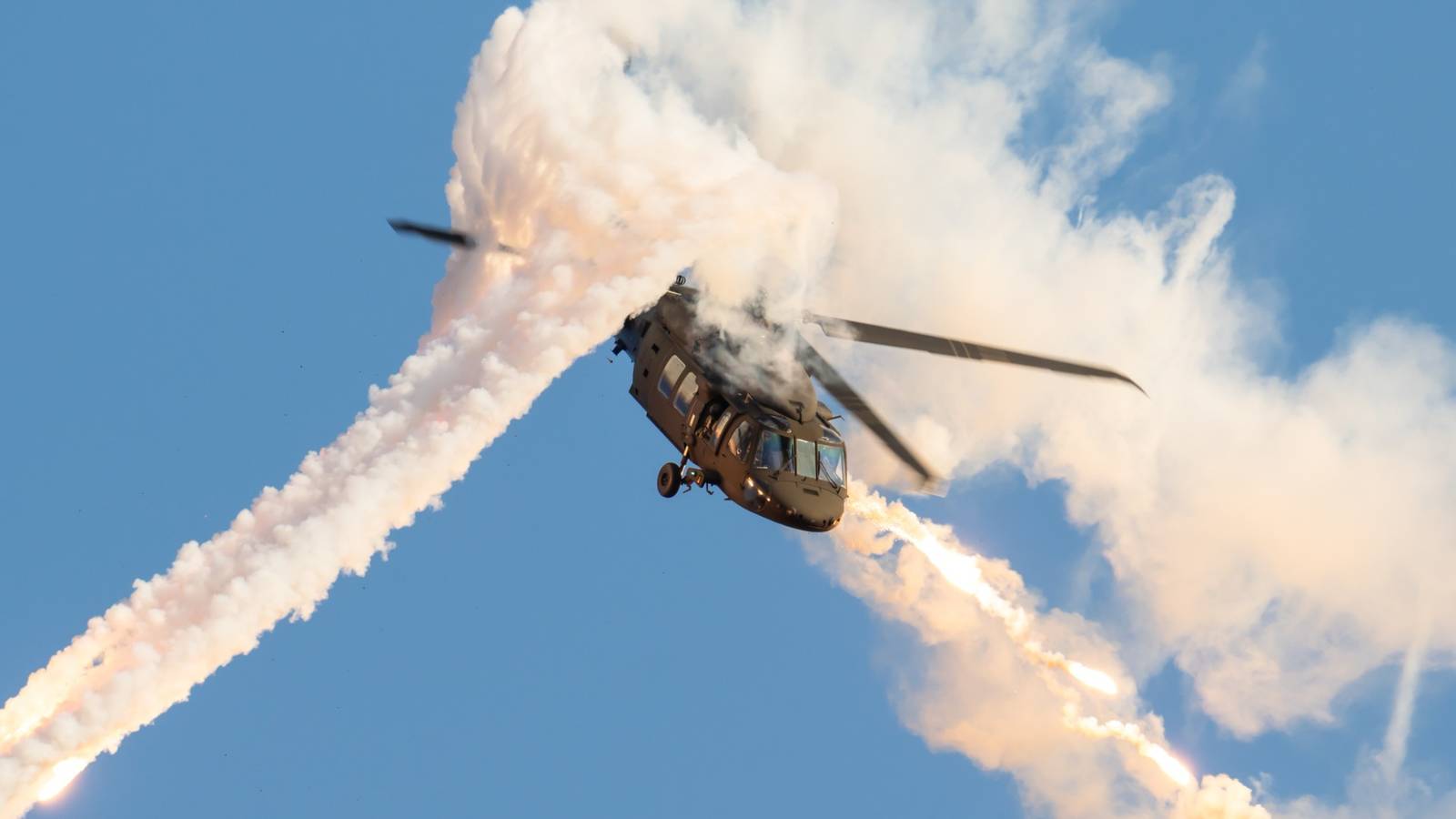
Published Nov 3, 2026, 3:13 PM EST Experienced ICAO English Language Proficiency Instructor for pilots and ATCOs and conference interpreter who is passionate about facilitating effective communication within aviation-related businesses. Possess a deep understanding of the aviation industry, including aviation regulations, terminology, and industry-specific communication protocols. Has been working at numerous airshows across Europe since 2014. Being an ultralight pilot in her free time, she also promotes safety and efficiency in aviation operations. Based in Italy and Malta A US Army Black Hawk helicopter narrowly avoided a potentially dangerous encounter with stadium fireworks during a pregame flyover at an NFL game between the Seattle Seahawks and Chicago Bears on November 2, 2026. The incident occurred at Lumen Field in Seattle, Washington, when pyrotechnics erupted while the final helicopter in a four-aircraft formation was still passing over the stadium. Dramatic footage captured the fireworks exploding remarkably close to the military aircraft, prompting audible gasps from spectators. The flyover was part of the national anthem ceremony ahead of the Monday Night Football matchup, which attracted approximately 70,000 spectators. Although military helicopter appearances are a familiar feature of major sporting events in the United States, the incident raised questions about coordination between stadium personnel and military flight crews. Fortunately, the helicopter continued flying after the fireworks erupted, with no apparent damage reported. Fireworks Explode Dangerously Close To The Final Black Hawk In Formation Credit: Frontpage | Shutterstock Four US Army Sikorsky UH-60M Black Hawk helicopters from the 2-158th Assault Helicopter Battalion, part of the 16th Combat Aviation Brigade, performed the ceremonial flyover at Lumen Field. The aircraft approached the stadium in formation as part of the pregame celebrations before the Seahawks faced the Chicago Bears. According to MyNorthwest, the first three helicopters passed over the stadium before the fireworks display began. However, the fourth aircraft was still nearby when the stadium's pyrotechnics were activated. Video footage shared widely on social media shows fireworks launching from the stadium structure and exploding extremely close to the trailing helicopter. From certain camera angles, the pyrotechnics appear to pass alongside the aircraft's rear section, creating the impression that the helicopter might have been struck. The aircraft nevertheless continued its flight behind the other three helicopters, with no visible signs of damage. The incident was also reported by the New York Post, which highlighted the frightening proximity of the fireworks and the reactions from spectators. While some footage appears to show fireworks passing directly alongside the aircraft, it remains unclear whether any projectile actually made contact. Neither an official explanation for the timing nor confirmation of an aircraft inspection was available in the initial reporting. Why Fireworks Can Pose A Serious Threat To Helicopters And Aircraft Fireworks are generally not compatible with aircraft operating in close proximity, especially during low-altitude helicopter demonstrations. Although a military helicopter such as the UH-60M is designed for demanding operating environments, its rotors, engines, flight controls, and other components remain vulnerable to foreign objects and external damage. A firework exploding near a helicopter could potentially expose its crew to burning debris, heat, and fragments, while also creating a distraction during a maneuver that requires precise aircraft control. Sikorsky, part of Lockheed Martin, manufactures the Black Hawk, a twin-engine military utility helicopter. Its design emphasizes operational versatility, survivability, and the ability to continue flying under challenging conditions. However, these characteristics should not be mistaken for immunity to airborne hazards. Even a relatively small incident involving a rotor blade or an engine intake could have serious consequences, particularly when an aircraft is operating close to a crowded venue. A historical example also shows why coordination between aircraft operators and pyrotechnics teams is essential. On July 23, 1982, a Bell UH-1 helicopter crashed in California during the filming of Twilight Zone: The Movie after special-effects explosions detonated too close to the aircraft. The accident killed actor Vic Morrow and two child actors, and injured six other people. According to the National Transportation Safety Board's investigation, debris and heat from the explosions damaged the helicopter's rotor blades, causing the tail rotor assembly to separate and the helicopter to descend uncontrollably. The investigation identified inadequate communication and coordination between the helicopter pilot and film director as contributing factors. How Airshows Safely Combine Military Aircraft And Pyrotechnic Displays Credit: bogpopdanas | Shutterstock Despite the potential dangers, aircraft demonstrations and pyrotechnics can be combined in the same organized event when appropriate safety procedures are in place. Airshows regularly combine military aircraft demonstrations, ground-based explosions, smoke effects, and other theatrical elements to recreate combat scenarios or enhance performances, and we have personally witnessed many such impressive performances, including the legendary one at Oshkosh. The key distinction is that these activities require careful planning, clearly defined operating areas, and communication between participating teams. Aircraft must follow predetermined flight paths that keep them away from designated pyrotechnic zones. The Federal Aviation Administration ( FAA) provides specific guidance for organizing aviation events involving ground-based pyrotechnics. Its airshow safety requirements emphasize documenting pyrotechnic device locations, establishing appropriate public-protection procedures, and coordinating ground operations. The agency also highlights the importance of separating aircraft movements from fireworks displays. Its guidance on mass aircraft demonstrations further stresses the need for detailed flight plans, mandatory briefings, and geographical, vertical, lateral, and time separation between participating aircraft. For stadium flyovers, timing is everything because helicopters generally fly slower than many fixed-wing aircraft, so they can stay near a venue longer. This makes coordination between flight crews, stadium production teams, and pyrotechnics operators especially important. In Seattle, the fireworks appeared to begin before the final Black Hawk had completely cleared the stadium area. Although the helicopter continued flying without any apparent consequences, the incident demonstrated how a seemingly routine pregame celebration can create an unnecessary aviation hazard.
US Army Black Hawk Helicopter Nearly Struck By Fireworks During Dramatic NFL Flyover
Full Article
Original Source
Read the full article at Simpleflying →KhanList aggregates and links to publicly available news content. We do not host full articles from third-party sources. Always verify important information with original sources.