
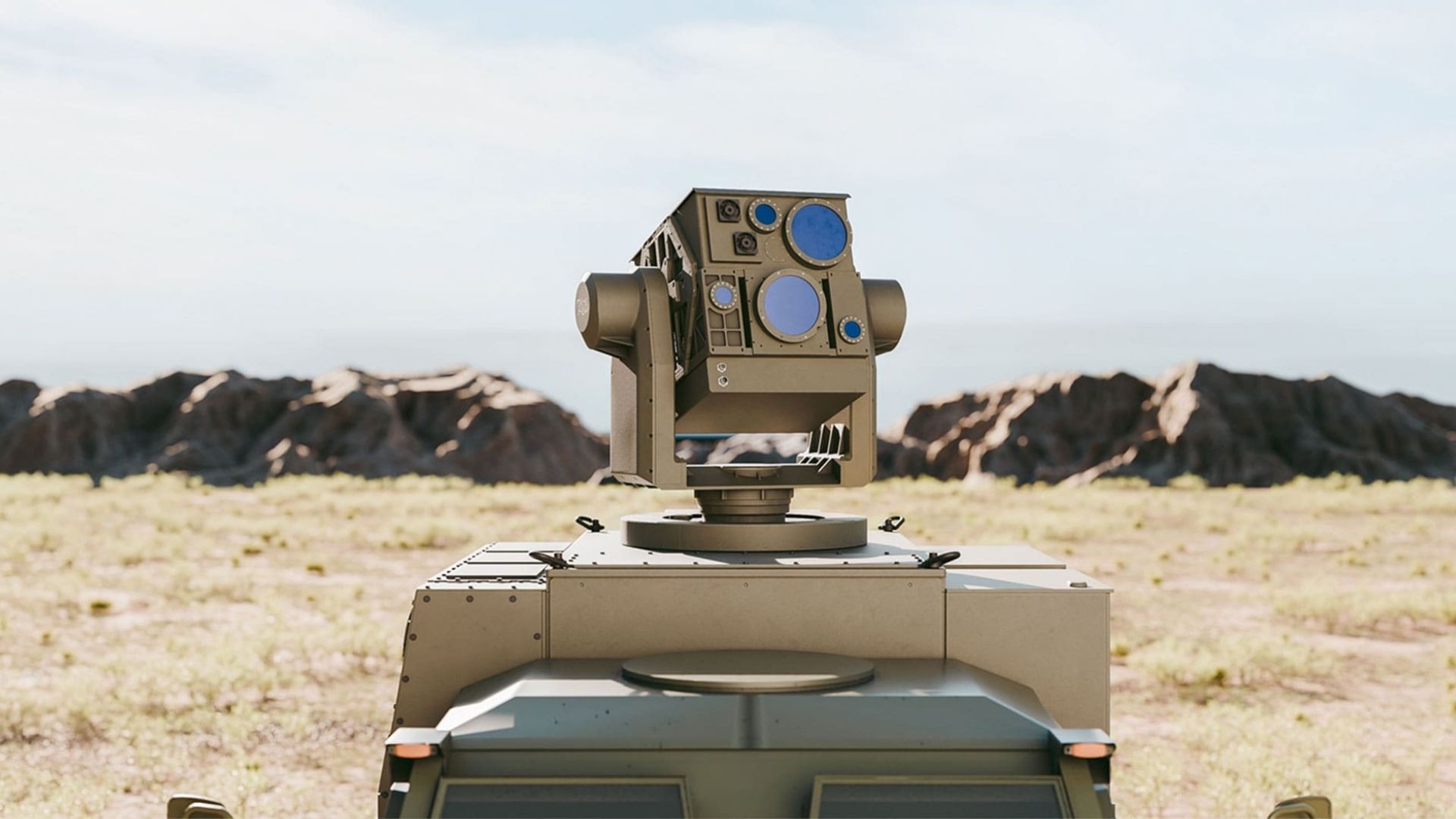
The U.S. Army’s move to put high-energy laser weapons into production is bringing another defense contractor into the effort. Leonardo DRS has been selected by AeroVironment to provide power management, thermal control, and integration expertise for the Army’s Enduring-High Energy Laser (E-HEL) program. The subcontract supports production of AeroVironment’s 30-kilowatt LOCUST X3 laser weapon, a mobile system designed to counter unmanned aircraft systems (UAS). While the laser is responsible for engaging incoming drones, the supporting equipment will help ensure it can operate reliably from military vehicles and other platforms. The announcement follows the Army’s September 2026 award of a $464.8 million E-HEL contract to AeroVironment. The service described it as its first production contract for a high-energy laser weapon system, marking a shift from prototype development toward procurement and fielding. Why a laser weapon needs more than a laser A high-energy laser may appear to be a relatively simple weapon. Direct concentrated light at a target and hold it there long enough to cause damage. But turning that principle into a mobile military system involves considerable engineering. Unlike conventional missiles, laser weapons do not carry an expendable interceptor for each engagement. They use electrical energy to generate a beam that can heat and damage a target. However, producing a powerful beam requires substantial electrical power, while the conversion process also generates waste heat. That creates two important engineering challenges. The system needs a reliable electrical power supply, and it must manage the heat generated during operation. Without effective thermal control, temperatures can affect sensitive electronics and other components, potentially limiting how long the weapon can operate. This is where Leonardo DRS comes in. The company will contribute its experience in power management, environmental control, and rugged system integration. The announcement does not disclose the precise configuration or specifications of these subsystems, but their role is to help make the laser suitable for operation in demanding field conditions. A 30-kilowatt laser designed for mobile deployment The LOCUST X3 is AeroVironment’s third-generation directed-energy system. The company describes it as a platform-agnostic weapon designed to engage Group 1–3 unmanned aircraft, which broadly cover smaller drones through larger tactical UAS. Its 30-kilowatt configuration is intended to support integration across different military platforms, including the Army’s Joint Light Tactical Vehicle (JLTV). AeroVironment also offers palletized configurations, providing another option for deploying the system without permanently installing it on a vehicle. The system combines laser hardware with sensors and software for detect, track, and engage aerial targets. Its modular architecture is intended to support integration with different platforms and sensor configurations. This flexibility matters because counter-drone systems may need to operate at fixed sites, accompany ground units, or protect mobile formations. According to AeroVironment, LOCUST X3 is designed to engage Group 1–3 UAS and provide persistent counter-drone defense. The company says its laser-based approach can reduce reliance on expendable interceptors, although actual engagement performance depends on factors such as target characteristics and operating conditions. From prototypes to production The E-HEL program builds on the Army’s earlier work with mobile high-energy laser prototypes, including the Multi-Purpose High Energy Laser (AMP-HEL). Leonardo DRS also brings experience from an earlier rapid-prototyping effort with AeroVironment and other industry partners. During that work, DRS contributed vehicle integration, power and thermal management, and systems engineering for government live-fire evaluations and training conducted in 2024 and 2025. AeroVironment’s September contract announcement says the E-HEL program will deliver dozens of LOCUST X3 systems over the next few years. The production effort is intended to expand the Army’s ability to counter drone threats while establishing a more sustainable way to procure directed-energy weapons. Leonardo DRS has not disclosed the value of its subcontract or the number of systems its work will support. But its selection shows that fielding laser weapons at scale requires more than a powerful beam. It also requires dependable power, effective cooling, and hardware that can withstand the conditions of military operations. Get the latest in engineering, tech, space & science - delivered daily to your inbox.Kaif Shaikh is a journalist and writer passionate about turning complex information into clear, impactful stories. His writing covers technology, sustainability, geopolitics, and occasionally fiction. A graduate in Journalism and Mass Communication, his work has appeared in the Times of India and beyond. After a near-fatal experience, Kaif began seeing both stories and silences differently. Outside work, he juggles far too many projects and passions, but always makes time to read, reflect, and hold onto the thread of wonder.
US Army advances first vehicle-mounted laser weapon production to destroy enemy drones
Full Article
Original Source
Read the full article at Interestingengineering →KhanList aggregates and links to publicly available news content. We do not host full articles from third-party sources. Always verify important information with original sources.