
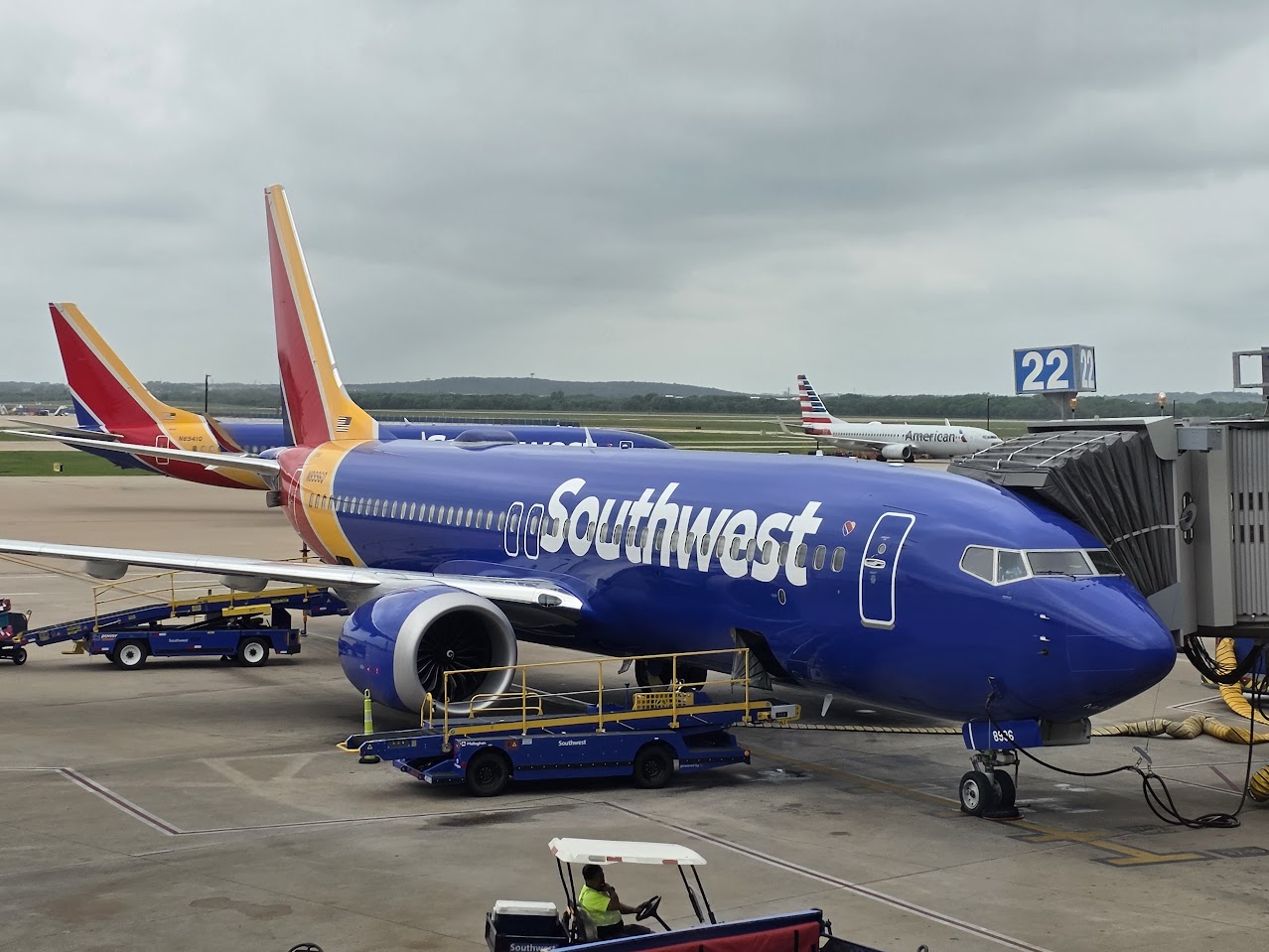
Southwest’s on-time arrival rate fell more than 10 percentage points compared with last September. And they weren’t alone: every U.S. airline in Cirium’s September rankings was less punctual and canceled a larger share of flights than a year earlier. Yet Southwest was still the least likely to cancel flights. All nine North American airlines listed improved their on-time performance over August. But the comparison with last September’s results is much less flattering. Delta still leads the U.S. airlines and Southwest finishes last. Cirium’s September 2026 report puts WestJet first in North America at 85.31%, followed by Delta at 82.52% and Alaska at 80.73%. Here’s the full North American list, with August’s results and last September for comparison: Airline Sept. 2025 Aug. 2026 Sept. 2026 CanceledSept. 2026 WestJet 84.49% 82.55% 85.31% 0.74% Delta 87.50% 79.15% 82.52% 0.92% Alaska 84.59% 73.95% 80.73% 1.57% United 84.16% 74.49% 78.65% 0.89% American 82.10% 74.19% 77.11% 1.01% Frontier 79.82% 67.18% 75.49% 0.65% JetBlue 79.81% 63.85% 74.64% 1.80% Air Canada 81.07% 65.44% 73.19% 3.31% Southwest 81.46% 68.28% 71.14% 0.38% The first three percentage columns measure on-time arrivals. The last shows September 2026 cancellations, calculated as 100% minus Cirium’s completion factor. Cirium counts an arrival as on time when the plane reaches the gate within 15 minutes of schedule. Canceled flights aren’t counted as late arrivals. Southwest Improved And Still Finished Last Southwest went from 68.28% on time in August to 71.14% in September. They still dropped from sixth to ninth because Frontier, JetBlue and Air Canada improved more and passed them. Compared with September 2025, Southwest fell from 81.46% to 71.14%. That’s a 10.32 percentage point decline, the largest among the airlines listed. Their 99.62% completion factor, though, means they canceled just 0.38% of flights, about one in 263. That’s less than half the cancellation rate at United, Delta or American. Southwest was also the least likely to cancel in August, although its cancellation rate last September was lower still at 0.17%. Southwest has been trying to get more flying out of each aircraft by reducing time on the ground and adding redeyes. That saves aircraft and labor costs when the schedule works. It also leaves less room to absorb problems. And it leaves less room for the slowed-down boarding that results from more carry-ons in the cabin, which has been an issue since ending Bags Fly Free. During the July earnings call, Chief Operating Officer Andrew Watterson acknowledged that full flights were taking longer to turn, particularly in the final 10 minutes. Delta Recovered, But American Hasn’t Closed The Gap Delta’s summer performance was a mess. Their September was an real improvement. Their cancellation rate fell from 1.77% in August to 0.92%, while on-time arrivals improved from 79.15% to 82.52%. Delta had admitted pilot availability, crew scheduling and maintenance recovery as problems. Delta’s lead over United was 3.87 percentage points for on-time arrivals. United canceled slightly less often, 0.89% versus Delta’s 0.92%. Delta’s operatonal advantage is no longer material. American improved too. Their cancellation rate fell from 2.28% in August to 1.01%, and on-time arrivals rose to 77.11%. But Delta’s lead over American was 5.41 percentage points. Last September it was 5.40 points. The airline’s investment in more realistic scheduled flight times and its plan to spread Dallas–Fort Worth flying out across 13 connecting banks instead of nine hasn’t yet paid off in systemwide performance relative to other carriers. Two Delta Hubs Stand Out In The Airport Results Airports are ranked on departures, while airlines are ranked on arrivals. Only two U.S. airports made the large airport top twenty: Salt Lake City: 13th, with 85.56% of departures on time. Minneapolis–St. Paul: 16th, at 85.13%. Both are Delta hubs. An airport’s result includes the performance of the airlines using it, so this is partly another view of Delta’s operation. Weather, congestion and airport layout also affect how well a hub works. Harbin led the large airport category at 96.74%, followed by Santiago at 90.54% and Lima at 90.40%. Portland placed 12th among medium airports at 83.24%, while Kona was 12th among small airports at 88.78%. Topics on this page
U.S. Airlines Are Running Later Than A Year Ago—Southwest’s On-Time Performance Fell 10 Points
Full Article
Original Source
Read the full article at Viewfromthewing →KhanList aggregates and links to publicly available news content. We do not host full articles from third-party sources. Always verify important information with original sources.