
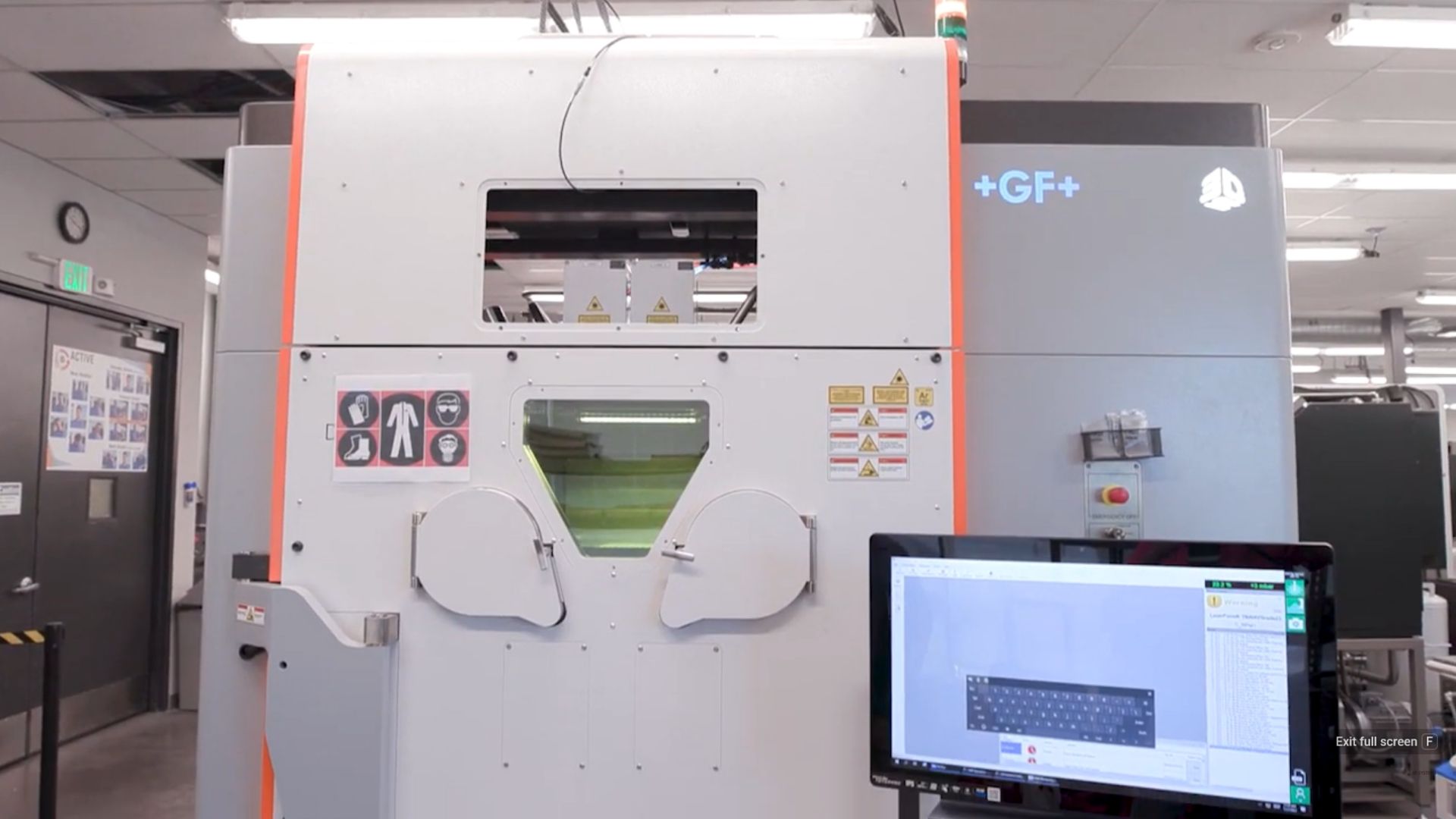
3D Systems has partnered with Savannah River National Laboratory (SRNL) to develop advanced 3D-printing technologies aimed at applications spanning nuclear energy, critical infrastructure, and national security. The South Carolina-based collaboration is structured through a Cooperative Research and Development Agreement (CRADA) and will be centered at SRNL’s Advanced Manufacturing Collaborative (AMC). The partners will work on new materials, manufacturing equipment, artificial intelligence and machine-learning tools, and scalable production processes for additive manufacturing. The partnership could be particularly significant for industries where components must operate under extreme temperatures, radiation, or mechanical loads, while also requiring complex geometries that are difficult to manufacture using conventional techniques. From 3D printing research to nuclear components 3D Systems and SRNL plan to investigate advanced additive manufacturing materials and processes for energy and national-security applications. Areas identified by the partners include high-temperature nickel-based superalloys and radiation-tolerant materials that could be used to manufacture complex components for advanced nuclear systems. Potential applications include heat exchangers with intricate internal cooling channels, reactor internals, pumps and valves. Such components can benefit from additive manufacturing because the technology lets engineers create geometries that would be difficult or impossible to produce with traditional manufacturing methods. It can also reduce material waste and provide greater freedom when designing components for demanding operating environments. For advanced nuclear systems, the implications extend beyond component design. The partners say additive manufacturing could contribute to domestic manufacturing capacity and supply-chain resilience as the US invests in advanced reactors, small modular reactors and other energy technologies. The collaboration will also investigate AI and machine-learning-enabled process optimization, potentially allowing manufacturing parameters to be monitored and adjusted more intelligently during production. Building a domestic advanced-manufacturing pipeline A major part of the agreement is the infrastructure behind the research. 3D Systems equipment has already been installed at SRNL’s Advanced Manufacturing Collaborative, alongside facility upgrades and additive-manufacturing specialists. That gives the partnership a route from materials research and experimental manufacturing toward processes that could eventually be demonstrated at production-relevant scales. “This agreement demonstrates the impact and importance of high-quality 3D printing materials and technologies on key industrial markets, particularly energy and national security,” said Jeff Graves, president and CEO of 3D Systems. SRNL said the collaboration is intended to strengthen US manufacturing competitiveness while accelerating the development and adoption of additive-manufacturing technologies. The partnership also has a workforce-development component. Researchers, engineers and technicians will receive opportunities to work with advanced additive-manufacturing systems, creating a pipeline of personnel trained in technologies that could become increasingly important to nuclear, aerospace, defense and energy industries. Why the timing matters The agreement comes as advanced nuclear technologies and other energy systems drive demand for manufacturing methods that can shorten development cycles while producing increasingly complex components. According to the International Energy Agency, global small modular reactor capacity could reach roughly 40 GW by 2050 under current policies, or as much as 120 GW under an accelerated scenario. The objective is for 3D Systems and SRNL is not simply to print individual components. The larger ambition is to develop materials, machines, software, and manufacturing expertise that can move additive manufacturing from laboratory research toward repeatable industrial production. Get the latest in engineering, tech, space & science - delivered daily to your inbox.Kaif Shaikh is a journalist and writer passionate about turning complex information into clear, impactful stories. His writing covers technology, sustainability, geopolitics, and occasionally fiction. A graduate in Journalism and Mass Communication, his work has appeared in the Times of India and beyond. After a near-fatal experience, Kaif began seeing both stories and silences differently. Outside work, he juggles far too many projects and passions, but always makes time to read, reflect, and hold onto the thread of wonder.
US 3D printing partnership targets complex prints for nuclear reactors and defence
Full Article
Original Source
Read the full article at Interestingengineering →KhanList aggregates and links to publicly available news content. We do not host full articles from third-party sources. Always verify important information with original sources.