
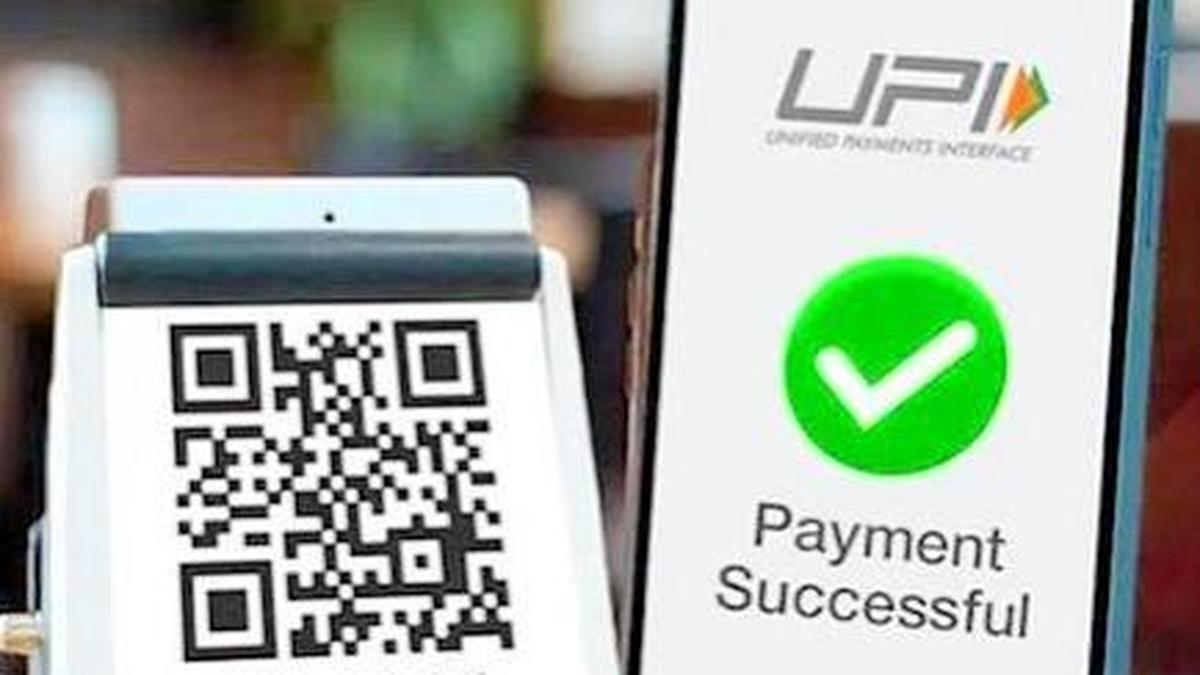
QR Code going to be a thing of the past | Photo Credit: The Hindu A decade after the launch of the Unified Payments Interface (UPI), payment companies are moving towards a new phase of digital payments that seeks to make transactions faster and do away with one-time passwords (OTPs) and QR codes.The Reserve Bank of India (RBI) Governor last week launched a ‘tap and pay’ facility for UPI transactions in partnership with the National Payments Corporation of India (NPCI), enabling payments through RuPay credit cards without the need for OTPs or QR codes. The facility was unveiled at the Global Fintech Fest 2026 in Mumbai.The new feature uses the point-of-sale (PoS) terminal’s internet connectivity, allowing a transaction to be completed even when the customer’s mobile device does not have internet access. NPCI said the facility is currently available for transactions of up to ₹5,000. For higher-value transactions, customers will have to enter their PIN.UPI has emerged as India’s dominant electronic payment system, accounting for about 85% of transactions. Introduced in in the aftermath of demonetisation, its rapid adoption has been driven largely by the convenience of making retail and utility payments without the need for cash.However, the growing scale of digital payments has also brought heightened concerns over fraud, including incidents involving the theft or inadvertent sharing of OTPs and other authentication credentials. In response, the RBI mandated a two-factor authentication for UPI transactions from April 1, 2026, prompting payment companies to develop alternatives that combine security with ease of use.Visa and Mastercard, for instance, have introduced passkeys as an additional authentication mechanism. Depending on the device and payment system, authentication can involve a PIN, fingerprint or the method used to unlock a smartphone.Mastercard has also showcased its Consumer Device Cardholder Verification Method (CDCVM), which allows transactions to be authenticated through a device’s biometric capabilities, including fingerprint or facial recognition. Mastercard has partnered with Google Pay to offer the service.Amazon Pay, which accounts for less than 1% of UPI transactions, has also introduced a tap-and-pay facility for its partner merchants as it seeks to expand its presence in the digital payments market.“At a petrol pump (for instance), you fill the petrol and then look for the QR code. The network may not be working or the lighting may not be right (leading to failed payments). Now, you just tap your phone and you can pay through your UPI card,” Mayank Jain, Director, Credit & Lending, Amazon Pay, told The Hindu on the sidelines of the fintech event.The regulatory focus on reducing payment frauds and ramping up data security comes in the backdrop of slowly increasing artificial intelligence (AI) based security attacks on financial systems all over the world. Companies and regulators are finding these newer solutions to deal with them and hence, trying to push UPI to its next phase, with data security in mind along with the convenience to pay. Published - September 21, 2026 08:30 pm IST
UPI heads towards a code-less era, a decade after its debut
Full Article
Original Source
Read the full article at Thehindu →KhanList aggregates and links to publicly available news content. We do not host full articles from third-party sources. Always verify important information with original sources.