
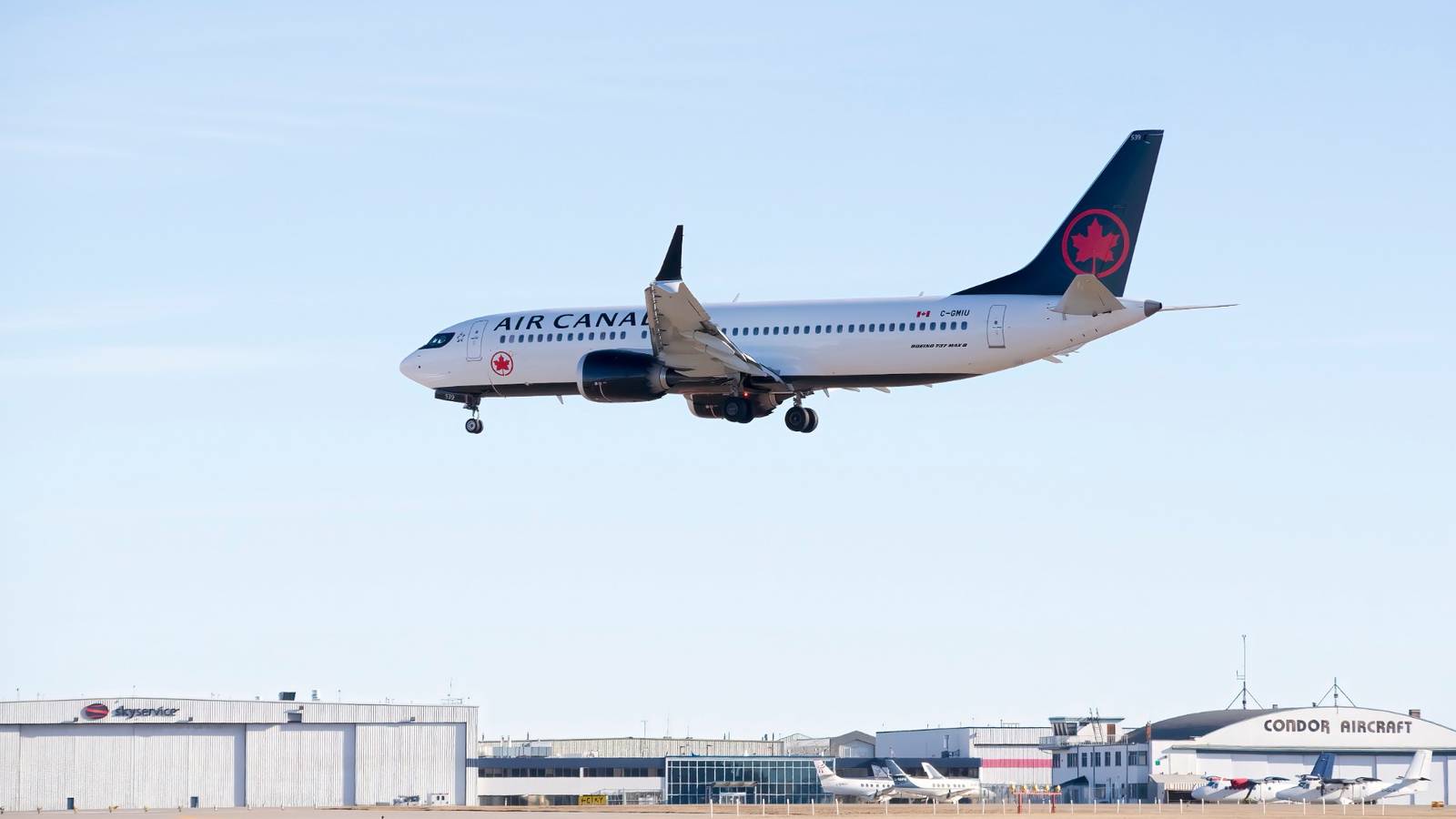
Published Nov 22, 2026, 6:47 PM EST Experienced ICAO English Language Proficiency Instructor for pilots and ATCOs and conference interpreter who is passionate about facilitating effective communication within aviation-related businesses. Possess a deep understanding of the aviation industry, including aviation regulations, terminology, and industry-specific communication protocols. Has been working at numerous airshows across Europe since 2014. Being an ultralight pilot in her free time, she also promotes safety and efficiency in aviation operations. Based in Italy and Malta An Air Canada Boeing 737 MAX 8 received a Traffic Collision Avoidance System (TCAS) alert after encountering an unresponsive Cessna while climbing out of Palm Springs International Airport (PSP), California, on November 17, 2026. Flight AC1769, bound for Vancouver International Airport (YVR), reportedly received a resolution advisory at approximately 11,400 feet, prompting its pilots to climb to 12,000 feet to avoid the nearby aircraft. The incident occurred shortly after the aircraft departed Palm Springs, with the smaller aircraft reportedly failing to respond. Although the encounter triggered an automated collision-avoidance warning, the Air Canada aircraft continued its scheduled journey without diverting or returning to the airport. The Boeing 737 MAX 8 subsequently landed safely in Vancouver. While the incident highlights the importance of onboard collision-avoidance technology, several details surrounding the encounter, including the Cessna's identity and the minimum distance between the two aircraft, remain unknown. Air Canada Flight Receives TCAS Climb Advisory Credit: Dark_Side | Shutterstock According to AIRLIVE, Air Canada flight AC1769 departed Palm Springs International Airport at 12:45 local time on November 17. The aircraft, registered C-FSDB, was a Boeing 737 MAX 8 operating a scheduled service to Vancouver. It departed from Runway 31R and began its climb towards cruising altitude when its onboard Traffic Collision Avoidance System detected potentially conflicting traffic. The reported encounter involved a small Cessna that was not responding as the Canadian aircraft climbed through approximately 11,400 feet. The TCAS resolution advisory instructed the Air Canada pilots to climb to 12,000 feet, representing an additional 600 feet of altitude. This maneuver was intended to establish greater vertical separation between the two aircraft and resolve the potential traffic conflict. Importantly, the reported alert was a resolution advisory (RA), not a proximity warning. According to AeroSillage, an RA provides pilots with instructions to modify or maintain their vertical flight path to address a potential collision threat. The available reports do not establish the exact distance between the aircraft when the alert occurred. How TCAS Protects Aircraft From Mid-Air Collisions Credit: schusterbauer.com | Shutterstock Traffic Collision Avoidance Systems are an important layer of aviation safety, particularly when aircraft encounter potentially conflicting traffic in busy airspace. The technology uses information transmitted by nearby aircraft transponders to identify potential collision threats. Depending on the circumstances, the system can issue traffic advisories or resolution advisories, recommending that pilots climb or descend to increase vertical separation. Unlike instructions from air traffic controllers, TCAS resolution advisories are generated automatically using onboard surveillance equipment. According to the Federal Aviation Administration's Aeronautical Information Manual, pilots are expected to follow an RA promptly unless doing so would jeopardize the aircraft's safety. However, the circumstances surrounding the Cessna's reported lack of response remain unclear. AeroSillage noted that the available reporting does not establish whether the smaller aircraft failed to answer a radio communication or did not comply with an air traffic controller's instruction. Its registration, the nature of the communication attempts, and the minimum separation between the aircraft have not been disclosed. Boeing 737 MAX Continues to Vancouver Credit: Rene Dominguez | Shutterstock Despite the reported encounter, AC1769 continued its journey to Canada without an emergency diversion. AIRLIVE reported that the aircraft landed at Vancouver International Airport at 16:45 local time, completing the approximately 2-hour-and-40-minute journey. Flight-tracking information independently confirms that this Boeing 737 operated the Palm Springs-Vancouver service and reached its destination. No other details or further emergency involving the aircraft were reported. Nevertheless, the incident illustrates how unexpected traffic conflicts can require immediate action even during otherwise routine departures. Based on available reporting, no specific findings from the US or Canadian authorities have established the circumstances of the encounter. Without an official reconstruction, it remains impossible to determine whether the Cessna experienced a communication problem, whether an instruction was missed, or how close the aircraft actually came. For now, the confirmed outcome is that Air Canada's Boeing 737 MAX 8 safely completed its flight to Vancouver, while some important questions about the reported traffic conflict remain unanswered.
Unresponsive Cessna Prompts Air Canada Boeing 737 MAX 8 TCAS Alert Over Palm Springs
Full Article
Original Source
Read the full article at Simpleflying →KhanList aggregates and links to publicly available news content. We do not host full articles from third-party sources. Always verify important information with original sources.