
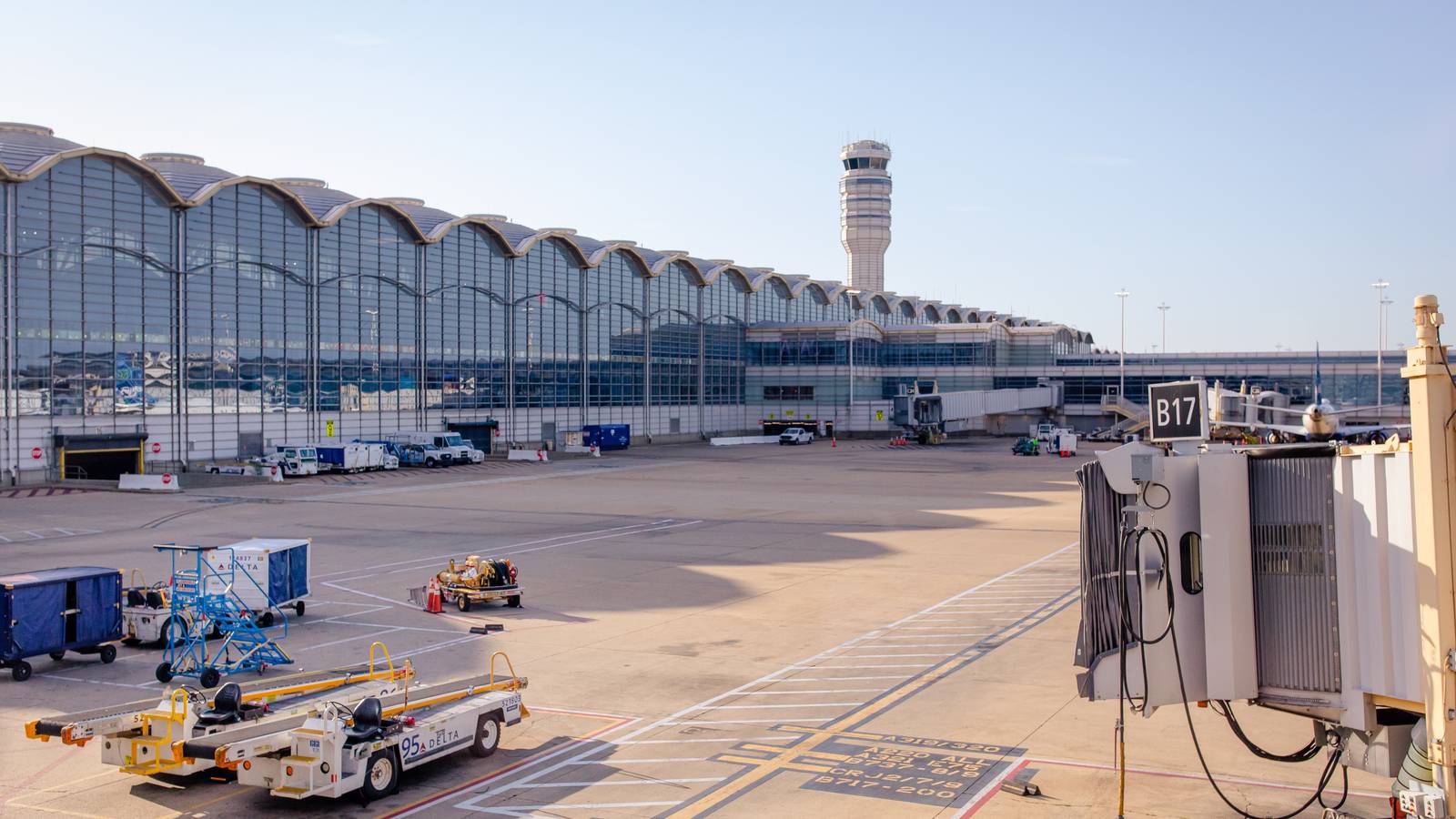
Published Sep 12, 2026, 1:23 PM EDT Jack comes to Simple Flying with a lifelong interest in all things aviation. He holds a degree in Aerospace Engineering from Georgia Tech, and is a certified private and remote pilot. Beyond these experiences, Jack previously worked for a corporate flight department where he gained first-hand experience in the world of business aviation. Currently, Jack works in the professional services industry and continues to build his flight hours outside of work. Sign in to your Simple Flying account United Airlines is preparing to scrap an Airbus A320 that has been parked at Ronald Reagan Washington National Airport (DCA) since May after sustaining rear-fuselage damage when it was struck by a catering truck. The aircraft, registered N470UA, has remained at DCA for months and is now being stripped of components, with recent photographs showing its United branding covered and its engines removed. N470UA was classified as damaged beyond repair following the May 16 incident, according to aircraft records. Planespotters.net lists the A320 as parked at Reagan National and records the incident as damage to the rear fuselage. Data shows the aircraft completed a United flight into DCA early on May 16, but it did not return to service afterward. A320 Has Remained At DCA Since The Incident N470UA arrived at Reagan National on May 16 after operating United flight UA1369 from Chicago O'Hare (ORD). Flight records show the aircraft landing at DCA at 1:08 AM on May 17 UTC, after which its scheduled return to Chicago was canceled. The aircraft has not subsequently appeared in normal United flight activity. Aircraft records identify N470UA as an A320-232, manufacturer serial number 1427. The jet was built in 2001 and delivered to United in March of that year before spending a period with United's Ted brand. It returned to United service in 2009. By the time of the accident, the aircraft was approximately 25 years old. The aircraft's long-term presence became increasingly noticeable to airport observers. Photographs and discussion posted in August showed the aircraft still sitting at DCA, with its United titles covered and visible work around the rear fuselage. Structural Damage Made Repair Uneconomical Credit: Ceri Breeze | Shutterstock The deciding factor appears to have been the location and extent of the damage. Aircraft records specifically identify the rear fuselage as the area damaged when the catering vehicle struck the aircraft. A fuselage repair can involve more than replacing exterior skin because the structure underneath must be inspected for damage, repaired, and returned to its certified condition. For an aircraft that was already about 25 years old, the economics of such work can be difficult to justify. N470UA was one of United's older A320s, and its retirement would remove an aircraft that was already approaching the latter portion of its commercial service life. The available records do not provide a detailed repair estimate, nor do they indicate precisely how the catering truck struck the aircraft or the full extent of the structural damage. Online reports from observers instead show the visible aftermath, including work around the damaged section. The decision to scrap the aircraft should therefore be understood as an economic and fleet-management outcome rather than evidence that every aircraft sustaining comparable ground damage would necessarily be written off. United has not publicly released a detailed explanation of the disposal decision. Aircraft Is Now Becoming A Source Of Parts Credit: Ceri Breeze | Shutterstock Recent observations indicate that N470UA is moving from long-term storage toward dismantling. Reddit users who photographed the aircraft in August and September reported that its engines had been removed, while other components appeared to have been taken off the aircraft. The process is consistent with the way damaged commercial aircraft can retain value after an airframe is no longer economically repairable. Engines, landing gear, avionics, flight-control components, cabin equipment, and other serviceable parts can be removed and returned to inventory or sold for use elsewhere, depending on their condition and remaining life. For United, retaining useful components from an aircraft that cannot return to service can help recover some value from the loss. The A320 family also has a large global installed base, which supports demand for replacement parts and components. N470UA's removal from the active fleet will therefore not mean that every valuable element of the aircraft is lost. Its airframe may ultimately be dismantled at Reagan National or moved elsewhere for further processing, although the available sources do not establish the aircraft's final physical disposition. The incident also illustrates how a relatively routine ground operation can end an aircraft's career. N470UA had spent roughly a quarter-century carrying United passengers across the carrier's domestic network. After a catering vehicle struck its rear fuselage at DCA, the aircraft never returned to scheduled service, and its remaining value now lies largely in the components that can be recovered from it.
United Is Scrapping An Airbus A320 Wrecked By A Catering Truck At Reagan National
Full Article
Original Source
Read the full article at Simpleflying →KhanList aggregates and links to publicly available news content. We do not host full articles from third-party sources. Always verify important information with original sources.