
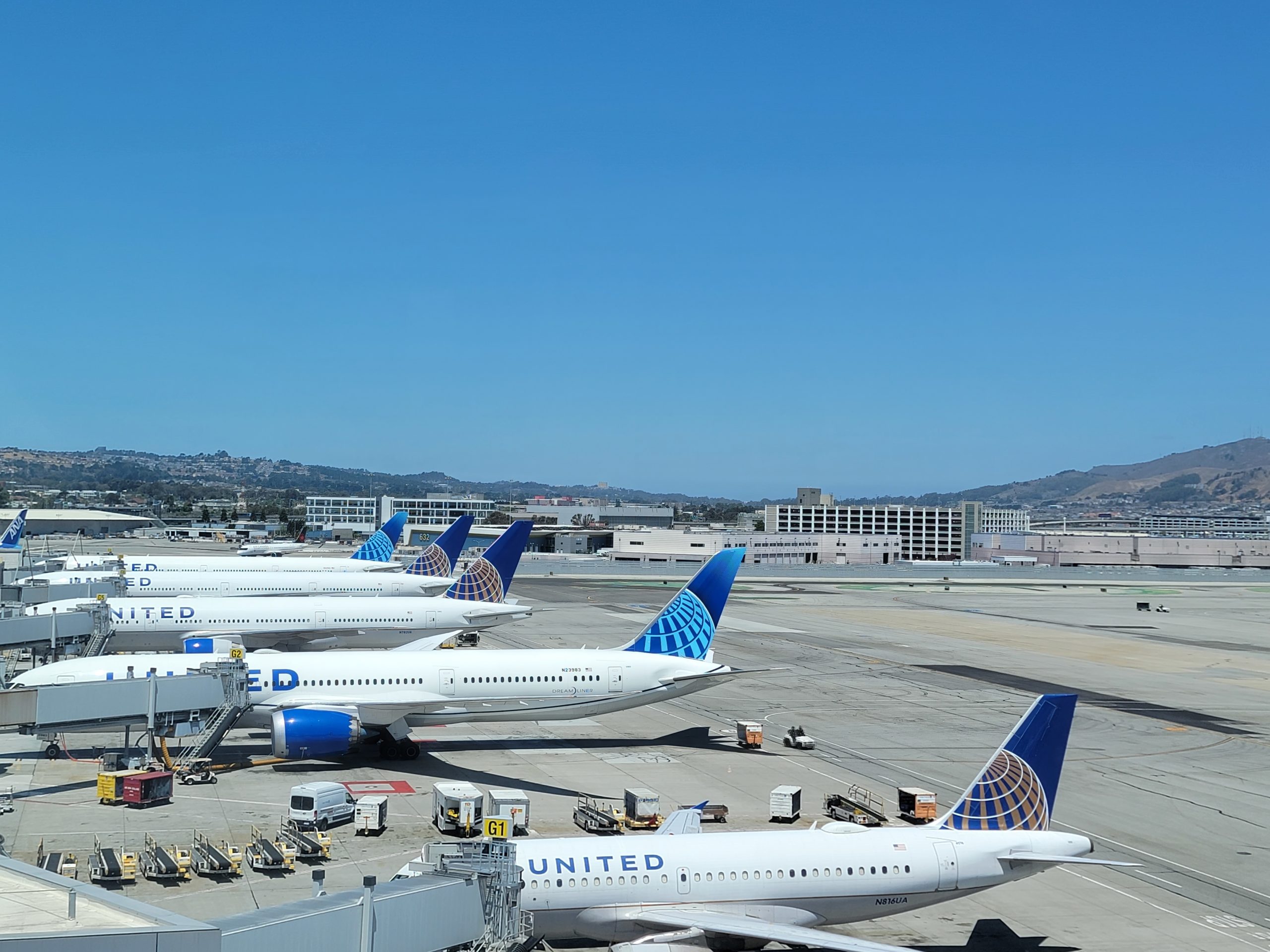
United Airlines CEO Scott Kirby is trash talking Delta’s Pacific route expansion, dismissing the markets it’s entering as “low yield and half empty” and saying it doesn’t have the right planes. United has the stronger transpacific network, but Delta doesn’t have to ‘beat United’ across that ocean to make money on a new flight or to make United earn less on theirs. According to aviation watchdog JonNYC, Kirby answered an employee question about whether Delta’s Asia-Pacific growth concerns him. The answer is no: We have best Pacific hubs. We are 5x bigger than DAL in the Pacific. Markets DAL is opening in Pacific are low yield and half empty, like HKG. They don’t have the right aircraft for the Pacific. SFO is the best Pacific gateway to have. We’ll be #1 across both oceans View JonNYC’s report on Twitter. There’s some bravado here, but he’s answering like it’s a fantasy sports team not a business. United is the biggest player in transpacific flying, but that doesn’t say anything at all about whether Delta will make incremental flying out of Los Angeles work or whether United will have to discount more seats to fill its own planes as a result. What Delta Is Adding Across The Pacific Delta has several new, announced, and planned routes. Los Angeles–Hong Kong: daily service launched June 6, 2026 on an Airbus A350. This is the market Kirby calls out. Delta’s announcement emphasized cargo, with capacity for more than 20 tons per flight. Hong Kong is a highly competitive market and less important than it was a decade ago. Los Angeles–Manila: starts March 28, 2027, three times weekly before becoming daily June 7, using an A350-900. Delta will compete with the Philippine Airlines nonstop and connecting options including United via San Francisco. It’s a big visiting friends and relatives group but generally considered non-premium. Seattle–Tokyo Narita: daily service begins March 27, 2027, using an A330-900neo, alongside Delta’s existing Haneda flight. This is the less desirable airport, Delta struggles transpacific out of Seattle, and other service already exists to the inferior airport out of Seattle. Los Angeles–Melbourne: launched in December 2025 with an A350-900. Delta expands it to daily for peak season starting December 22. Melbourne joins Sydney, Brisbane and Auckland in Delta’s Australia and New Zealand network from Los Angeles. Los Angeles–Shanghai: returned in June 2025 with an A350-900. Seattle–Taipei, which launched in June 2024, was another step in this buildup and now also uses the A350. U.S. airlines are fighting the addition of more flights to China to protect their existing service. Seattle-Taipei is saturated and one of the better flights for premium cabin awards. Singapore and more Seoul flying: I’ve covered Delta’s plans for Singapore and Los Angeles–Seoul. Chief commercial officer Joe Esposito has confirmed the intent to return to Singapore, and it seems likely to be from Seattle. Seoul makes sense with their joint venture partner Korean as a play for connecting traffic to Asia. Singapore is competitive, long and expensive. United Has The Better Pacific Network But Can’t Be Fairly Described As “5x Bigger” United has San Francisco, a huge connecting operation and a strong local market with deep business ties to Asia. It has a much broader network of its own flights, supplemented by partners including ANA and Air New Zealand. Its Pacific operation also includes Guam and island flying. Delta has a smaller network centered on Los Angeles and Seattle, plus long-haul flying from interior hubs. It also has the Korean Air joint venture feeding connections through Seoul. United serves dozens of destinations while Delta reaches just a handful non-stop. In the second quarter of 2026, United reported $1.788 billion in Pacific passenger revenue. Delta reported $832 million. United generated 2.15 times as much revenue from Pacific flying as Delta did. Meanwhile, Kirby’s claim that Delta doesn’t have the right aircraft for the Pacific is too strong. Hong Kong, Manila and Melbourne are well-matched to the A350’s capabilities, but it’s a large aircraft and does need a lot of passengers. United’s 787-8s and 787-9s give it smaller long-range aircraft, alongside larger 777s. A smaller plane can make it easier to open a route without having to sell as many seats. An A350 can offer attractive costs per seat and cargo capacity but may be too much airplane for a particular market. A 787 can offer a lower total trip cost while giving up seats or cargo revenue. The right fleet depends on destination and connecting opportunities to fill seats, along with cargo. Topics on this page
United CEO Trash Talks Delta’s “Half Empty” Pacific Routes—But His Own Profits Could Take A Hit
Full Article
Original Source
Read the full article at Viewfromthewing →KhanList aggregates and links to publicly available news content. We do not host full articles from third-party sources. Always verify important information with original sources.