
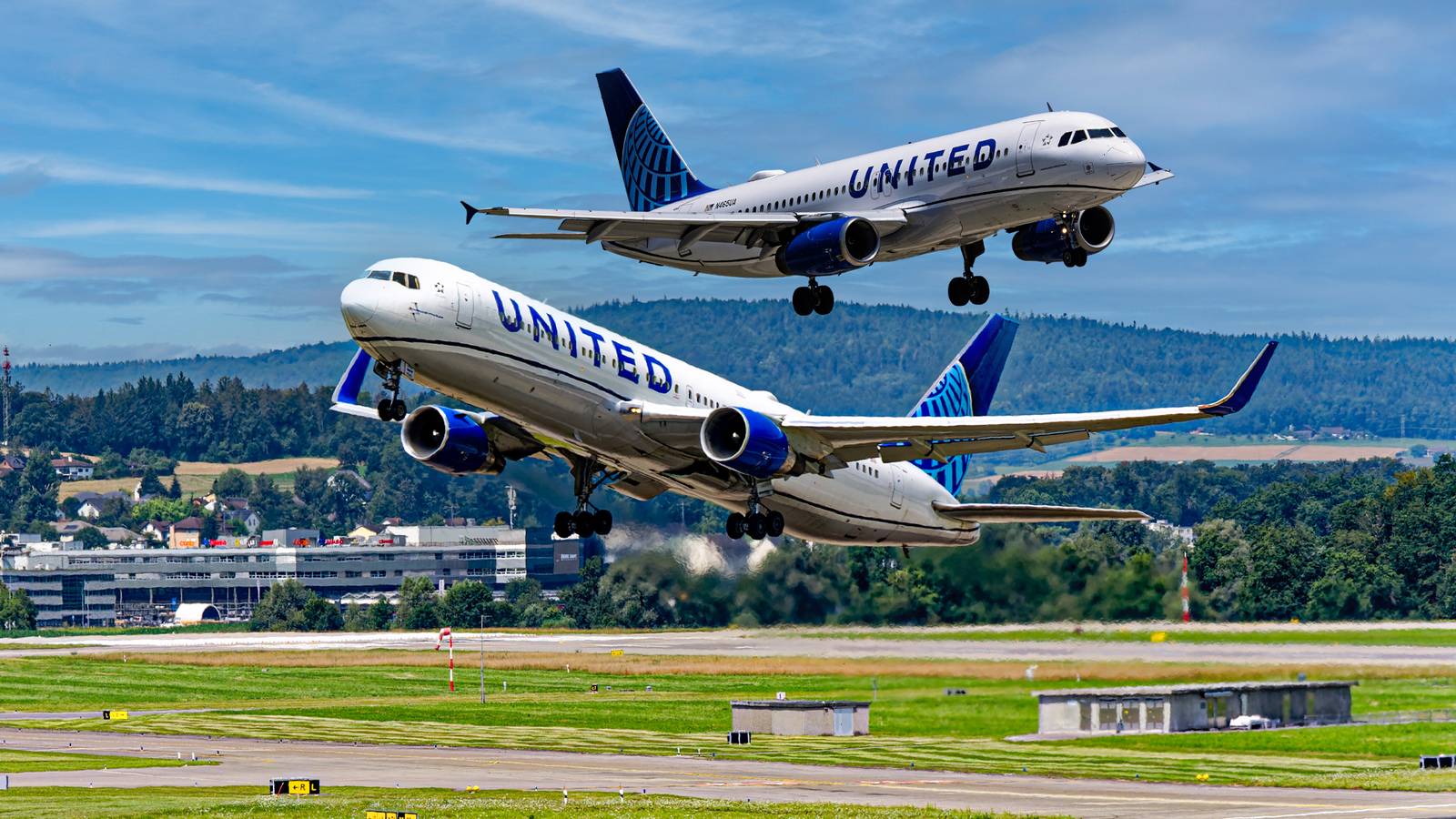
Credit: Michael Derrer Fuchs & Robin Guess | Shutterstock, Simple Flying Published Nov 3, 2026, 7:00 AM EST Daniel comes to Simple Flying with a business focused approach to the aviation world. Daniel enjoys analyzing strategy and how companies move against each other to gain a step ahead in the skies. Besides strategy, Daniel also has a passion for aircraft design and the history of aviation. Based in New York Sign in to your Simple Flying account On May 16, 2026, a catering truck at Washington Ronald Reagan National Airport (DCA) hit N470UA, a 25-year-old Airbus A320-200 operated by United Airlines. The vehicle struck the plane's rear fuselage and caused severe damage, enough that it was deemed too expensive to repair. This aircraft had, in fact, recently been refurbished with the United Signature Interior, but still, it was simply too old to justify the investment. As such, the aircraft has stayed in DCA ever since the incident and has been taken apart for scraps. 25 years isn't ancient for an airliner, but N470UA was hardly a sprightly bird either. It's normal to scrap an airliner of this age when it sustains severe damage, given the potential cost of repair. What's unusual about this is the context of an earlier decision to repair a damaged Boeing 767 in 2023. This aircraft, registered as N641UA, suffered severe structural damage after a hard landing and was repaired before being returned to service during the 2024 summer season, despite being 32 years old at the time of the incident. United's Current Fleet Make-Up Credit: Ceri Breeze I Shutterstock Planespotters.net shows that United Airlines currently has 1,157 aircraft in its fleet. This is split between 68 Airbus A319-100s, 64 A320-200s, 78 Airbus A321neos, 40 Boeing 737-700s, 141 737-800s, 12 737-900s, 136 737-900ERs, 123 737 MAX 8s, 188 737 MAX 9s, 40 757-200s, 21 757-300s, 37 767-300ERs, 16 767-400ERs, 19 777-200s, 55 777-200ERs, 22 777-300ERs, 12 787-8s, 64 787-9s, and 21 787-10s. Altogether, that's 210 A320 family aircraft, 640 737s, 61 757s, 53 767s, 96 777s, and 97 787s. On average, the 767-300ERs are the oldest aircraft, at over 30 years old, followed by the airline's 757-200s, at over 29 years old. This is followed by the 737-700s, at 27.6 years, the 777-200s/200ERs at 27.2 years, the A320-200s at 26.7 years, the 737-900s at 25.2 years, the 767-400ERs at 25.1 years, and the A319-100s at 24.7 years. While the Airbuses aren't quite the oldest planes in the fleet, the A319 and A320 are also the only types that United has consistently been retiring in recent years. United's focus coming out of the pandemic has been on domestic growth as part of the 'United NEXT' strategy. As part of this, the airline is taking delivery of a large number of Boeing 737 MAX aircraft (having ordered 514 in total, including some before the strategy was implemented) and 210 Airbus A321neos. The smaller Airbuses, as the oldest narrowbodies in the fleet, are the primary types being replaced by the new narrowbodies, while widebody growth has been slower, even as the airline is still being incredibly ambitious abroad. The Value Of The 767 Versus The A320 Credit: Minh K Tran I Shutterstock Repair cost was an important consideration for United Airlines in both cases, as well as the repair cost relative to the plane's value. The other important consideration, however, is opportunity cost. When making these decisions, United had to determine the value of keeping the extra A320 in the fleet and the value of keeping 37 767-300ERs. This is the main reason why N470UA went away, as United ultimately doesn't need an extra A320, while the Boeing 767 is much more strategically important. Deliveries of 737s and A321neos have picked up in recent years, and the carrier planned to take over 100 new narrowbodies in 2026, which means that United is hardly short of widebodies. In addition, it's fairly easy for the carrier to cover the loss of one aircraft by adjusting schedules within its domestic network. The A320 is also the third-smallest narrowbody in the United mainline fleet, above only the A319 and 737-700, while United has been focusing heavily on upgauging with larger 737 MAX 9s and A321neos. The widebody fleet is much smaller than the narrowbody fleet, so the loss of one 767 would have a larger impact. In addition, deliveries of widebodies are generally much slower than those of narrowbodies, with United planning to take 20 787s in 2026. Moreover, this is a record yearly delivery rate for the airline; in 2023 and 2024, when N641UA was being repaired, the airline took delivery of just five 787s (the only widebody that it is currently taking). United's International Growth Credit: Michael Derrer Fuchs I Shutterstock United has long had a much larger long-haul network than its competitors, and this remains an advantage for the Chicago-based carrier. Even for United, a carrier taking 20 787s in 2026, widebodies are a scarce resource. What's more, although the 767 is currently United's oldest type and N641UA is the oldest aircraft in the airline's entire fleet, the airline essentially had no replacement for it in 2023. In 2023 and 2024, retiring a 767 would have meant cutting back its growth plans. In 2024, United only added one new transatlantic destination during the summer, while also moderately increasing frequencies on select transatlantic and transpacific services. It was not a year of massive international growth, mainly because United took only two 787s in early 2023 and only three in 2024, all of which arrived after the summer season. Losing a 767 would have further capped its 2024 schedule, and this would have been a serious problem as transatlantic demand has been growing with strong yields. United plans to retire its 767-300ER fleet by 2030, as the 787 will eventually replace it. For now, however, the carrier is not focusing on fleet renewal. Instead, United is growing as much as it can and getting as many widebodies as possible. Although the 767 is old and inefficient by today's standards, United's examples feature modern interiors, while these paid-off planes remain effective on transatlantic routes during the summer, when demand is lower. The Declining Relevance Of The A320 In United's Fleet Credit: Wenjie Zheng I Shutterstock The Airbus A320, although it is still regarded as a modern airliner, is actually a very old aircraft type today. Within United's fleet, the A320-200 is the airline's third-oldest narrowbody type, behind only the 757-200 and 737-700. However, United has already retired a significant portion of its A320-200 fleet, and the 757-200 plays a very specific role in United's fleet as a premium narrowbody for transcontinental routes and thin transatlantic services. The replacement for the 757 is only just now arriving in the form of the A321XLR and A321neo 'Coastliner'. The A320-200s are old, and this size of aircraft is also not particularly relevant to United's goals today. The airline only installs 12 first class seats and 150 seats in total on the A320-200, whereas it's overwhelmingly taking delivery of 179-seat 737 MAX 9s and 200-seat A321neos with 20 first class seats as well as significantly more Economy Plus seating. United is all about large narrowbodies today, and the A320-200 is mainly a tool to use while the airline still owns the aircraft, but it is not a core part of its strategy. United Airlines Domestic Narrowbody Fleet United First Economy Plus Economy Total Seats Airbus A319-100 12 36 78 126 Airbus A320-200 12 42 96 150 Airbus A321neo 20 57 123 200 Boeing 737-700 12 36 78 126 Boeing 737-800 16 54 96 166 Boeing 737-900 20 45 114 179 Boeing 737-900ER 20 45 114 179 Boeing 737 MAX 8 16 54 96 166 Boeing 737 MAX 9 20 45 114 179 Boeing 757-300 24 54 156 234 Data from aeroLOPA United has retrofitted a significant number of its A320s with the Signature Interior, which includes seatback screens, mood lighting, and larger overhead bins. However, this is mainly because the airline has been prioritizing the rapid roll-out of the Signature Interior across its fleet to provide a more consistent experience. Within its domestic fleet, the A320-200s and A319-100s are the types furthest from its current vision. How The United Airlines Fleet Is Evolving Credit: 1000 Words I Shutterstock The A320-200 and A319-100 fleets are set to fully exit by 2030, being replaced by the 737 MAX 9, MAX 10, and A321neo. United is primarily retiring its oldest examples as they age out and is not in a hurry to remove either type, because the carrier's first objective with the domestic network is to grow, followed by upgauging. It's unconfirmed what will happen with the similarly aged 737-700s, but the 737-800s and 737-900s are larger and more economical, while the 737-900ERs are relatively young. On the widebody side, United is, again, focusing on growing its fleet. While it's now taking 787s at a rapid rate, these planes are intended for a different role than the 767s. The latest 787-9s coming in are a special subfleet with a huge Polaris cabin, mainly used to add premium capacity to high-demand destinations, while the displaced aircraft are used for growth. Eventually, however, these aircraft will leave the fleet and the 787 will take their role, although it will be many years before the fleet is fully gone. While United has not yet retired any 737NG aircraft and has not announced plans to do so, the 757-200s will be retired within the next few years. To replace these 40 aircraft, United has ordered 50 A321neo Coastliners for transcontinental routes and 50 A321XLRs for European flights, which will send the 757s away once they start arriving in higher numbers. In addition, the carrier will eventually replace its 777-200s and some 777-200ERs with future 787-10 deliveries, although it's unclear what will replace the remaining 777-200ER fleet.
United Airlines Threw Away A Damaged 25-Year Airbus A320, But Repaired A Fuselage-Wrinkled Boeing 767 Much Older
Full Article
Original Source
Read the full article at Simpleflying →KhanList aggregates and links to publicly available news content. We do not host full articles from third-party sources. Always verify important information with original sources.