
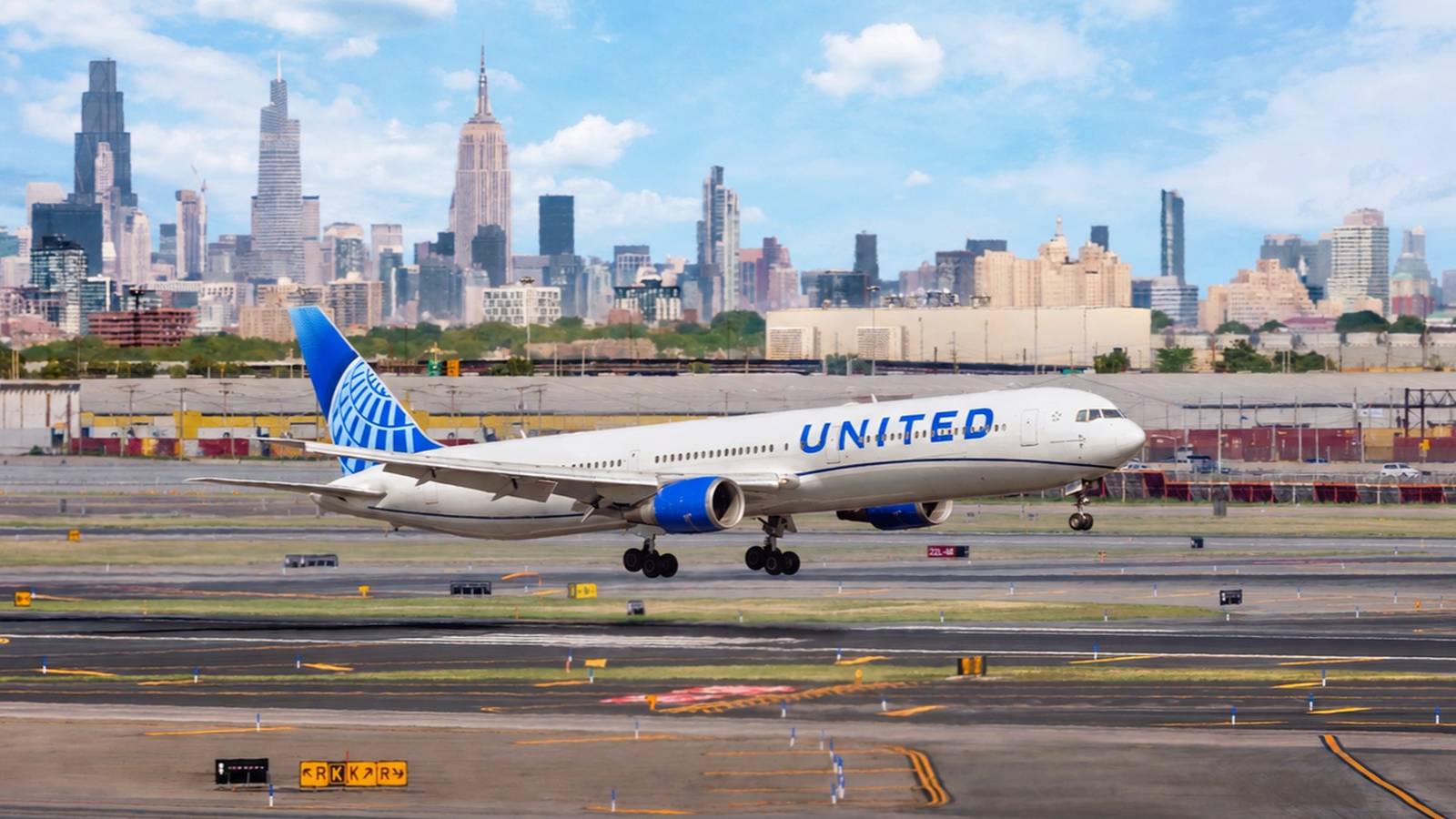
Credit: United Airlines Published Oct 6, 2026, 2:03 PM EDT Paul has had a career of 25+ years focused on the international technology sector, which has taken him to over 100 countries. Along the way, he developed a deep love for aviation, with a travel bucket list measured by aircraft types flown rather than destinations reached. Now he brings that avgeek passion, along with the journalism experience he accumulated early in his career, to write insightful pieces for Simple Flying. Sign in to your Simple Flying account United Airlines is rapidly expanding its network at Newark Liberty International Airport (EWR), with 18 new and returning routes forming a major part of its 2026 and 2027 growth. The tally combines four headline European additions launched in spring 2026 with 14 more routes beginning between September 2026 and June 2027, ranging from Seoul and St. Croix to a wave of secondary European cities. The more revealing story, however, is how United is deploying that capacity. Twelve of the 18 routes are seasonal, including almost all the leisure-oriented European additions, while four European routes introduced in 2026 are already confirmed to return next summer. The expansion builds on a strategy that has increasingly pushed United beyond Europe's biggest gateways into thinner and more unusual transatlantic markets. United Has Added 18 Routes From Newark Credit: FiledIMAGE | Shutterstock The Newark additions cover everything from daily Boeing 787-9 flights to Seoul's Incheon International Airport (ICN) to once-weekly winter service to St. Croix. Europe dominates the list, with destinations including Croatia, Italy, Scotland, Spain, Slovenia, Luxembourg, France and Portugal, while only four of the 18 are domestic US markets restored in September 2026. Destination Start Date Frequency Aircraft Operation Split, Croatia April 30, 2026 3x weekly 767-300ER Summer seasonal; returning 2027 Bari, Italy May 1, 2026 4x weekly 767-300ER Summer seasonal; returning 2027 Glasgow, Scotland May 8, 2026 Daily 737 MAX 8 Summer seasonal; returning 2027 Santiago de Compostela, Spain May 27, 2026 3x weekly 737 MAX 8 Summer seasonal; returning 2027 Seoul Incheon, South Korea September 4, 2026 Daily 787-9 Year-round Charlottesville, Virginia September 24, 2026 Daily CRJ550 Year-round Knoxville, Tennessee September 24, 2026 2x daily CRJ550 Year-round Northwest Arkansas September 24, 2026 Daily E175 Year-round Omaha, Nebraska September 24, 2026 Daily E175 Year-round St. Croix, USVI October 31, 2026 Weekly 737-700 Winter seasonal Luxembourg City, Luxembourg April 2, 2027 Daily A321XLR Year-round Ljubljana, Slovenia May 12, 2027 4x weekly 767-400ER Summer seasonal Olbia, Sardinia, Italy May 27, 2027 3x weekly 767-300ER Summer seasonal Catania, Sicily, Italy May 28, 2027 4x weekly 767-300ER Summer seasonal Ibiza, Spain May 31, 2027 4x weekly A321XLR Summer seasonal Valencia, Spain June 2, 2027 3x weekly A321XLR Summer seasonal Marseille, France June 4, 2027 Daily A321XLR Summer seasonal Terceira, Azores, Portugal June 9, 2027 3x weekly 737 MAX 8 Summer seasonal Charlottesville, Knoxville, Northwest Arkansas and Omaha are less glamorous than Ibiza or Sardinia, but they strengthen the spoke network feeding United's Newark hub. All four are technically restorations: Knoxville and Omaha last had regular service in 2020, Northwest Arkansas in 2022, while Continental Airlines last served Charlottesville in 1997. With United's massive transatlantic operation so heavily centered on Newark, additional regional feed is particularly useful for its international banks. The two remaining 2026 additions demonstrate opposite sides of the strategy. Seoul is a major year-round long-haul route flown daily by the 787-9, while St. Croix is a highly targeted Saturday-only winter service beginning October 31 and scheduled through March 27, 2027. The latter will give United 23 Caribbean destinations from Newark, and resembles other attempts to use the hub for relatively niche leisure markets, including its earlier launch of Newark to Marrakech. Seasonal Flying Is Becoming A Major Newark Strategy Credit: Markus Mainka | Shutterstock Seasonality is arguably the most important feature of the expansion: 12 of the 18 routes are not intended to operate throughout the year. Split, Bari, Glasgow and Santiago de Compostela all debuted in summer 2026, and United has already confirmed that every one will return in summer 2027. A second season does not necessarily confirm that each route was profitable, but Patrick Quayle, United Senior Vice President of Global Network Planning, has made it very clear that the airline saw sufficient performance and strategic value to warrant bringing all four back: “Everything [from summer 2026] is coming back. We're not dropping any routes in order to fund the next round of expansion.” That model also makes the most efficient use of United's fleet and helps drive up yields. Split, Bari, Glasgow and Santiago alone represent 17 weekly Newark departures during their peak seasons; when those flights disappear in autumn, the 767-300ER and MAX 8 capacity is reassigned elsewhere, such as Caribbean and Latin American routes, rather than being forced to fly weak winter European schedules. United has long adjusted aircraft assignments at Newark as seasonal demand changes, allowing its widebodies to move between markets while also creating additional room for maintenance during quieter periods. St. Croix effectively demonstrates the same philosophy in reverse, appearing when Caribbean demand strengthens for winter, and disappearing as Europe ramps back up. In 2027, Ljubljana, Olbia, Catania, Ibiza, Valencia, Marseille and Terceira will all be summer seasonal, while Luxembourg is the lone year-round Newark addition from that group of new additions. It is also very evident that United is increasingly using Newark to pursue emerging or comparatively thin international markets, rather than limiting its network to traditional major gateways, and there is one particular aircraft that is the spearhead of that strategy. The A321XLR Helps United Create Demand, Not Just Follow It Credit: Simple Flying United's expansion is increasingly about more than finding markets that already generate enough passengers to fill an airplane. Quayle has previously said that “people look to United to tell them where to fly,” describing unusual destinations as undiscovered gems. More recently, he has argued that a market such as Ljubljana can be very difficult to justify purely from historical data, because “you can't square it off in a spreadsheet,” but that is part of the attraction for United: “United has an unmatched international network, with enough breadth to allow us to be setting the travel trends. So we really pride ourselves on connecting our customers to unique, trendsetting destinations that no other US airline serves, and inspiring our customers to discover destinations they might not otherwise have considered.” That distinction matters commercially. Instead of joining several competitors on another established European trunk route, United can make the destination itself the selling point and, in many cases, become the only US airline flying there nonstop. Eight of the 10 international cities announced for 2027 have no competing nonstop service from another US carrier, while Quayle says United has achieved a roughly 90% success rate on the new routes it has launched and continued operating. A thinner market can therefore still be very attractive if United's marketing stimulates additional demand, and the convenience of a unique nonstop supports pricing. The Airbus A321XLR is what makes that strategy considerably easier to pursue. United's 150-seat aircraft has just 32 premium seats — 20 Polaris suites and 12 Premium Plus seats — allowing it to offer a full long-haul premium product without committing the capacity of a 767 or 787. That leaves United with an unusually broad toolkit for expanding Newark: widebodies for stronger seasonal destinations, XLRs for thinner long-haul markets and Boeing 737 MAX 8s for shorter Atlantic niches. Aircraft New European Newark Markets Role 767-300ER/400ER Split, Bari, Ljubljana, Olbia, Catania Higher-capacity seasonal markets A321XLR Luxembourg, Ibiza, Valencia, Marseille Thinner long-haul markets 737 MAX 8 Glasgow, Santiago de Compostela, Terceira Shorter, thinner transatlantic markets As a case in point, Luxembourg is probably the most revealing: Quayle has indicated that United probably would not have launched the year-round route without the XLR, while the airline will also use the type for Ibiza, Valencia and Marseille, all routes that would be very unlikely to be able to consistently fill a widebody. It means that United can increasingly ask “where will customers want to go once we show them the destination?” rather than simply “where are enough people already flying?” — and then use the XLR to keep the financial risk of answering that question relatively low.
United Airlines Adds 18 New Nonstop Routes From Newark: See Full List Now
Full Article
Original Source
Read the full article at Simpleflying →KhanList aggregates and links to publicly available news content. We do not host full articles from third-party sources. Always verify important information with original sources.