
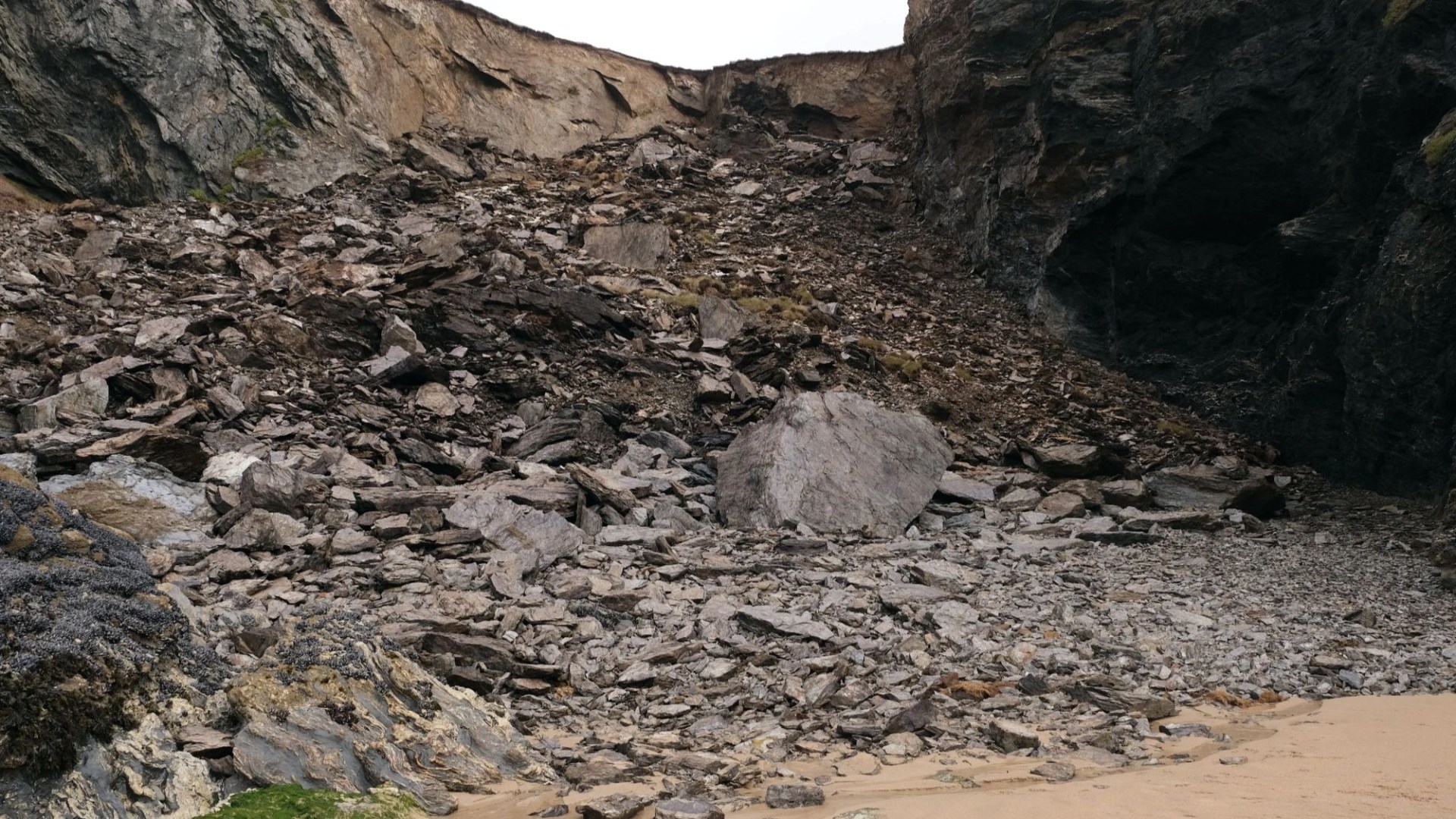
A FAMOUS rainbow cave that has featured in a popular TV show may have been “sealed forever” following a massive cliff collapse. Holywell Cave at Holywell Bay near Newquay, Cornwall, features some stunning multi-coloured walls and “steps”. The entrance to Holywell Cave has been completely sealed off by the cliff collapse Credit: Shutterstock Editorial The famous cave features some stunning multi-coloured walls and ‘steps’ Credit: SWNS It provided the setting for some scenes in the hit BBC drama Poldark. The multicoloured grotto was once one of Britain’s most mysterious sites and attracted huge numbers of visitors during the 17th and 18th century. Sign up for The Sun newsletter Thank you! The area is named after the cave’s healing waters where pilgrims, cripples and sick people would make their way to the cave to drink from the “holy well”. In recent decades it become largely secluded and unknown and most tourists visiting Holywell were unaware of its hidden wonders. In medieval times many people would visit the cave, believing it have magical, healing powers Credit: SWNS The cave may have been lost forever Credit: SWNS However, it seems that the natural phenomenon may now be hidden forever after the entrance to the cave was blocked by a rock fall overnight. Coming across the landslide this morning, Kev Richens posted a photo on Facebook saying: “Holywell cave is no more! Cliff collapse has sealed it forever.” The cave and well, which are only accessible at low tide, is in the south west corner of Kelsey Head at the northern end of Holywell Bay, between Newquay and Perranporth. It features in Series 4 and 5 of the most recent TV adaptation of Poldark, most notably as the spot where Drake Carne secretly meets Morwenna, and in dramatic scenes involving Ross Poldark. Most read in The Sun The grotto featured in BBC’s adaptation of Poldark starring Aidan Turner Credit: Handout How the entrance to the grotto, also known as St Cuthbert’s Cave, looked before the rock collapse Credit: SWNS The news that the cave has now become inaccessible to visitors has been met with extreme sadness. One person described it as “a tragic loss to Cornwall heritage and its magical pagan history“, adding: “It’s a blessing it went at night and not during the day when people would have been inside. Goodnight Holywell.” Another person wrote: “This is so sad, an important part of Cornish history wiped out.” Others pointed out that the cliff fall was likely to be the result of the recent hot weather followed by heavy rain over the last couple of days. Holywell Cave, was also known as St Cuthbert’s Cave, and became known for its vibrant colours and is also home to the legendary ‘holy well’ from which the name comes. Freshwater from a spring above the cave trickles down through the rock, forming a series of terraced pools that medieval pilgrims once believed had healing properties. Legend has it that in 995 AD the body of St Cuthbert was brought to the cave by the bishop of Lindisfarne, and that when his bones touched the spring water it became blessed with healing powers. The colours that swirl across the cave walls and basins come from layers of calcium carbonate, iron deposits and traces of other minerals left behind by the constantly flowing water, creating the vivid, almost otherworldly appearance that has drawn visitors from all over the world. People have been warned to keep away from the area as the cliff face could still be unstable. Newquay Coastguard said: “Sadly overnight a substantial rock fall has sealed off the cave to Holy Well on Holywell Beach. “This area is still unstable and we advise that you to stay clear of this rockfall. “Heavy rain after a prolonged dry spell may lead to further incidents along the coast path. Keep clear of the edge whilst walking along the top of cliffs and stay clear of the bottom. “If you see someone in difficulty along the coast, dial 999 and ask for the coastguard.” The site creates mineral deposits leaving its stones red, green, blue and yellow. The spring water it creates was once described as the “elixir of life” in writings from the 19th century and were said to contain “life healing” minerals that trickled through the cave’s natural limestone. The water has been described as tasting like “cereal milk” and forms shallow pools within the basins, before trickling out from the cave and on to the outside beach. Unlike other so-called ‘holy wells’ in the UK, the spring water in St Cuthbert’s Cave is washed out twice every day, when the tide comes in and floods the cavern. Its popularity was also recorded by William Hals in his “History of Cornwall”, which he compiled from 1685 until 1736. In his book he wrote: “The virtues of this water are very great. It is incredible what numbers in summer season frequent this place and waters from counties far distant.” Comment now
UK’s rainbow cave grotto made famous by hit TV show left ‘sealed FOREVER’ after massive cliff collapse
Full Article
Original Source
Read the full article at Thesun →KhanList aggregates and links to publicly available news content. We do not host full articles from third-party sources. Always verify important information with original sources.