
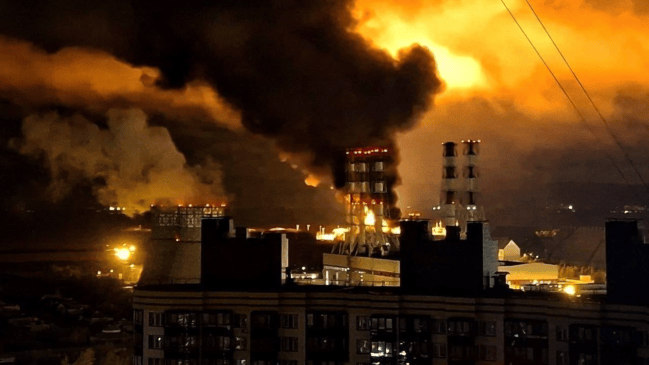
Ukrainian drone strikes hit multiple infrastructure sites in St. Petersburg and Russia’s surrounding Leningrad region early on October 18, setting fires at an oil terminal and fuel depot, damaging a data center operated by technology company VK, and disrupting electricity supplies to about 20,000 residents. The reported targets also included an Ozon e-commerce logistics hub and a bridge on the city’s Western High-Speed Diameter. Russian officials confirmed an overnight drone attack and damage to infrastructure, while open-source investigators reported fires at several locations. The strikes follow other reported Ukrainian attacks on Russian technology infrastructure earlier in October, including incidents involving Yandex data centers in the Vladimir, Ryazan and Kaluga regions, as well as a reported strike on a Sberbank data center facility in the Saratov region. Oil infrastructure and fuel distribution hit St. Petersburg Governor Alexander Beglov confirmed that the city had come under attack by UAVs, with fires reported across four districts. He acknowledged damage at the Petersburg Oil Terminal, a major petroleum transshipment facility serving Russia’s Baltic region. Open-source analysis by independent Russian outlet Astra also identified a fire at the terminal and a separate blaze at the Ruchyi oil depot in the city’s Krasnogvardeisky district. The depot has a reported storage capacity of 3,900 cubic meters, equivalent to approximately 137,400 cubic feet, and handles AI-92 and AI-95 gasoline as well as commercial diesel, the Kyiv Post reported. The reported damage could affect facilities involved in storing and moving fuel, although the extent of operational disruption at either site was not immediately clear. The petroleum terminal’s role in regional fuel logistics makes it a significant infrastructure site, but the available reports did not establish how much storage or handling capacity was lost. Astra also reported that municipal emergency alerts failed to warn residents in advance, with notifications arriving after impacts or being substantially delayed. The claim also shows a separate concern surrounding overnight attacks and whether local warning systems can provide timely information to people in affected areas. Drone strikes disrupt digital and power infrastructure The attack also extended into the Leningrad region, where drones reportedly hit a data center operated by VK, the Russian technology group behind the VKontakte social network and other online services. The facility is located in Novosergievka, in the Vsevolozhsk district. VK representatives said their services continued operating normally, but users across Russia reported connection problems and outages affecting VKontakte and parts of its wider platform. Astra’s investigators reported that an electrical substation next to the data center was also damaged. Leningrad Region Governor Alexander Drozdenko confirmed damage to electrical distribution infrastructure and emergency power cuts that left approximately 20,000 residents without electricity. The available reports did not establish whether the reported online disruptions resulted directly from damage to the data center, the nearby substation, or other effects of the attack. Russian e-commerce company Ozon separately confirmed that an aerial impact caused a fire at its fulfillment center on Sofiyskaya Street in St. Petersburg’s Kolpino district. The facility covers approximately 850,000 square feet and is one of the company’s major logistics sites in northwestern Russia.Get the latest in engineering, tech, space & science - delivered daily to your inbox.Bojan Stojkovski is a freelance journalist based in Skopje, North Macedonia, covering foreign policy and technology for more than a decade. His work has appeared in Foreign Policy, ZDNet, and Nature.
Ukrainian drones strike fuel depots and tech hubs near Russia’s St. Petersburg: Reports
Full Article
Original Source
Read the full article at Interestingengineering →KhanList aggregates and links to publicly available news content. We do not host full articles from third-party sources. Always verify important information with original sources.