
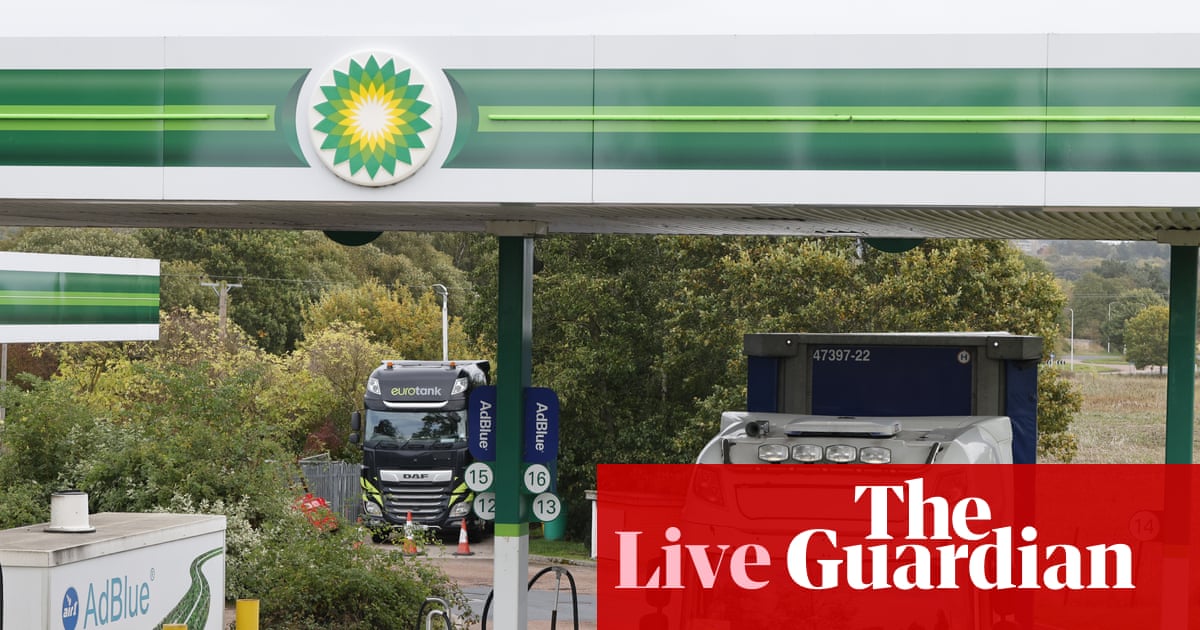
Key events34m agoIntroduction: UK inflation rises to 3.6% on the back of higher petrol pricesHarvir Dhillon, lead economist at the British Retail Consortium, said: double quotation markHeadline inflation edged up in October, driven mainly by transport costs, while food inflation fell to its lowest rate in nearly five years, with notable falls in butter and chocolate prices. Clothing and footwear fell into deflation, while the onset of colder weather brought down garden furniture prices. Food prices have risen just 0.5% this year, but higher energy and transport costs could push food inflation back towards 2% and overall inflation towards 4% early next year. Clothing and shoe prices declined by 0.5% year on year in October, against a 0.1% rise the month before, according to the Office for National Statistics.Turning to the final report from Alan Milburn on how to fix the youth unemployment crisis, Dhillon said: double quotation markYesterday’s Milburn review proposed doubling the threshold at which retail and hospitality employers pay National Insurance for under 25s. Implementing this as soon as possible would help ease employment costs just as inflationary pressures build. For labour-intensive sectors, such as retail, this would help businesses absorb rising costs while giving retailers greater confidence to keep younger seasonal staff on beyond Christmas and January. The rise in inflation to 3.6% was widely expected, while two other closely watched measures were little changed, explaining the lack of reaction in markets so far.Core inflation, stripping out volatile energy and food costs, rose by 2.8% in October, the same annual rate as in September.Services inflation was also unchanged, at 3.7%. Both are closely watched by the Bank of England and are taken into account when it sets interest rates.Felix Feather, economist, at the fund manager Aberdeen, said: double quotation markIn fact, the detail of the report was a touch less concerning than it might have been. The biggest contributor to the increase was transportation fuel costs. But the recent decline in oil prices makes it likely that this will be reversed to some extent over November. And core and services inflation, which the Bank of England pays particular attention to, did not increase. So we don’t think there is enough in this report to push the Bank of England into back-to-back rate hikes at its meeting in December, though the meeting remains live. We see February, when the Bank will have a fresh set of forecasts to work with, as a more natural moment to deliver a second hike. Introduction: UK inflation rises to 3.6% on the back of higher petrol pricesGood morning, and welcome to our rolling coverage of business, the financial markets and the world economy.It’s UK inflation day!Inflation rose slightly last month to an annual rate of 3.6%, driven by higher petrol prices.Figures from the Office for National Statistics show the headline rate of inflation as measured by the consumer prices index rose to 3.6% in October, in line with economists’ forecasts, from 3.5% in September.The ONS said transport, particularly motor fuels, was the main driver behind higher inflation while restaurants and hotels made the largest, partially offsetting, downward contribution.Transport prices rose 7.5% year on year, up from 6.6% in September. The average price of petrol rose by 5.2 pence per litre between September and October, while diesel went up by 7p a litre. Both went up more than in the same period last year.In better news for households, food prices rose at the slowest rate since September 2021, at 0.9%, down from 1.3% in September.Chocolate prices declined, while fish prices also drove inflation lower.Chocolate prices fell by 2.9%, compared with a rise of 0.4% a year ago. Prices had been going up since 2021 and since 2024 there was a cocoa crisis, but cocoa prices are now much lower than they were in 2024, the ONS explained.Discounting of chocolate almost doubled between September and October.Meanwhile, factory gate prices rose by an annual rate of 5.1% in October, up from a revised rise of 4.7% in September, according to separate figures from the ONS.On the other side of the pond, Nvidia “does not intend to reinstate Jensen as CEO”, the chairman of the company’s board said Tuesday. Harvey Jones made the remark during Nvidia’s first quarterly earnings report since Jensen Huang’s ouster.Nvidia announced the same day that its quarterly revenue beat expectations, coming in at $115.84bn, doubling from the same time period a year ago. The third-quarter earnings report comes just days after the world’s most valuable chip company saw the ouster of Huang over allegations of several extramarital affairs, including one with a suspected Chinese spy and two with his own employees.Following the tumult, Nvidia’s stock tumbled more than 10%, shedding hundreds of billions in value and dropping its valuation to $3.7tn. In October, the company had hit an all-time-high valuation of nearly $6tn, but its share price has steadily fallen since then amid a broader AI slowdown.The Agenda 9am GMT: European Central Bank financial stability report 1.30pm GMT: US Housing starts for October 2.25pm GMT: ECB president Christine Lagarde speech 7pm GMT: US Federal Reserve minutes of last meeting
UK inflation rises to highest level in a year on back of higher petrol and diesel prices – business live
Full Article
Original Source
Read the full article at Theguardian →KhanList aggregates and links to publicly available news content. We do not host full articles from third-party sources. Always verify important information with original sources.