
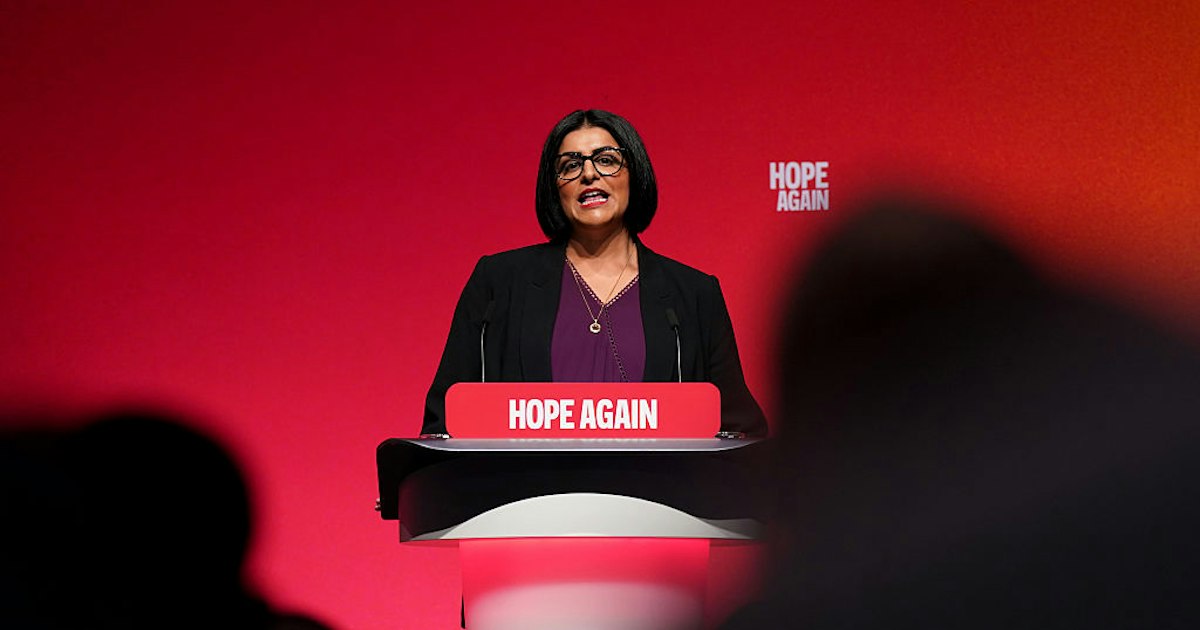
UK Special Coverage Shabana Mahmood’s new policies reverse the modest reforms she proposed under the Starmer government. UK Special Coverage Photo by Ian Forsyth/Getty Images After over a year of back and forth, the UK’s Home Secretary Shabana Mahmood announced the Labour Government’s new immigration policies on November 2. They have seemingly disappointed everyone: both restrictionists who fear that they will embed large numbers of low-skilled immigrants and the Labour Party’s open-borders faction, which is offended by even moderate limits on the ability of migrants—both illegal and legal—to reside in Britain permanently. Initially planned to be a widespread restriction on settlement rights for low-wage, low-skill immigrants who arrived during the 2021–23 “Boriswave,” these reforms attracted extreme hostility from the government’s own backbench MPs. The home secretary had planned to extend the qualifying period for indefinite settlement from five to 10 or 15 years, depending on the circumstances. This, she argued, would significantly reduce the potential welfare burden that may come from the permanent settlement of hundreds of thousands of people who moved to the UK—particularly those on the misconceived and badly designed health and care visa introduced by the previous Conservative government in 2021. As the country’s welfare bill grew, and concerns around the life-long fiscal burden of low-skilled migrants to the public finances became a mainstream talking point, this seemed like a prudent measure in response to an extraordinary failure of immigration policy. (It was also announced when Reform UK was riding high in the opinion polls.) Mahmood and then-Prime Minister Keir Starmer saw an opportunity to regain popular support from an electorate hostile to immigration, and simultaneously attack the Conservatives for their failures on immigration (which Starmer had previously denounced as an “open borders experiment”). This reached its political peak with Starmer’s infamous speech in May 2025, in which he declared Britain was becoming an “island of strangers” thanks to mass immigration. Despite being quite well received by the British public, who remain furious about immigration, it was greeted with horror by the Labour Party itself. MPs said it was reminiscent of Enoch Powell’s rhetoric, and the former prime minister eventually recanted, implicitly blaming his adviser Morgan McSweeney for writing the speech. It was in this context that Mahmood attempted to reform rules around indefinite leave to remain. Almost immediately, her policy to delay settlement rules for migrants in the country was attacked by many in the Labour Party, who called the move “unfair” and “un-British.” (It is a strange interpretation of Britishness that suggests restricting permanent immigration in a country that had very low immigration until the 21st century is not in fact British, but the modern Labour Party is ideologically rooted in a year-zero approach to multiculturalism.) Despite ministers attempting to hold firm on the importance of delaying settlement rights for low-wage migrants, claiming that it would save the public finances around £10 billion per year in reduced welfare expenditure, the campaign against the policy was relentless. Labour MPs focused on sob stories of recently migrants denied welfare access—apparently an entitlement that the British taxpayer should fund in perpetuity—and an organized campaign bombarded official government consultations on the policy. It was revealed that over 70 percent of respondents to the Government’s consultation on the policy were migrants themselves. It bodes badly for democracy that the British state is asking recent migrants whether they should be able to remain in the country indefinitely and gain access to taxpayer-funded welfare, rather than asking British citizens and taxpayers. The government conceded. It has provided large loopholes for low-wage migrants in Britain to gain access to permanent settlement on the usual five-year time scale, and has avoided meaningful changes to the conditions facing immigrants already in the UK. This means that people here on the health and care visa and their dependents who are out of work or likely in other low wage sectors will be granted free access to Britain’s welfare state and labour market. Despite Labour MPs campaigning for this concession on the moral debt the country supposedly owes people who have come to Britain to work in care homes, the campaigns led by care workers themselves have centered around their desire to leave the sector and work elsewhere. The short-term labour market pressures which led to the creation of this visa will likely persist, as migrant care workers flee the sector the moment they can. It is worth remembering that, in 2018 or so, the social care workforce was over 80 percent British. Today, this has fallen to around 67 percent, but reported labor shortages in the sector persist. What was all this for? For many people, the priority was gaining a route into the UK via any means necessary, and this particularly badly designed visa gave them that opportunity. Many well-documented cases of fraud, in which people have moved to the country to work for care homes which do not exist or the case of Nigerian nurses who moved to the UK with fraudulent qualifications, will likely go uninvestigated following this amnesty. Responding to the home secretary’s climbdown in Parliament, Emily Thornberry, Labour MP for Islington South and Finsbury, asked the government to confirm that a Pakistani constituent of hers will be able to gain access to state funded welfare and medical support for his family, or whether he has to wait until he can apply for British citizenship. The picture is clear. This is a mass-migration and welfarist policy that ratchets only in one direction. Despite some spin from the government about new restrictions being implemented for future migrants, including higher salary thresholds and longer periods for settlement for those on lower wages, the direction of travel is toward a significant loosening of migration policy. Providing one sector with a loophole will lead ineluctably to others lobbying for their own, and the government has shown itself incapable of resisting these kinds of campaigns—not just on immigration, but also on welfare. Subscribe Today Get daily emails in your inbox Despite this week’s announcement being nominally about legal migration, in order to placate Labour MPs, the government made some notable changes to policy around illegal immigration as well. This includes allowing charities to sponsor refugees to settle in the country and the introduction of more “safe and legal routes” for asylum seekers. Both are riddled with potential problems. The sponsorship scheme may well be rife with fraud; similar policies tried in Canada led to sharp increases of family-related chain migration rather than assistance to genuine refugees. Safe and legal routes will do nothing to stop the small-boats emergency in the English Channel. If the routes are capped, then once the annual ceiling is reached, asylum seekers will return to illegal methods of entry, or the government will increase the number of places available, thus solving illegal immigration by making it legal. Britain’s right-wing parties have responded with hostility. The Conservatives and Reform have both said they would reverse aspects of this policy. The Tories focused on the welfare burden, stating they would remove settlement from anyone who is not a net-contributor, while Reform stated they will review all citizenship grants that follow from the policy, with an intent to revoke those granted fraudulently or against Britain’s interests. The political stakes have increased. Mass migration is not simply a matter of fiscal policy or labor shortages; it changes British society and British politics in ways that British voters have consistently opposed. As Labour has regained its polling position following the replacement of Starmer and a horrible six months for Reform UK and Nigel Farage, the party’s true instincts are reemerging: more immigration, more welfare, and a potential return to the European Union. Home Secretary Shabana Mahmood failed to hold back the pro-migration campaigners within her own party. She has instead chosen to join them and make the Boriswave a permanent fixture in British life. Thus temporary labor-market worries have again been addressed with a permanent immigration solution, continuing an ignominious tradition of post-war British governance.
UK Home Secretary Sets Labour Back on Course for Mass Immigration
Full Article
Original Source
Read the full article at Theamericanconservative →KhanList aggregates and links to publicly available news content. We do not host full articles from third-party sources. Always verify important information with original sources.