
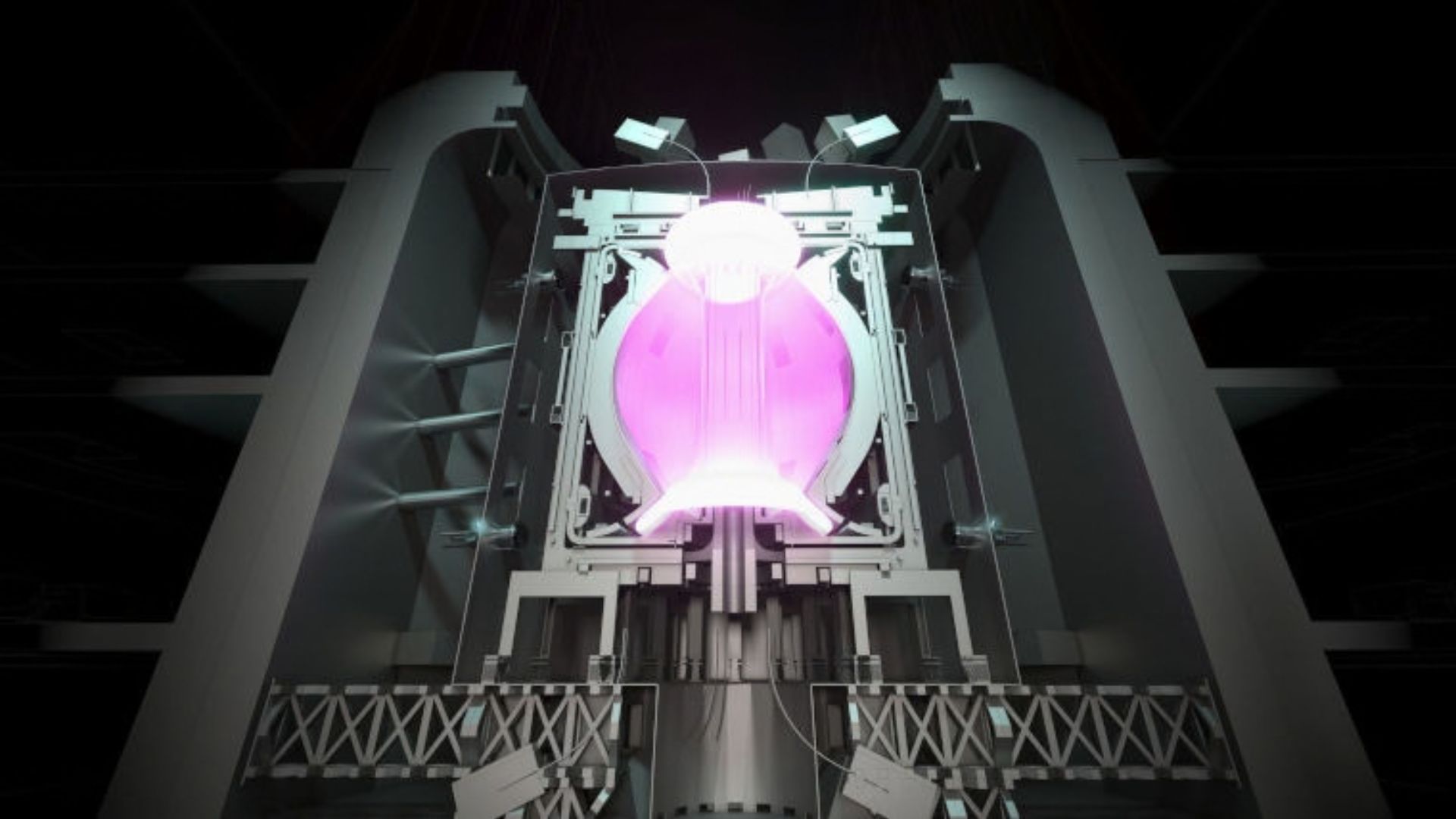
For a long time, fusion energy has been dogged by a persistent cliché — always 30 years in the future, yet never quite within reach. UK-led STEP Fusion just pushed back against that cynicism with a stack of blueprints. The UK Atomic Energy Authority (UKAEA) has progressed its design for the STEP fusion plant, aiming to deliver clean, grid-connected fusion energy. At the 34th Symposium on Fusion Technology (SOFT 2026) in Aix-en-Provence, the UK’s flagship fusion program revealed SPP3. It is the third-generation design iteration of its Spherical Tokamak for Energy Production prototype plant. The evolution of the STEP Prototype Powerplant (SPP). Shared via email. SPP3 prototype design The core problem with fusion has rarely been making it work. The real hurdle is keeping it running long enough to turn a profit. SPP3 changes this dynamic through its compact, cored-apple-shaped spherical tokamak design. This steady-state architecture lets the plant run continuously, delivering the uninterrupted energy flow needed to supply reliable power to the electricity grid. “This is all very hard, but we have to keep sight of the benefits. We are consciously taking on some of these technical challenges and uncertainties because they unlock steady-state operation and practical maintenance,” said Sam Davis, Head of Engineering for the Tokamak Machine at STEP Fusion. To make that vision work, engineers focused heavily on the plant’s giant microwave heaters, known as gyrotrons. These systems blast the plasma to temperatures exceeding 150 million degrees Celsius. Boosting their efficiency means burning less energy just to keep the internal fire hot. Yet, creating a self-sustaining miniature star is only half the battle. You also have to fix it when it breaks. Intense heat and high-energy neutrons quickly degrade reactor interiors. If replacing a part takes months, a power plant becomes an expensive paperweight. STEP’s answer is a “stacked rings” architecture paired with a vertical maintenance approach, shown publicly for the first time at SOFT 2026. Instead of peeling back layers of complex machinery like an onion, technicians can access in-vessel components vertically. “These innovations are designed to simplify access to in-vessel components, reduce maintenance outages and support the high levels of availability that will be required from future fusion powerplants,” the press release stated. Advancing UK’s energy goals Risks remain high. The engineering required to contain a star in a commercial grid environment borders on the absurd. “And of course, we’re doing everything we can to mitigate the risks in the meantime,” Davis added, “for example by testing everything we can.” STEP Fusion is a pioneering UK technology and infrastructure program to build a prototype fusion power plant. This facility will demonstrate net energy production, fuel self-sufficiency, and practical maintenance strategies, paving the way for a global fleet of commercial fusion plants. Harnessing the natural process that powers the stars offers a safe, abundant, low-carbon solution to humanity’s growing energy challenges. Set to be built on the site of a decommissioned coal power station in West Burton, Nottinghamshire, the £2.5 billion project aims to deliver roughly 100 megawatts of net electricity to the national grid by 2040. Apart from continuous power, SPP3 is designed to breed its own rare tritium fuel. It would eventually prove that fusion can move from a high-stakes physics experiment to a repeatable, commercial power fleet.Get the latest in engineering, tech, space & science - delivered daily to your inbox.Mrigakshi is a science journalist who enjoys writing about space exploration, biology, and technological innovations. Her work has been featured in well-known publications including Nature India, Supercluster, The Weather Channel and Astronomy magazine. If you have pitches in mind, please do not hesitate to email her.
UK advances design for the next-generation STEP fusion plant to boost efficiency
Full Article
Original Source
Read the full article at Interestingengineering →KhanList aggregates and links to publicly available news content. We do not host full articles from third-party sources. Always verify important information with original sources.