
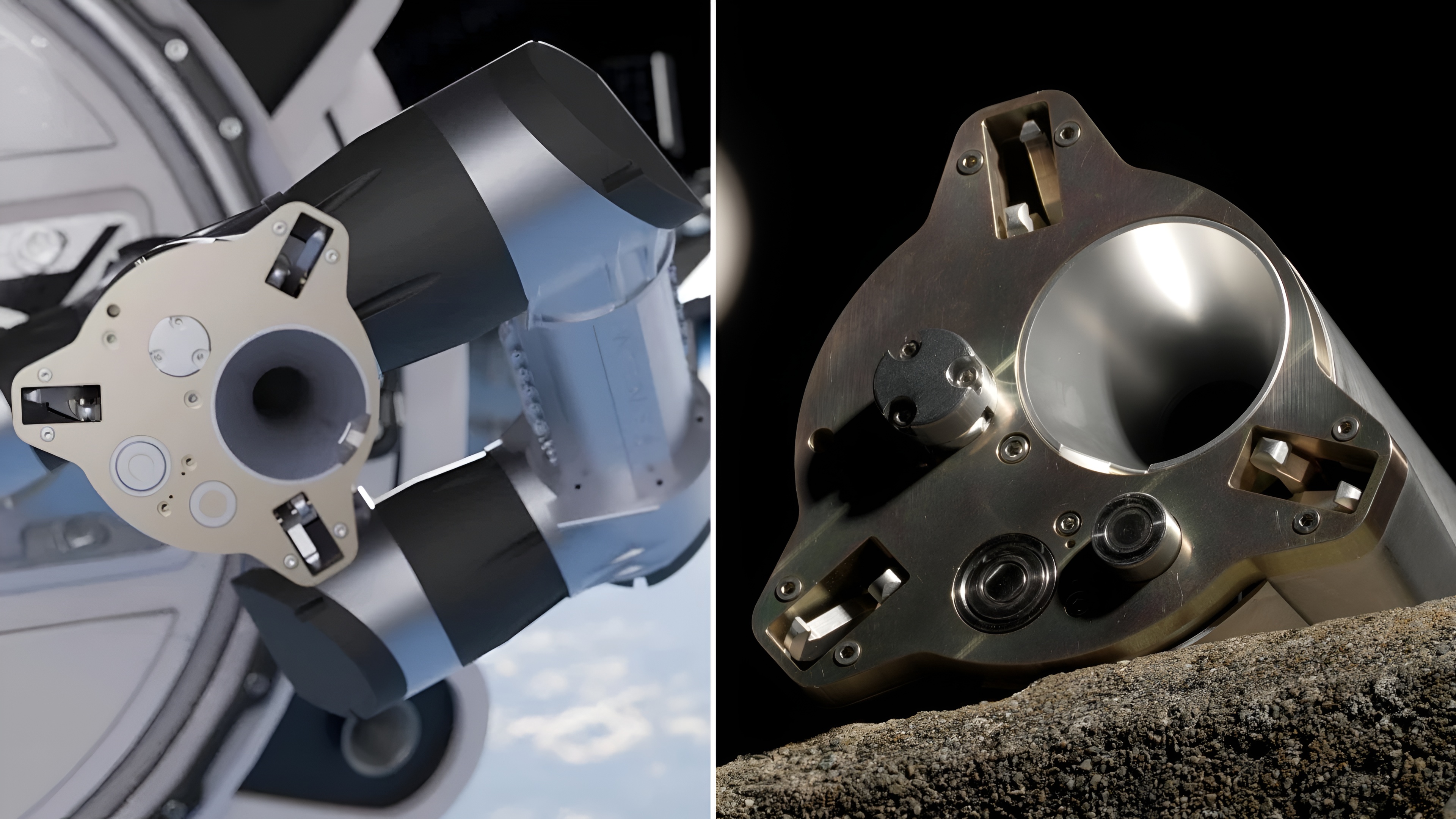
Spacecraft could soon share a common refueling connection, potentially changing how operators manage satellites in orbit. Spaceium has released OpenPort, an open-source interface that any company can license and manufacture for just $1. The design lets spacecraft receive fuel after launch instead of relying entirely on their onboard reserves. It will also undergo an orbital demonstration aboard the International Space Station. Common refueling standard Most satellites carry a fixed supply of propellant for their planned missions. Once that supply runs low, operators often retire otherwise functional spacecraft. Their electronics and other systems might remain operational, but limited fuel can end their usefulness. A lack of standardized connections has also complicated orbital refueling efforts. Different manufacturers develop their own interfaces, forcing operators to consider compatibility before arranging fuel transfers. A tanker built by one company might not connect with another manufacturer’s spacecraft. OpenPort aims to address that problem through an identical connection on both spacecraft. Its androgynous design allows either vehicle to supply or receive propellant. That means a satellite could potentially refuel another spacecraft instead of relying exclusively on dedicated tankers. The interface also replaces a conventional fill-and-drain valve. Those connections typically serve ground fueling operations before launch. OpenPort keeps the connection functional after a spacecraft reaches orbit. Spaceium says its design handles higher pressures and greater docking misalignment than competing refueling interfaces. These capabilities could help spacecraft establish reliable connections during demanding orbital operations. Xenon transfer reaches orbit OpenPort’s upcoming demonstration will take place aboard the International Space Station. Spaceium plans to fly the hardware as a NASA-approved external payload through Voyager Technologies’ commercial payload service. During the demonstration, the interface will transfer xenon between two tanks in orbit. Spaceium describes this as the first-ever xenon transfer performed in orbit. The mission will test whether spacecraft can exchange propellant through a standardized connection. The demonstration follows another Spaceium mission in February 2026. Its precision robotic actuator successfully completed its first space mission after launching aboard a SpaceX rideshare. Building a refueling network Spaceium wants OpenPort to become a widely adopted connection across the spacecraft industry. Its broader business model centers on automated orbital stations that sell propellant as a service. Co-founder and CEO Ashi Dissanayake says the company sees the stations as its primary business. Every spacecraft equipped with OpenPort could eventually become a potential customer. “The port isn’t the business. The stations are,” Dissanayake said. He believes widespread adoption will create demand for orbital refueling services, including those operated by competitors. Founded by aerospace and mechanical engineers Dissanayake and Reza Fetanat, Spaceium joined Y Combinator’s Summer 2024 batch. Its commercial customers include operators pursuing orbital transfer vehicles, lunar missions and geostationary satellites. The company plans to establish refueling stations across low Earth orbit and geostationary orbit. Its longer-term ambitions also include stations along routes to the Moon. A common connection could eventually help satellite operators extend spacecraft lifespans. It could also allow lunar missions and orbital transfer vehicles to travel farther without carrying all their propellant from Earth. Spaceium is expanding its engineering team as it prepares for the ISS demonstration and its first refueling station. OpenPort’s adoption will ultimately determine whether different spacecraft manufacturers embrace a shared standard. Get the latest in engineering, tech, space & science - delivered daily to your inbox.Aamir is a seasoned tech journalist with experience at Exhibit Magazine, Republic World, and PR Newswire. With a deep love for all things tech and science, he has spent years decoding the latest innovations and exploring how they shape industries, lifestyles, and the future of humanity.
Two-way spacecraft refueling port costs just $1, set for first-ever orbital xenon test
Full Article
Original Source
Read the full article at Interestingengineering →KhanList aggregates and links to publicly available news content. We do not host full articles from third-party sources. Always verify important information with original sources.