
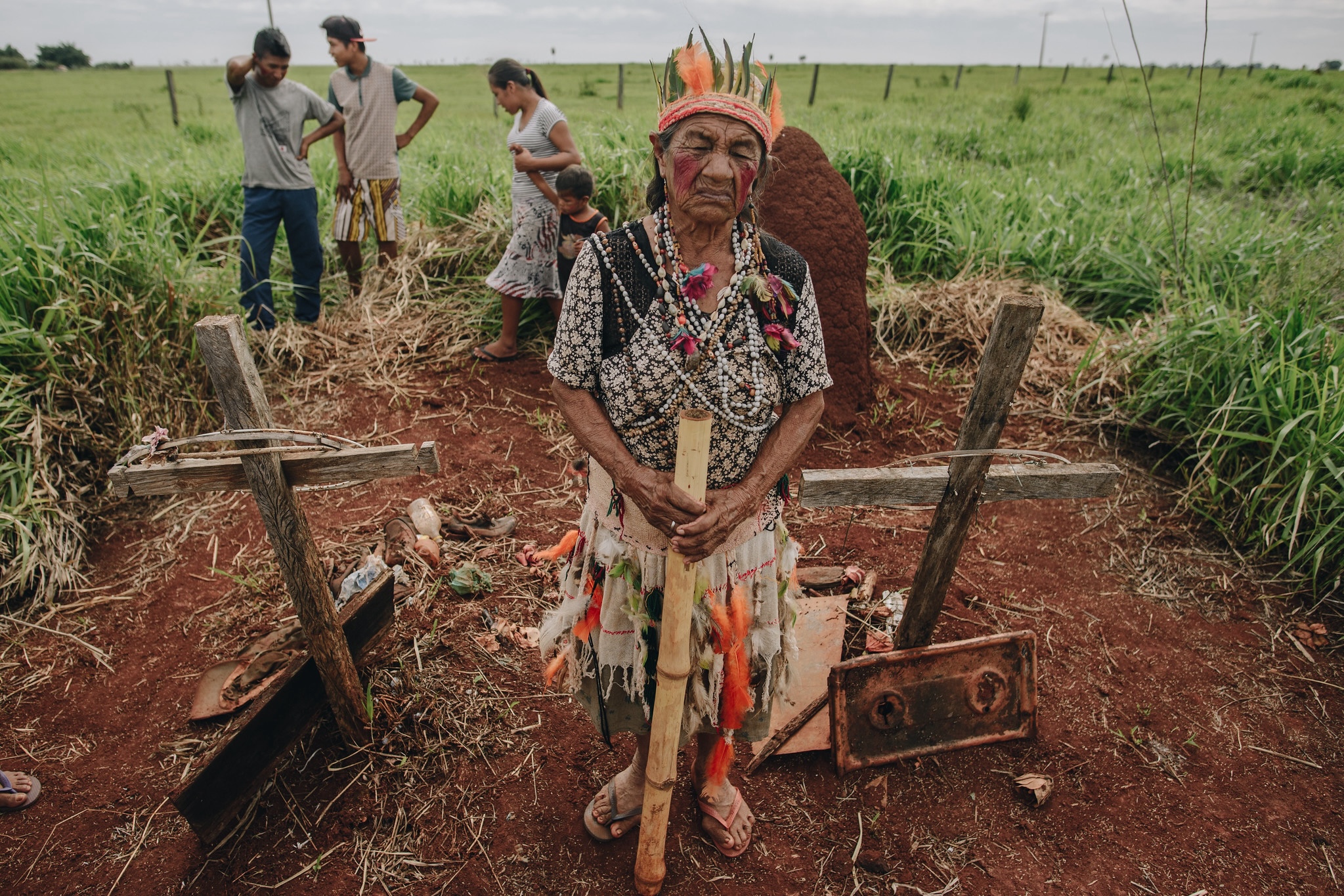
Brazil’s Indigenous voters helped reelect incumbent President Luiz Inácio Lula da Silva on Oct. 25. Following his win, two officials in the municipality of Tacuru, Mato Grosso do Sul, allegedly sent WhatsApp messages threatening to poison the water supply used by the Guarani-Kaiowá Indigenous people. The officials have been suspended; however, activists argue that’s insufficient to curb violence against Indigenous people. “Talking about poisoning the water in Mato Grosso do Sul is not just verbal racism; it is not merely a message of hate,” said Matias Benno Rempel, coordinator of the state’s Indigenous Missionary Council (Cimi). “It is grounded in concrete reality, drawing from numerous instances where this has been a recurring tactic used against the state’s Indigenous peoples.” Shortly after it was announced that Lula won the run-off election, the officials allegedly sent WhatsApp audio messages saying that only Indigenous people voted for Lula. “I already said it, we have to [put] poison in the water. Kill those pests in the water,” the messages said, according to reports made by the Articulation of Indigenous Peoples of Brazil (APIB) on social media and sent to the Ministry of Indigenous Peoples (MPI). The case is being investigated by the Federal Police and the Federal Public Ministry (MPF). The Tacuru City government suspended the two employees for 20 days, the MPF told Mongabay; disciplinary administrative proceedings were also initiated. For activists, the measures are insufficient “to put an end to the violence, or at least [to] curb acts of violence against the Guarani and Kaiowá, which occur on an ongoing basis,” Rempel said, emphasizing that the root causes of the violence must be uncovered and those responsible must “be held accountable for their crimes.” Following the election, there have also been reports of killings, hit-and-run incidents and attacks against Indigenous people. The home of Ñandesy Roberta, a 90-year-old Guarani and Kaiowá spiritual leader, was sent on fire. “The reports are extremely concerning,” Funai, Brazil’s federal Indigenous rights agency, said in a statement, highlighting “possible instances of discrimination and hate speech against indigenous peoples.” A task force has been established to investigate reports of political violence against Indigenous peoples and Afro-Brazilian minority groups, Funai added. The MPI has set up a hotline at +55 (11) 98202.5433. “We will continue to combat all forms of violence against Indigenous communities here,” said m inister of Indigenous Peoples Eloy Terena. Rempel said that Bolsonarism, a political movement named for former far-right President Jair Bolsonaro, is “one of the most aggressive facets” of violence against Indigenous peoples in Mato Grosso do Sul and represents an “additional layer” in the landscape of violence and violations that already existed. . Banner image Violence against Guarani and Kaiowá Indigenous in Mato Grosso do Sul state has been a systematic problem for several years. In 2018, the relatives of this elderly Guarani-Kaiowá woman from the Guyraroka Indigenous Territory in Caarapó, were killed. Credits Topics
Two public servants in Brazil removed after threatening to poison Indigenous people
Full Article
Original Source
Read the full article at News →KhanList aggregates and links to publicly available news content. We do not host full articles from third-party sources. Always verify important information with original sources.