
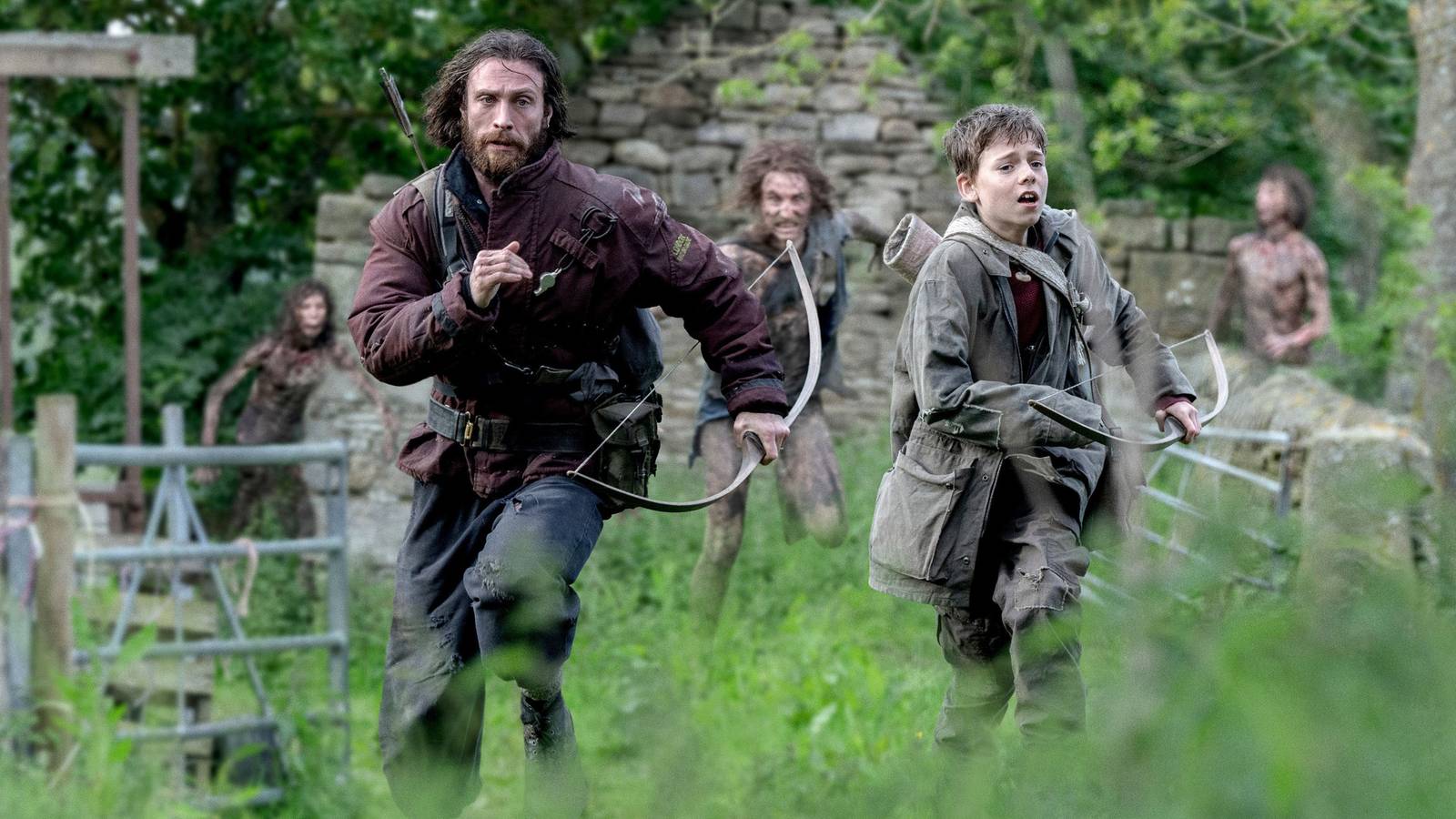
Published Sep 19, 2026, 2:00 PM EDT Kyle is a senior writer at ScreenRant and has been part of the team for over two years. Having led coverage on The Walking Dead projects alongside Rick & Morty, Kyle is well versed in numerous genres. Born in Glasgow, Scotland, Kyle is a passionate journalist who has a keen interest in TV and film. He has six years of experience studying journalism including a HND in Practical Journalism and a BA Honours in Journalism, Media and Communication and History. Alongside his love for TV and film, Kyle enjoys video games, football and Formula 1. After debuting over 20 years ago, the 28 Days Later franchise is back in full swing, with two movies releasing in the past couple of years that have brought the series back into the limelight. Financially, 2025's 28 Years Later was a success, but the reviews were pretty mixed, while its sequel performed much better critically, yet struggled at the box office. This has cast some doubt over whether the 28 Years Later story will be completed with its planned trilogy, or whether the franchise will be back on hiatus. As things stand, the third installment will still go ahead after 28 Years Later: The Bone Temple deserved better at the box office, and there's no telling what direction the sequel will go next. Back in 2002, 28 Days Later kickstarted everything by being a horror thriller that focused on survival. The Rage Virus caused humans to essentially go crazy and turn into unhinged killers driven by pure aggression, with the original film being all about a small group of survivors trying to find safety and avoid becoming infected themselves. The tense atmosphere and uncertainty about who will survive still hold up decades later, which is why there are few better post-apocalyptic movies than 28 Days Later. However, while the third installment, 28 Years Later, uses a similar tone, 28 Weeks Later and 28 Years Later: The Bone Temple feel like real outliers. Despite having one of the greatest opening sequences in cinema history, 28 Weeks Later relies less on suspense and horror, using action to dictate the plot. That's not to say it doesn't have unsettling moments, but the constant gunfire and explosions suggest it belongs in a different genre entirely, while The Bone Temple practically invents its own category. 28 Days Later & 28 Years Later Are The Truest Survival Horror Movies While 28 Days Later and 28 Weeks Later are far from being part of the same genre, 28 Days Later and 28 Years Later couldn't be more similar. They are both true survival horrors that focus on the desperation to survive in a brutal world — the biggest difference being when they take place in the timeline. In 28 Days Later, our protagonist wakes up from a coma with no idea what is going on. He lucks his way into finding some knowledgeable survivors before slowly adapting to this world himself, albeit not without difficulty. Come the climax, Jim is more than capable of handling himself, stepping up as a hero against corrupt soldiers. There are warm, light-hearted moments throughout the movie, but more often than not, things are dark and tense, creating a one-of-a-kind atmosphere. 28 Years Later does a good job of replicating this, as the movie takes place close to three decades after the Rage Virus began spreading around the United Kingdom, creating a whole new environment. The story revolves around a 12-year-old named Spike living in a small town with his mother, Isla, and stepfather, Jamie. For the most part, the settlement is considered a safe zone, but danger lurks outside the gates, where Spike is brought to train and help gather resources alongside Jamie, which is where the true horrors lie. The infected have become more evolved, and even veteran survivors want nothing to do with Alphas, which are some of the most dangerous zombie-like creatures out there. Each confrontation in 28 Years Later felt truly chilling, and with several characters being killed off just like in the original, these two movies clearly master the survival horror genre. Thankfully, The Bone Temple proved that the 28 Days Later franchise is only getting better, after 2007's divisive 28 Weeks Later left the series shelved for almost 20 years. 28 Weeks Later Is Much More Of An Action Movie Don't get it twisted, 28 Weeks Later still has its share of scares and plenty of dread-inducing moments, but at its core, it's an action movie. Over half a year into the apocalypse, the plot focuses on a protection zone in London where survivors aren't allowed to leave while US forces help contain the virus. Despite the outbreak and the subsequent loss of life in the UK undoubtedly being worldwide news, there is still a sense of naivety among the soldiers sent in to assist in keeping humanity alive on the island. Inevitably, all hell breaks loose when Tammy and Andy sneak out and find their infected mother, bringing her back to the safe zone. She winds up infecting her husband, Don, who spreads the virus, leading to a flurry of action. The US soldiers open fire on civilians, with firebombs being dropped on the location, resulting in those who escaped being hunted down. One soldier named Doyle defies his orders and calls in a favor from Flynn, helping Tammy and Andy escape to France. Although there are weapons and firefights in the other movies, the military involvement allows for snipers, bombs, helicopters, and flamethrowers, making it clear what type of project 28 Weeks Later is. There are still plenty of highlights in this high-octane thriller, but the franchise certainly thrives on horror rather than action. 28 Weeks Later's ending even teased the virus reaching Europe, a decision that was ultimately retconned in future installments, helping the series get back on track to becoming a survival horror once more. However, this sequel proved the IP could branch out in terms of genre, something The Bone Temple undoubtedly took advantage of. 28 Years Later: The Bone Temple Is... Something Else Entirely After three movies, the 28 Years Later franchise reinvented the wheel once again through 28 Years Later: The Bone Temple. It doesn't follow the traditional survival horror formula that the movie series has become synonymous with, but it is also the furthest thing from an action film, making it something else entirely. The best way to describe it is more of a psychological horror or thriller, as the infected take a back seat in this movie to allow its more mysterious characters to shine. Following a satanic cult and learning their ways of life during the apocalypse makes for a fascinating twist on what we've seen before. Meanwhile, Dr. Kelson's discovery regarding an Alpha named Samson leans heavily into the psychological aspects of this world, creating a very distinct project that doesn't really resemble the other 28 Days Later films despite fitting seamlessly into the franchise. This bold direction could've gone very wrong. Instead, 28 Years Later: The Bone Temple is one of the best horror movies of the 2020s so far, making a sequel necessary. Defining this movie is almost impossible, especially compared to its predecessors, yet it might just be the best in the entire series. A third 28 Years Later movie is still in the works, with filming planned for 2027. As a result, it arguably stands out even more than 28 Weeks Later, and its weird twist on the 28 Days Later franchise's winning formula was a critical success, making us all the more curious about where the story will go next. 28 Days Later First Film 28 Days Later Cast Cillian Murphy, Naomie Harris, Brendan Gleeson, Christopher Eccleston, Robert Carlyle, Rose Byrne, Jeremy Renner, Imogen Poots, Jodie Comer, Aaron Taylor-Johnson, Ralph Fiennes, Jack O'Connell Created by Alex Garland Latest Film 28 Weeks Later Upcoming Films 28 Years Later Movie(s) 28 Days Later, 28 Weeks Later, 28 Years Later
Two 28 Days Later Movies Belong To Completely Different Genres
Full Article
Original Source
Read the full article at Screenrant →KhanList aggregates and links to publicly available news content. We do not host full articles from third-party sources. Always verify important information with original sources.